Hamilton grew up as a getaway. For five years after 1868 the railroad from Alexandria ended here, and Virginia’s historic resources office describes the town becoming a summer and weekend spot for Washingtonians; the Town’s plan calls its architecture largely late Victorian. Houses from then were built to stay cool with shade, porches and cross breezes, not ducts. Across 20158 the Census dates 148 homes to 1939 or earlier.
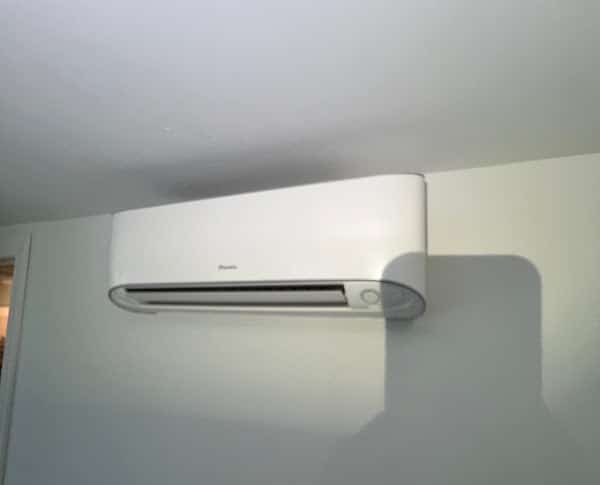
In a house like that the upstairs bedrooms are often the rooms no duct reaches. The Purcellville weather station, 2.6 miles west-northwest of town, averages a July high of 86.4 degrees and 26 days of 90 or more between June and August, and heat gathers under the roof into the evening. One wall head cools that room on its own schedule, and heats it in winter.
Newer houses bring a different room: a 1970s house, one of 303 in the ZIP, that gained an addition, a sunroom or a converted garage, or one of the 657 from the 2000s and 2010s with a bonus room or a finished basement, each at the far end of a duct run laid out before it existed. A head gives that room its own thermostat, and the station’s average January low of 24.5 is weather a current head keeps heating through.
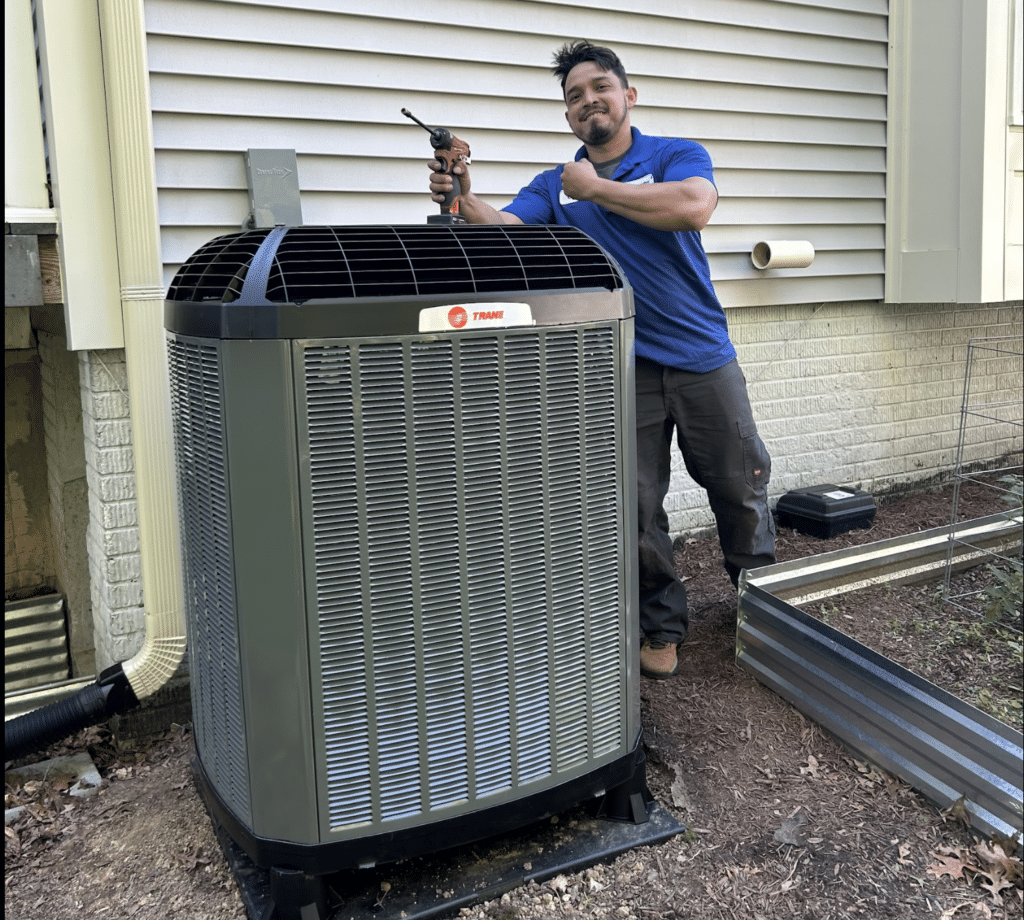
Placement matters more out here. The Purcellville station logged 36 inches of new snow on its January 24, 2016 reading. Mount the unit high enough that a storm like that leaves the coil uncovered, out from under the eaves where snow and ice slide off the roof, and where the water it sheds while defrosting can run off rather than freeze into a hump on the patio.