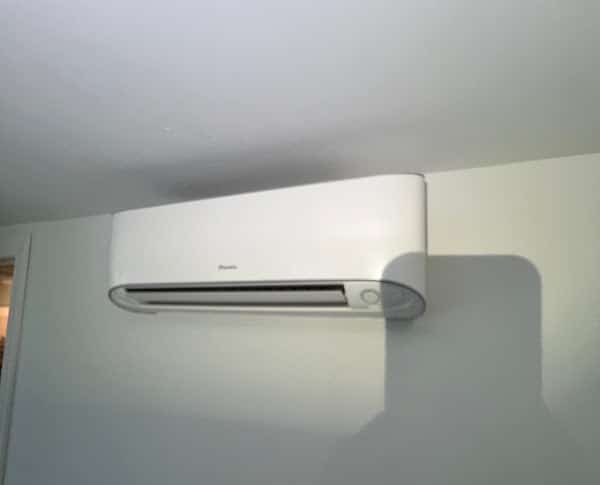
Delaplane began as Piedmont Station, a stop on the Manassas Gap Railroad from 1852, and took its present name in 1874. The National Register survey of the Crooked Run Valley dates the village’s brick and frame houses from about 1852 into the early 1900s, built for stoves and fireplaces, and one of its old commercial buildings is a home now. Ducts in houses like that mean opening walls nobody wants opened. A head on an outside wall in each room that counts, with the lines run down the outside, leaves the plaster alone.
Out in the valley the survey describes farm dwellings of local fieldstone, and tenant houses from the late 1800s to the mid 1900s scattered across the big farms. A tenant house is often a few small rooms with no ductwork at all, and two or three heads on one outdoor unit can heat and cool the whole place: two zones run $11,000 to $15,000, three run $12,500 to $18,000. Through stone, every line needs a cored hole and a tight seal, so agree on where each one goes before the drill comes out.
Most of 20144 is newer than either: about half its homes date from the 1980s and 1990s and a quarter from 2000 on, nearly all detached, with ducts to every original room. There a mini split is for space finished later, like a walkout basement turned into a family room or a porch closed in. On the horse and cattle farms the survey describes, a barn office or tack room is the same job: one head, one outdoor unit, no ducts.
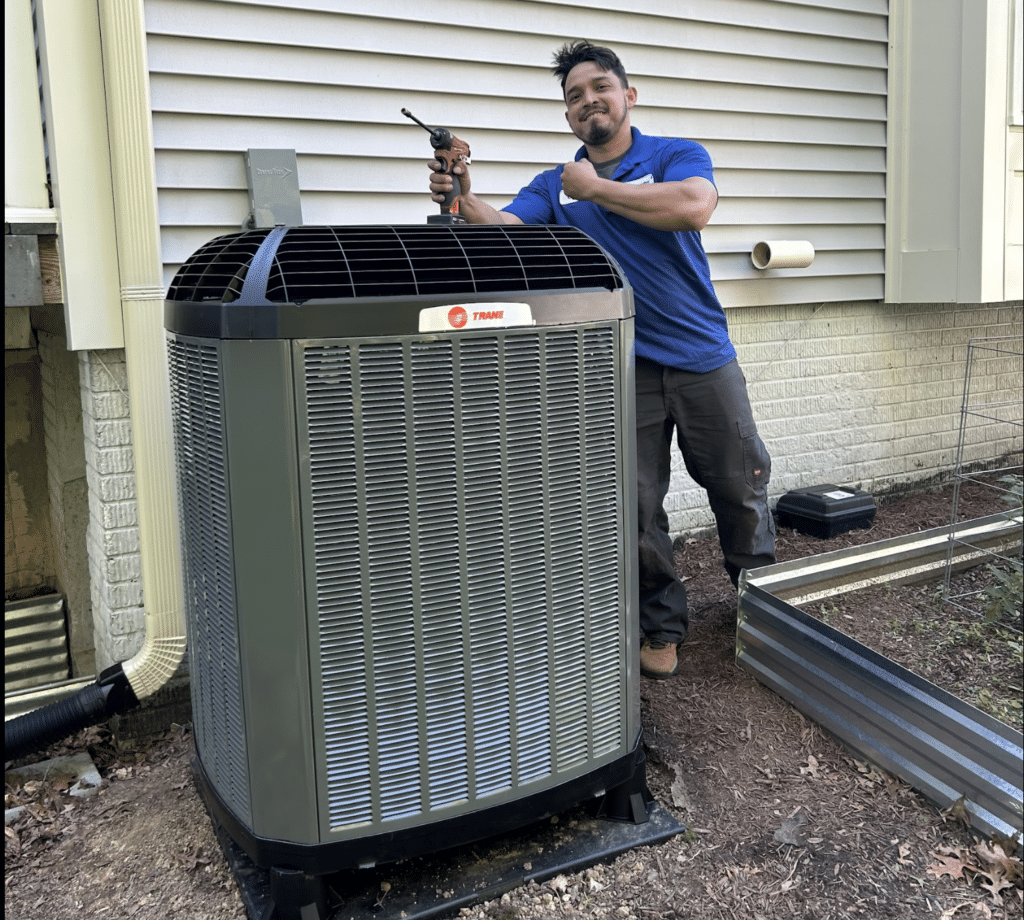
Mind the snow when placing the outdoor unit. The Plains 2 NNE, the closest snowfall station, averages about 20 inches a winter, 8 of them in January, and the 2016 blizzard left an estimated 24 to 36 inches on northern Fauquier. A wall bracket or a tall stand keeps the unit above a drift, and it belongs out from under the roof edge, where sliding snow and ice land.