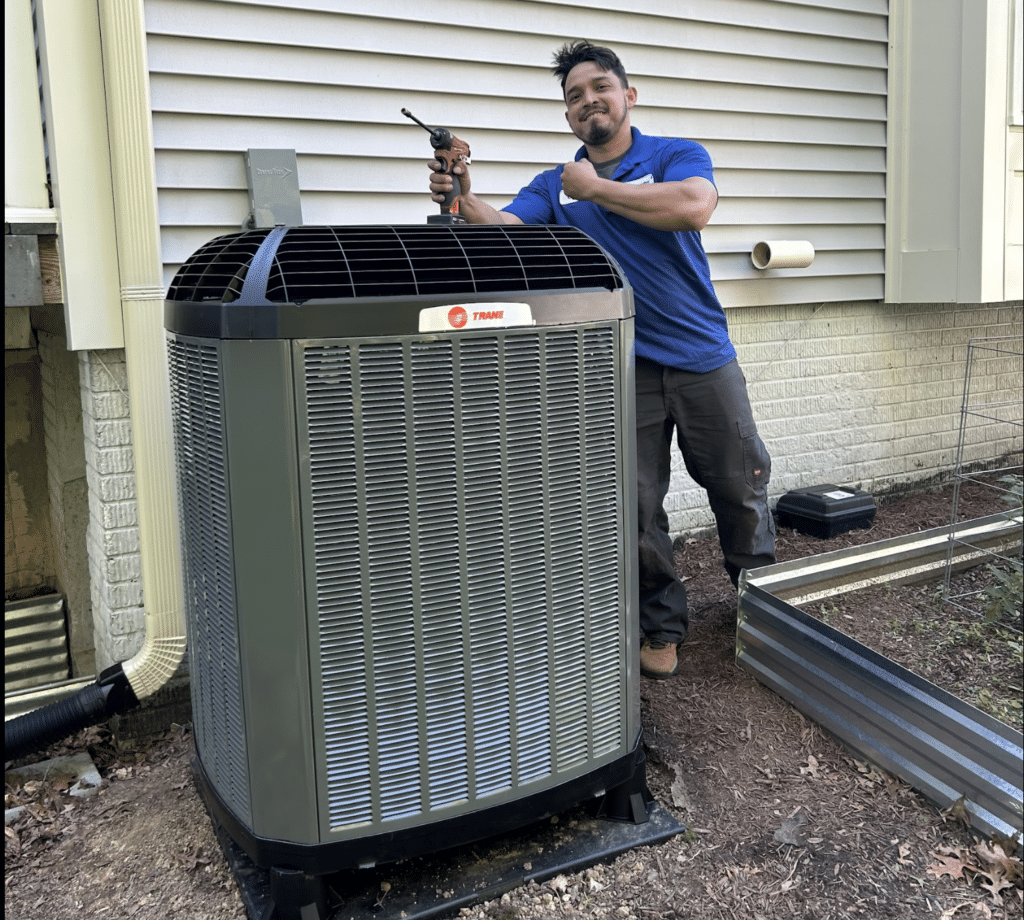
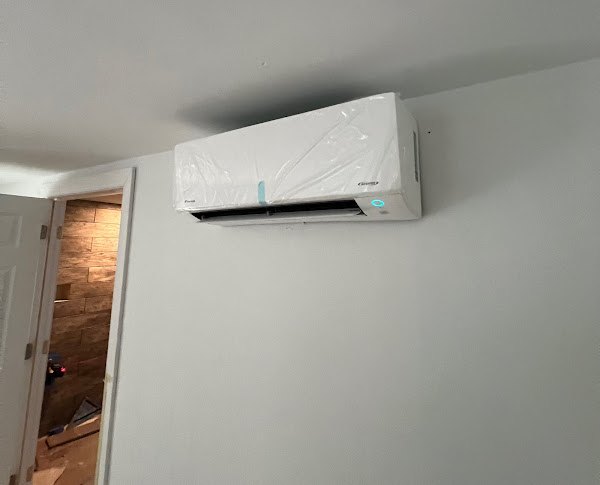
Chantilly’s houses came with ductwork: the typical owner’s house in 20151 went up in 1987, in South Riding in 2006. Boilers are rare in Chantilly’s houses, and when there is one, we service and replace it. So a Chantilly mini split is a one-room fix, not a whole-house one: for the level somebody finished later, or for a room whose job changed.
In 20151 about 6 in 10 homes are single-family houses, and plenty of their basements were finished years after the house went up, as a family room, a guest suite or a gym. A head on a basement wall, with its outdoor unit just outside, gives that level heat and cooling on its own schedule without stealing air from the floors above.
South Riding’s houses are younger and rarely short of ducts. There a head usually goes in a room whose use changed: a bedroom turned into a home office where the computers run all day, a nursery that needs to sit warmer than the rest of the floor, a guest room kept shut most of the year. One thermostat sets one temperature for a whole floor; a head lets that one room disagree.
Greenbriar is the older corner of 20151, where the typical owner’s house dates from 1970, and its sunrooms and back additions are where the original ducts run out. About 3 in 10 Greenbriar homes are in condo or small multi-unit buildings, where an outdoor unit needs the association’s yes before anybody drills a wall. The permit in 20151 comes from Fairfax County, with its rules listed below; in South Riding it’s Loudoun County.