The streets around Main and 21st hold the oldest houses in town, and the Town’s plan lists them by era: Victorians from after the railroad came, Arts and Crafts bungalows and foursquares, then brick and stone Cape Cods in the 1940s and 1950s. About one home in nine inside the town went up before 1960, long before central air was ordinary. The rooms that suffer are the ones tucked under the roof, a Cape Cod’s upper floor with its sloped ceilings above all, where heat collects all summer and no duct was ever planned.
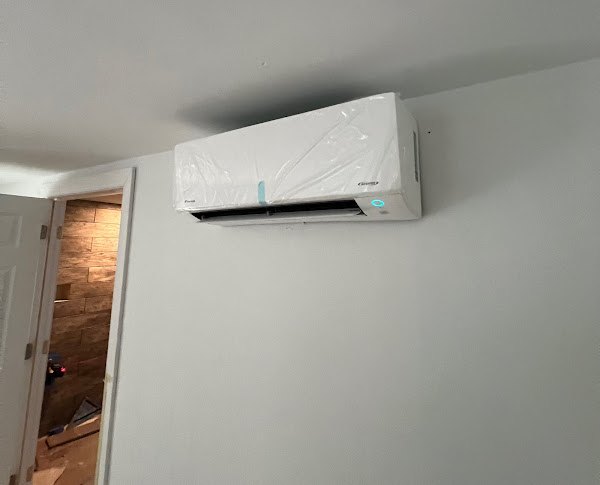
Out on the county side, about one home in twelve was built before 1940, and many of those are old farmhouses, often with additions. A few still lean on a woodstove; the Census counts about three owner homes in a hundred out there heating with wood. A house heated that way has no ducts to cool through, and a head in each room that matters does the cooling and the shoulder season heating without cutting chases through old framing.
In the newer neighborhoods, Village Case among them, the ducts reach every room the builder finished, and a head usually serves the one somebody finished after move-in. On acreage it’s also the workshop or studio in an outbuilding, which no house system will ever reach.
A mini split is new equipment, not a swap, and Loudoun County’s fee schedule lists adding mechanical equipment as permit work, inside the town and out. Inside the town limits the Town handles zoning, and the County won’t take a building permit application from there without the Town’s approved zoning permit. The Town’s Community Development staff at (540) 338-2304 can say what the outdoor unit’s spot needs.