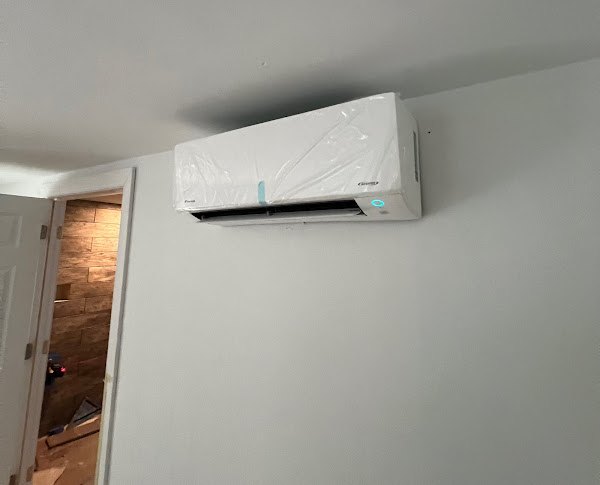
Inside the town limits the Census counts 88 homes from 1939 or earlier and 78 more from the 1950s; across 20180, 268 homes predate 1940. None were built with central air in mind. Some had ductwork squeezed in later, and some still heat with a boiler: the Town’s 2025 water report asks anyone heating that way to contact it for its cross-connection survey. A head in each room that needs one skips cutting chases through old plaster.
The NOAA co-op at Purcellville averages about 30 days a year at 90 or above, and on July 28, 2023, mesonets across Western Loudoun measured heat indices above 110. In an older house that heat gathers under the roof, in upstairs rooms with knee walls and small windows, and one head up there makes the floor livable in August.
On the newer streets, Town Center, Keena and Loudoun West among them, the builder ran ducts to every finished room. The trouble is space finished afterward: a basement turned family room, the bonus room over the garage, a sunroom off the back. Outside the town, where about 94 homes in 100 across 20180 are detached, the room may be a barn office or a workshop that no duct will reach.
Snow decides where the outdoor unit goes. With 30 inches measured just east-northeast of town in February 2010 and 30 to 36 across western Loudoun in January 2016, it belongs on a wall bracket or a tall stand, clear of drifts, so its defrost water drains instead of freezing beneath it. A mini split adds equipment rather than swapping it, which Loudoun County’s fee schedule lists as permit work, in town or out.