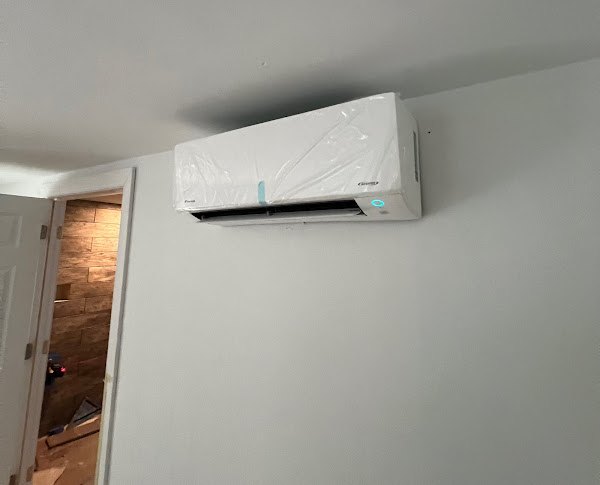
About a third of ZIP 20135’s owner homes were built before 1960, nearly half before 1980, and the median year is 1981. Houses from those decades were often built without central air, and some have ducts that stop short of a later addition, a finished attic or a room over the garage. A mini split gives one room its own heating and cooling without opening walls for duct.
Heat sources here are mixed. Electricity heats 54 percent of owner homes, wood or another fuel 24 percent, propane 14. In a room warmed by baseboard or a wood stove, a head on the wall gives that room a thermostat of its own, and it cools in summer too. That matters in a house where the heat comes from three different places and none of them reaches the back bedroom evenly.
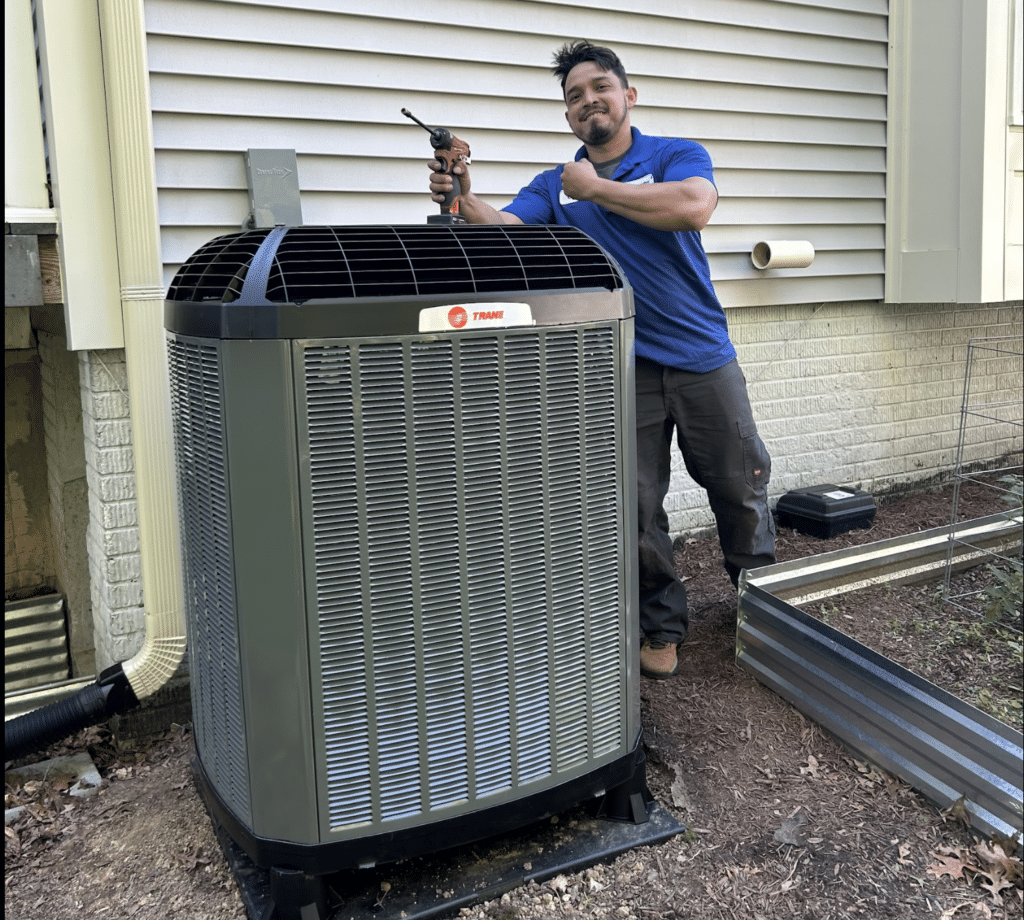
Snow and trees shape where the outdoor unit goes. Drifts are the winter worry: the January 22 to 24, 2016 blizzard piled 36.6 inches onto a gauge a mile northeast of the village, which argues for a wall bracket or a tall stand under the outdoor unit. Winds on October 31, 2019 downed numerous trees in Bluemont, and the 2024 tornado sheared several hundred on the east face of the Blue Ridge, so put it where limbs are not aimed at it.
Summer is the other half. Purcellville, the valley comparison for the village, averages 30.2 days a year at 90 degrees or hotter against 5 at Mount Weather, and July 28, 2023 pushed heat indices above 110 across Western Loudoun. Three rooms on one outdoor unit are $12,500 to $18,000 installed, and four are $16,000 to $21,000. The estimator quiz prices the mix that fits your house.