ZIP 20135 counts 1,272 owner homes, and more than half heat with electricity. Wood and other fuels heat about one in four, propane about one in seven, and utility gas about 3 percent, so a Bluemont boiler is likely fed by a propane tank in the yard. If one won’t fire on a cold morning, look at the tank gauge before anything else.
The village was first known as Snickers Gap and took the name Bluemont when the W&OD sold it to Washington summer visitors as a mountain resort. The houses have the age to match: the typical owner home dates from 1981, close to half predate 1980, and about one in three predates 1960. Those older houses are where cast iron boilers on chimneys turn up.
Most addresses in 20135 are in Clarke County, and most of the others are in Loudoun around the village. Virginia’s code exempts an appliance swap from a permit only when it doesn’t burn gas or oil, so in Clarke a propane boiler replacement is permit work, reviewed by the Building Department at 101 Chalmers Court in Berryville. On either side of the line, an emergency replacement can start first, with the application in by the end of the next working day.
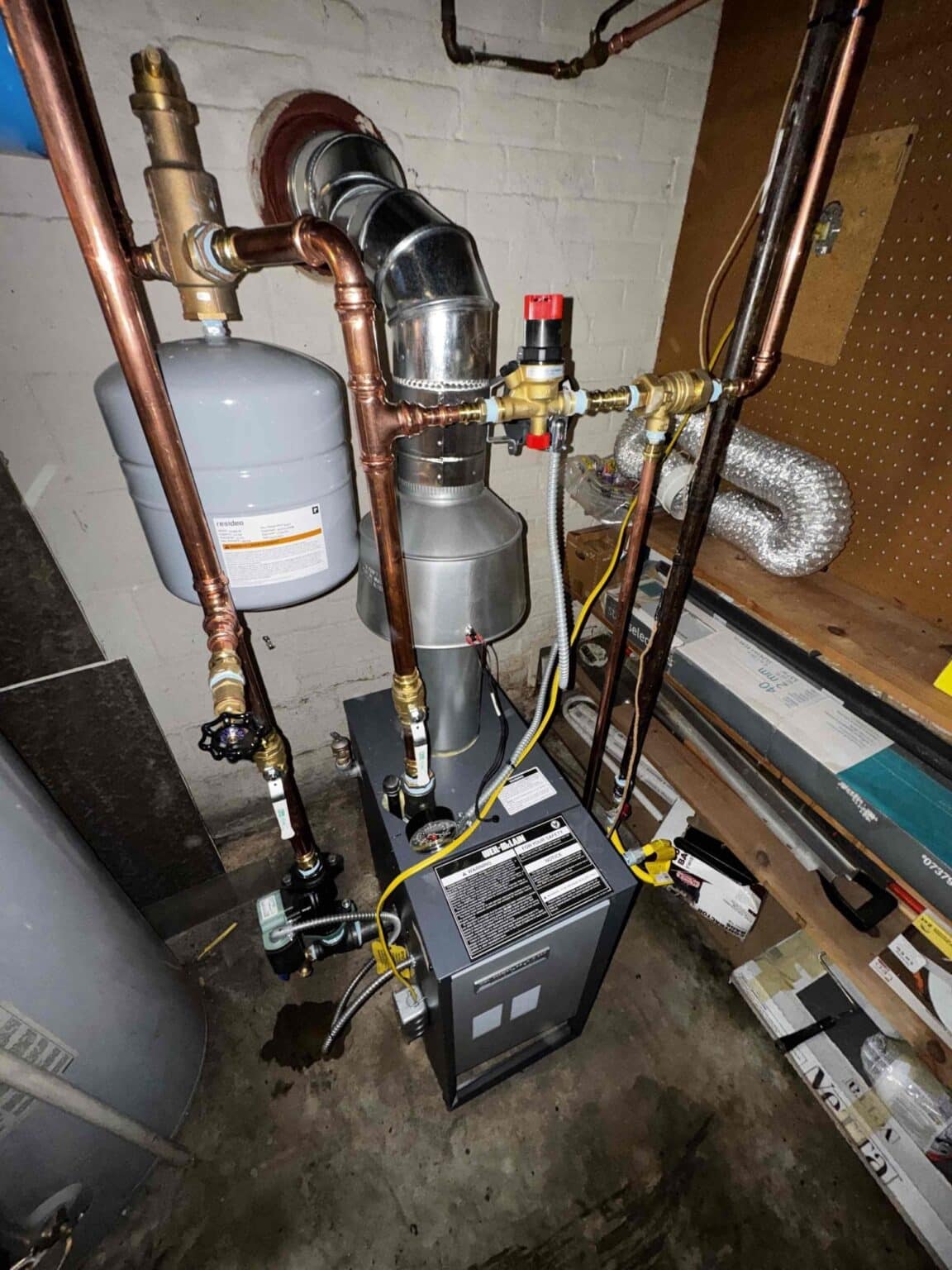
Snow is the Bluemont story. The January 2016 blizzard left 36.6 inches a mile northeast of the village, the top total in Virginia, and February 2010 brought 30.1 inches in Bluemont itself. A condensing boiler vents through a side wall, so after a storm like that its intake and exhaust need digging out before it will run. A cast iron boiler on a chimney doesn’t have that problem, which is one reason to weigh a straight swap against a wall-hung condensing model at $12,782 to $16,500 installed.