The village sits about four miles west of Leesburg at the base of Catoctin Mountain, and it was founded around bottled spring water and as a summer escape from the city’s humidity. ZIP 20129 is small: 150 owner homes, detached houses by the Census count. Natural gas registers at zero there. Propane heats close to half the owner homes, electricity about 35 percent and oil nearly one in five.
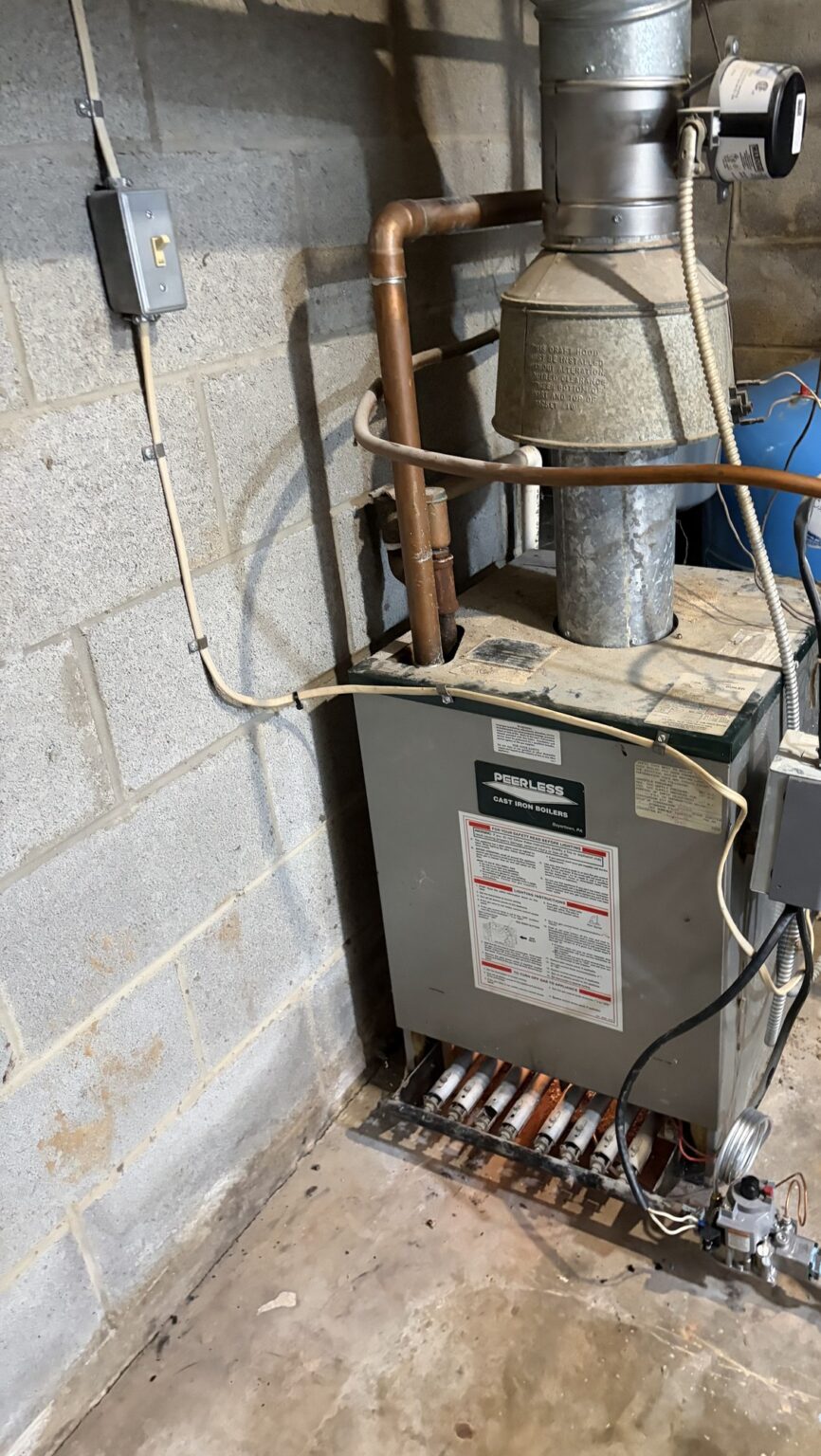
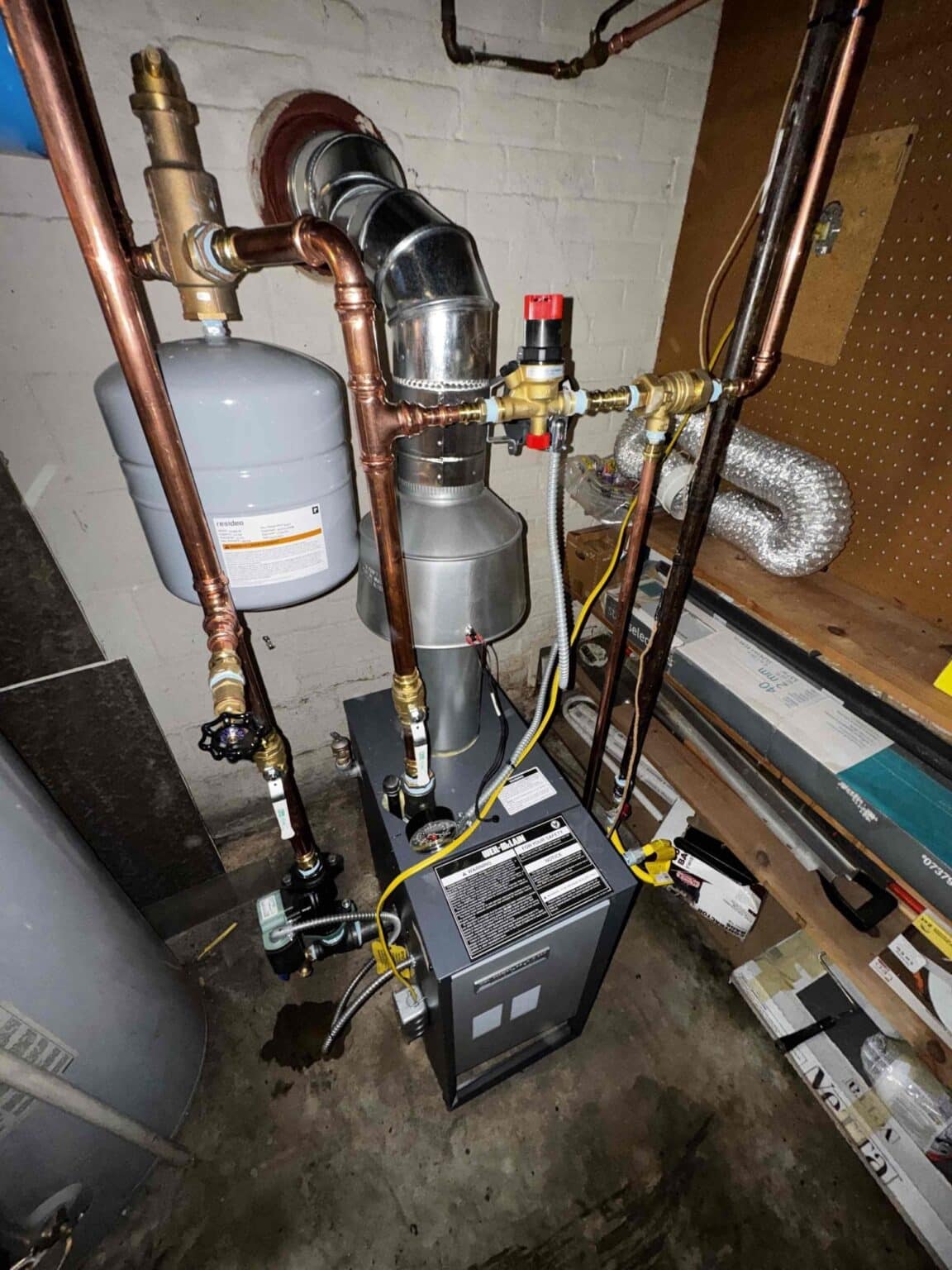
So a boiler here burns propane or oil. We work on the propane ones; oil is outside what we do. The housing is mostly from the 1980s on, the typical owner home from 1997, with about one in four older than 1980. A propane boiler put in with a house from 1997 has seen a lot of winters, and the heat exchanger’s condition, not the date on the label, tells you whether it’s worth a new circulator or done.
Winter here is longer than in eastern Loudoun. Purcellville, the nearest station, counts over a hundred nights a year at or below freezing, with a January average low of 24.5 degrees. The 2016 blizzard dropped 30 to 36 inches across western Loudoun, and February 2015 left 13.0 inches a mile southeast of the village, among that storm’s top county totals.
Wind is the other risk. On July 15, 2024, winds estimated near 75 mph brought down dozens of large trees, wires and a few poles near Clarkes Gap Road, and in June 2022 a similar storm blocked Hamilton Station Road and Route 7. A propane boiler still needs power for its circulator and controls, so when the lines are down the heat is too, and the fall $99 tune-up is the time to make sure it comes back on its own after an outage.