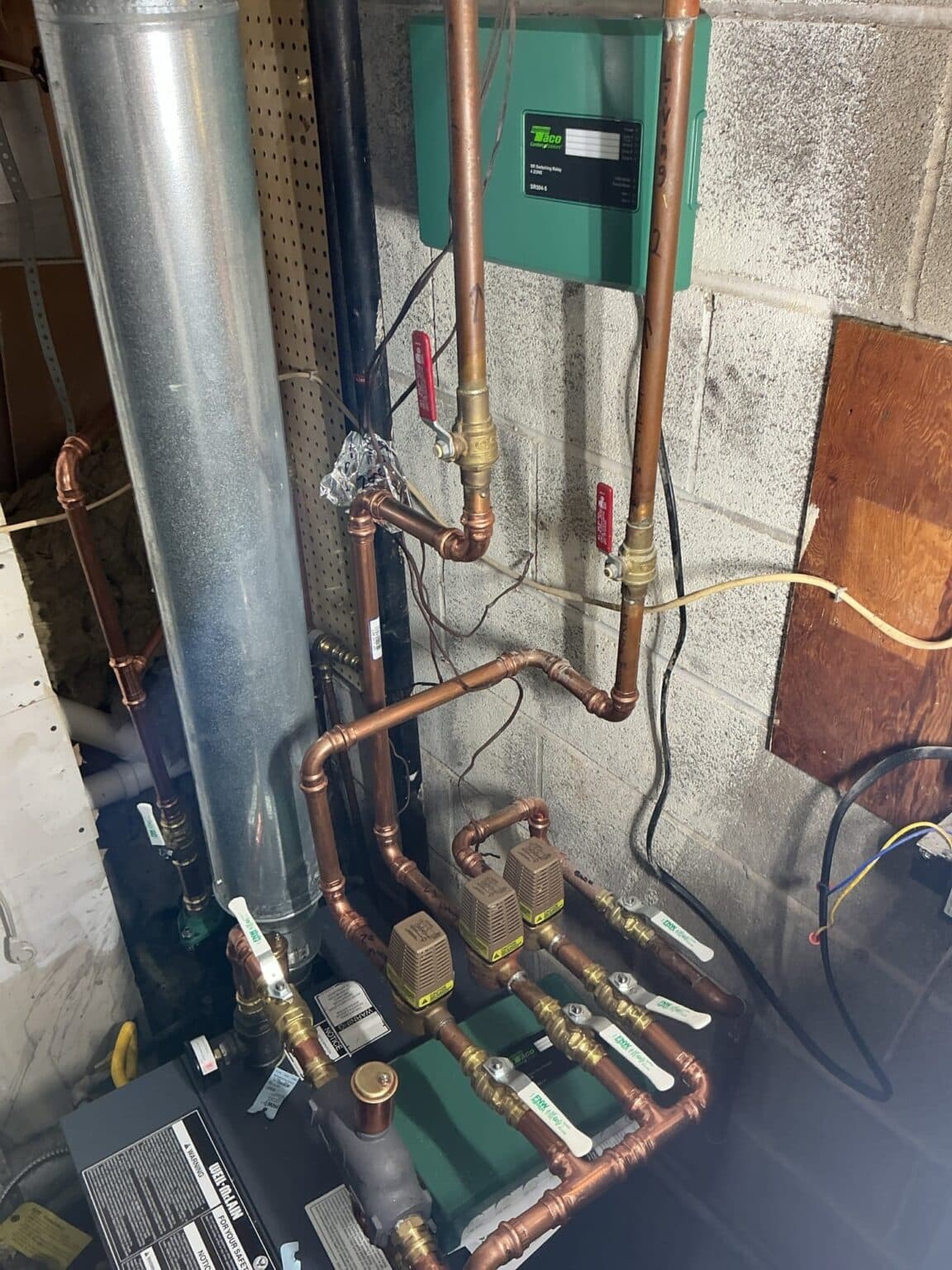
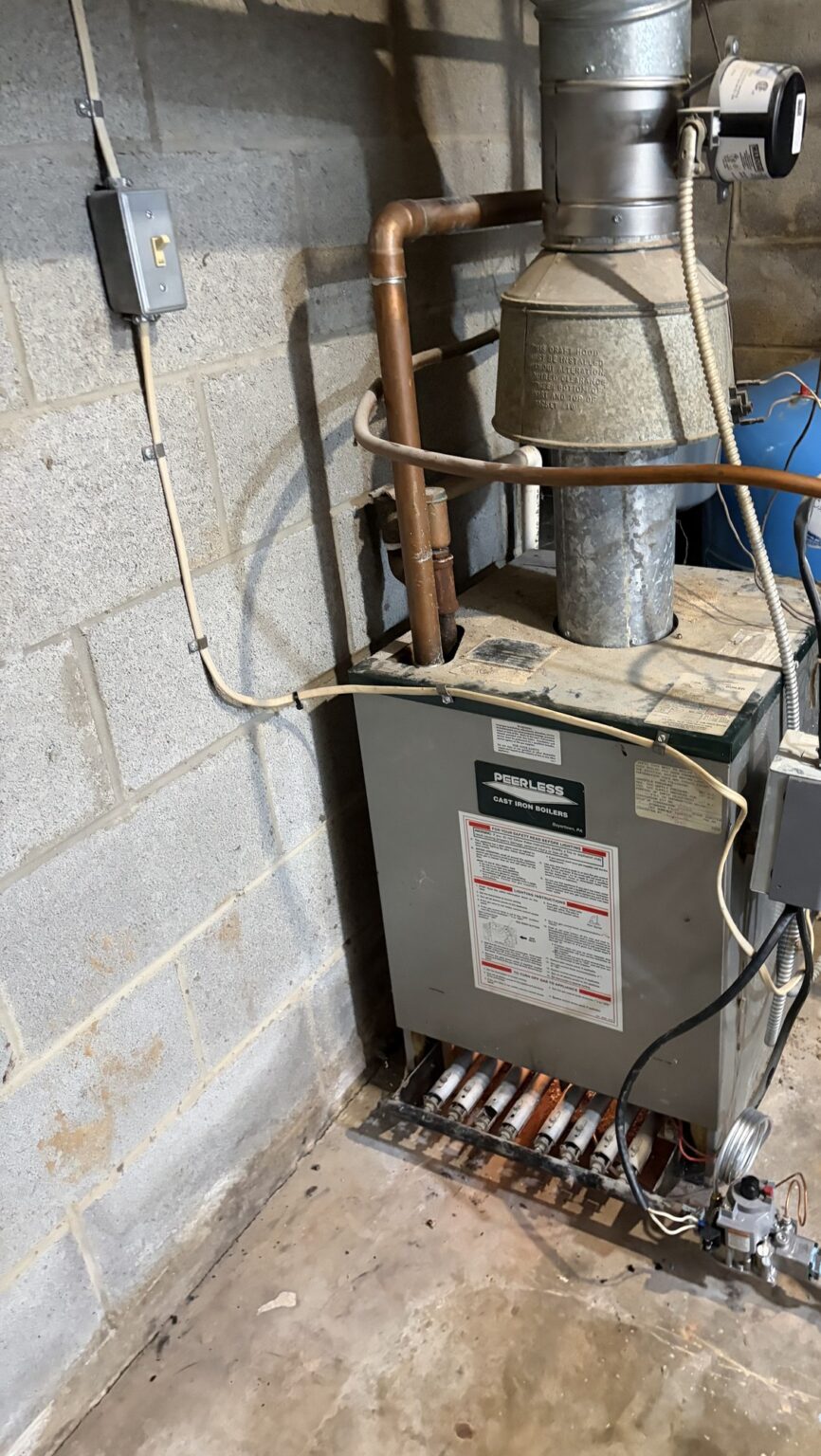
Inside the Town of Clifton the typical owner home dates from 1945, and about three in four predate 1980. Heat there is a mix: electricity leads, with about one in five owner homes on propane, about one in five on oil, and about one in ten on gas. A hot water boiler in one of those houses is likely on propane, and the gas and propane ones are the ones we work on.
Outside the town line, ZIP 20124 is a different place: 4,459 owner homes, close to eight in ten built in the 1980s and 1990s, the typical one in 1988, with gas heating about six in ten. Gas furnaces in the subdivisions off Springstone Drive and Union Mill Road are the usual heat there, and a boiler is the odd one out.
Inside the town line, a gas or propane appliance swap takes two approvals. The Town signs off first, by letter, and Fairfax County won’t move the appliance permit until that letter is uploaded to the record, with a chimney vent certification alongside it. The whole town is the Clifton Historic District, so a new wall vent for a condensing boiler at $12,782 to $16,500 installed is an exterior change that needs a certificate of appropriateness from the Architectural Review Board.
NOVEC brings power into town mostly on poles and overhead lines, and a boiler needs electricity for its circulator, igniter and controls whatever fuel it burns, so a storm that drops a line stops the heat too. Fire and rescue for the town comes from Fairfax County’s Station 16 on Chapel Road, and the County’s CO program covers town residents: an alarm on every floor and gas appliances inspected each fall.