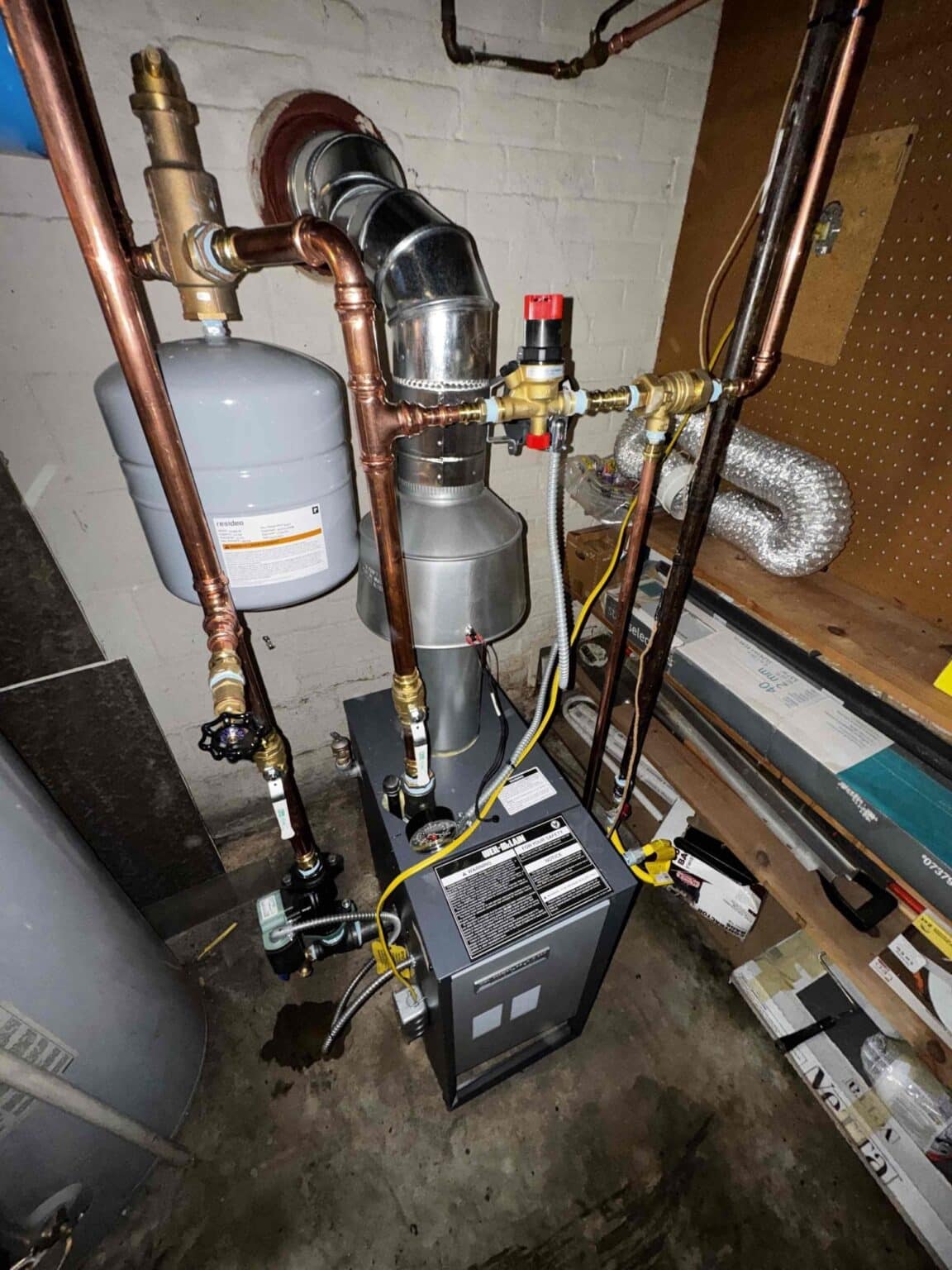
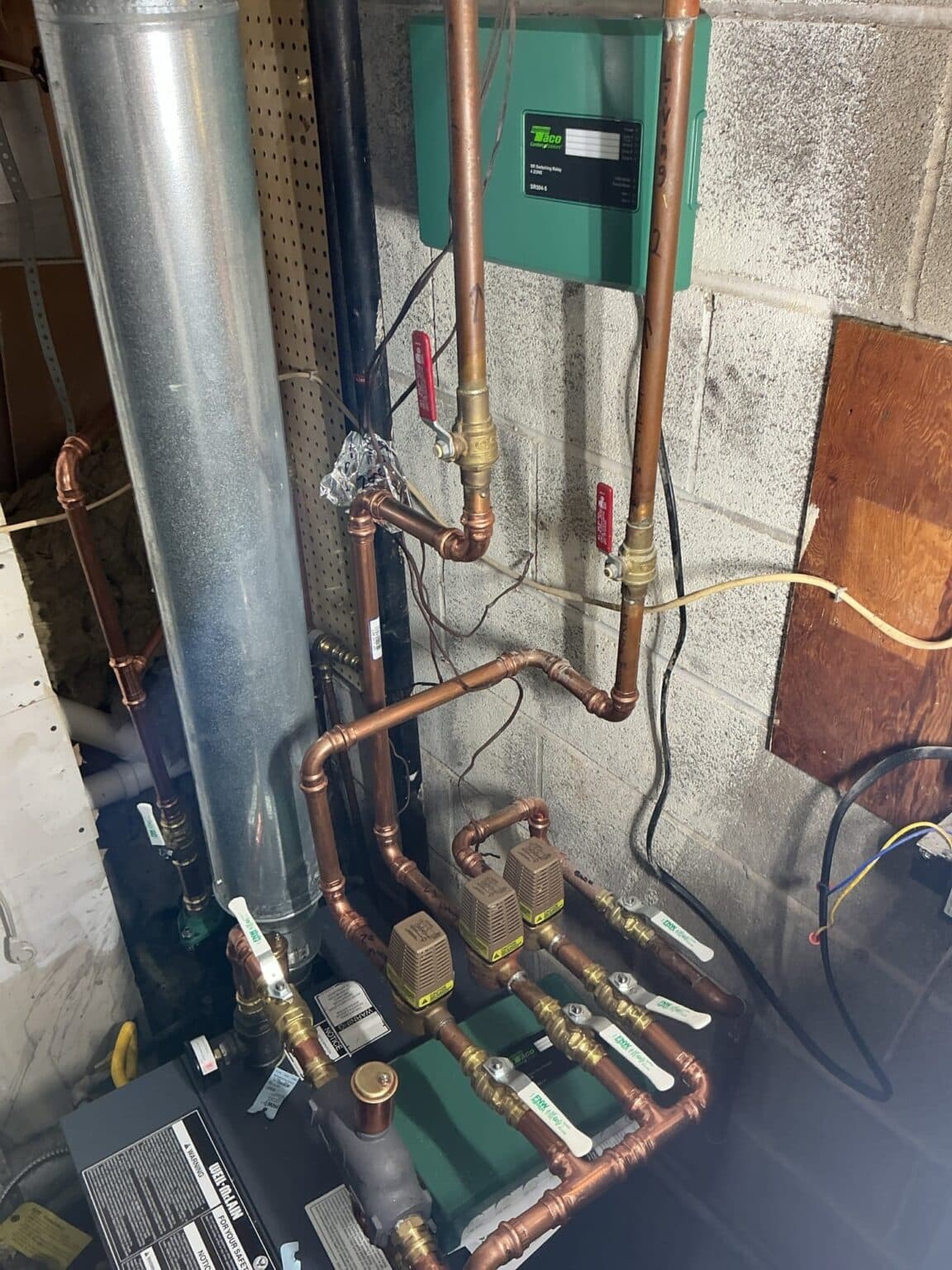
Philomont’s own ZIP, 20131, is post office boxes only, so its Census figures come from 20132, the Purcellville ZIP area around it. There, propane and electricity each heat about 42 percent of owner homes, and natural gas and oil about 6 percent each. A hot water boiler in Philomont is far more likely to burn propane than gas, and the propane ones are ours to repair; oil is the one fuel we don’t work on.
The village sits in the center of the Loudoun Valley, about midway between Middleburg and Purcellville, among rolling hills and streams. The housing around it runs young: the typical owner home in 20132 went up in 2000, close to half since then, while about one in four is older than 1980. Cast iron boilers on chimneys belong mostly to that older quarter.
Winter in the valley runs colder than in the east of the county. Purcellville’s station, the closest, records 4,942 heating degree days a year and freezes on more than a hundred nights. After the December 2022 arctic front, Philomont’s wind chill reached -9, and on January 22, 2025 it hit -8, with a low of -2 the next morning. Those are the nights a boiler’s circulator, igniter and safeties all have to work at once.
Flooding is the other local hazard: the Snickersville Turnpike near Hibbs Bridge Road, about a mile from the village, closed for high water twice in 2018. A boiler in a basement that takes on water needs its burner and controls checked before it runs again, even when it looks dry.