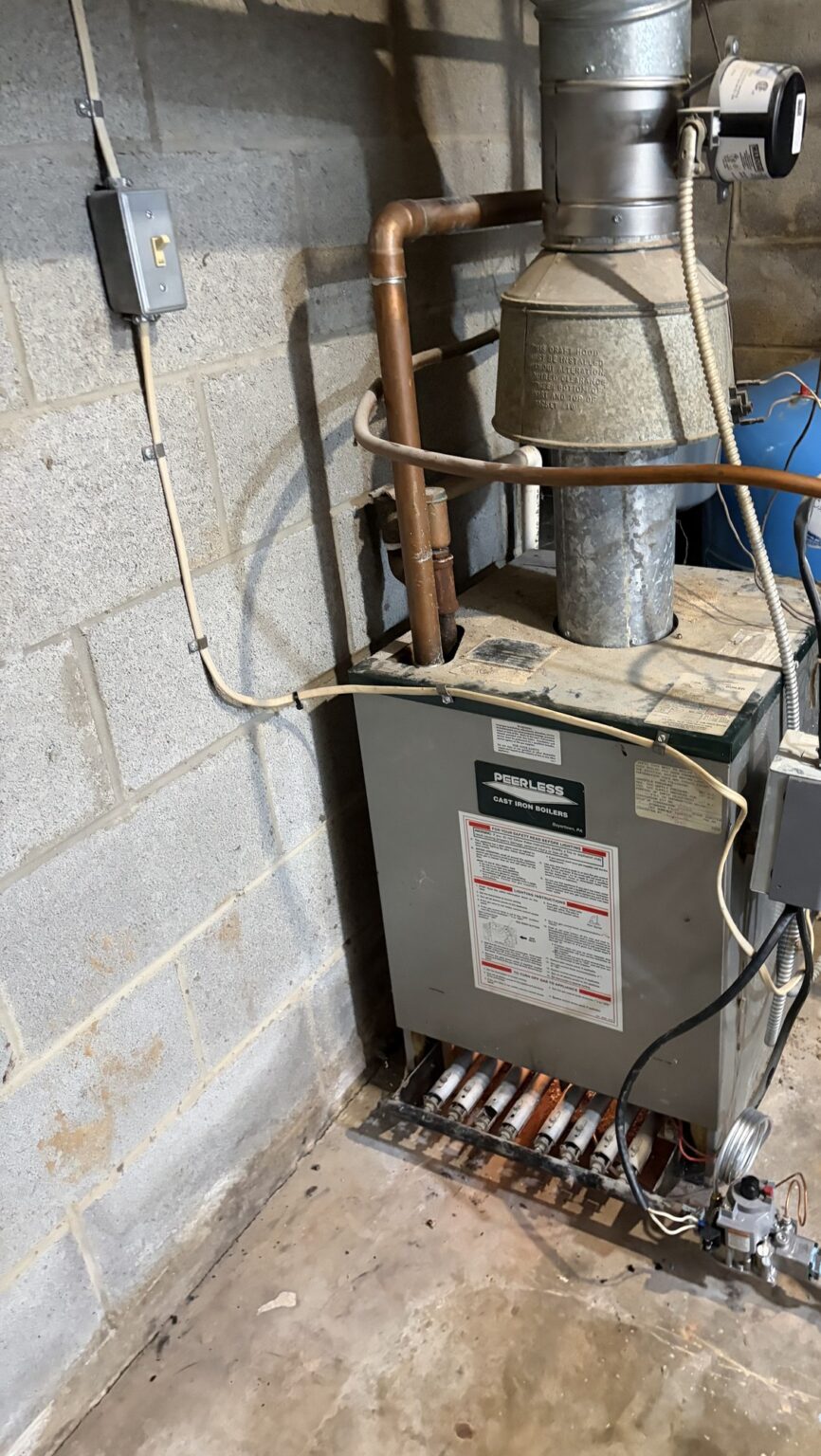
Centreville built most of its houses in the 1980s and 1990s, about seven in ten of the owner homes, with 1990 the typical year. Those houses were built around furnaces and ducts, which leaves the hot water boiler as Centreville’s outlier, usually in one of the older houses from before 1980, about one in ten of the town’s owner homes.
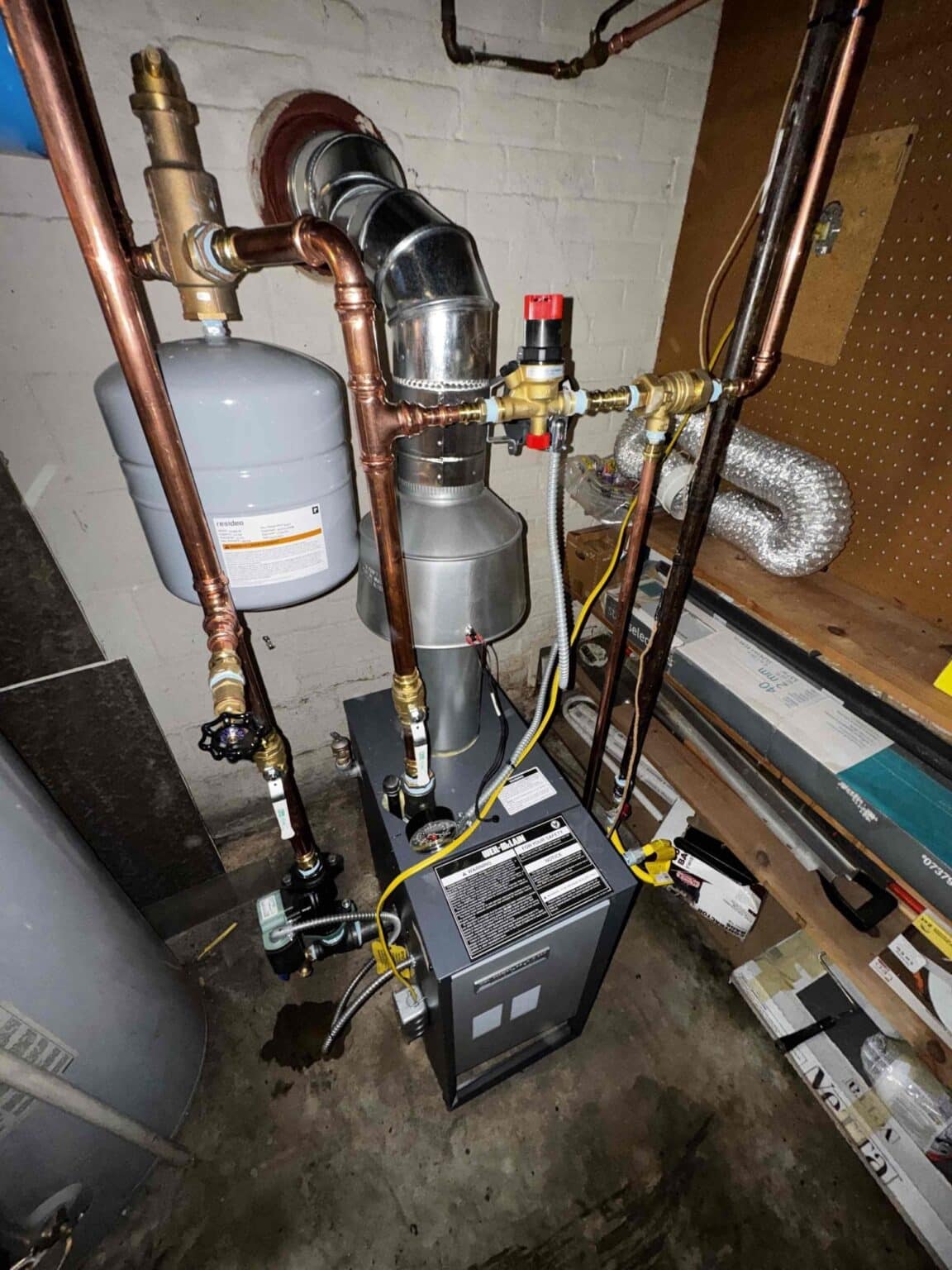
Close to three in four owner homes here heat with gas, and so do the boilers we’d meet. On a boiler that’s been running since the 1980s, the parts around it usually go first: the circulator pump that moves the water, the zone valves, the expansion tank that keeps the pressure steady. Each of those is a repair, priced in writing after the $99 diagnostic.
When a Centreville boiler does need replacing, the venting decides most of the job. A new cast iron boiler can go back on the existing chimney; going condensing means a new vent through the side of the house and a price of $12,782 to $16,500, and in a 1980s house whose chimney hasn’t been looked inside in years, that can be the cleaner answer. Fairfax County names the boiler outright among the gas appliances that need a permit to replace, even like for like, and a chimney vent certification goes with any fuel-burning swap, one more reason the chimney question comes first.
Close to half the owner homes here are townhouses, and in a townhouse the boiler sits in one small utility room beside the tank that makes the hot water. A wall-hung combi frees that floor space. About one in seven owner homes is a condo, where a boiler may belong to the building, so the association is the first call. For any of them, the $99 tune-up in September or October reads the system pressure, tests the relief valve and listens to the pump while it runs.