The Census finds no utility gas heat in ZIP 20197; propane heats more than half of the 575 owner homes and electricity about one in four. A Waterford boiler burns propane from a tank in the yard, and its gas pressure is set and read for propane, not natural gas. Propane heats more than half the owner homes here, so a Waterford boiler is likely a propane one. Oil still heats about one in six owner homes, and those burners are outside our work.
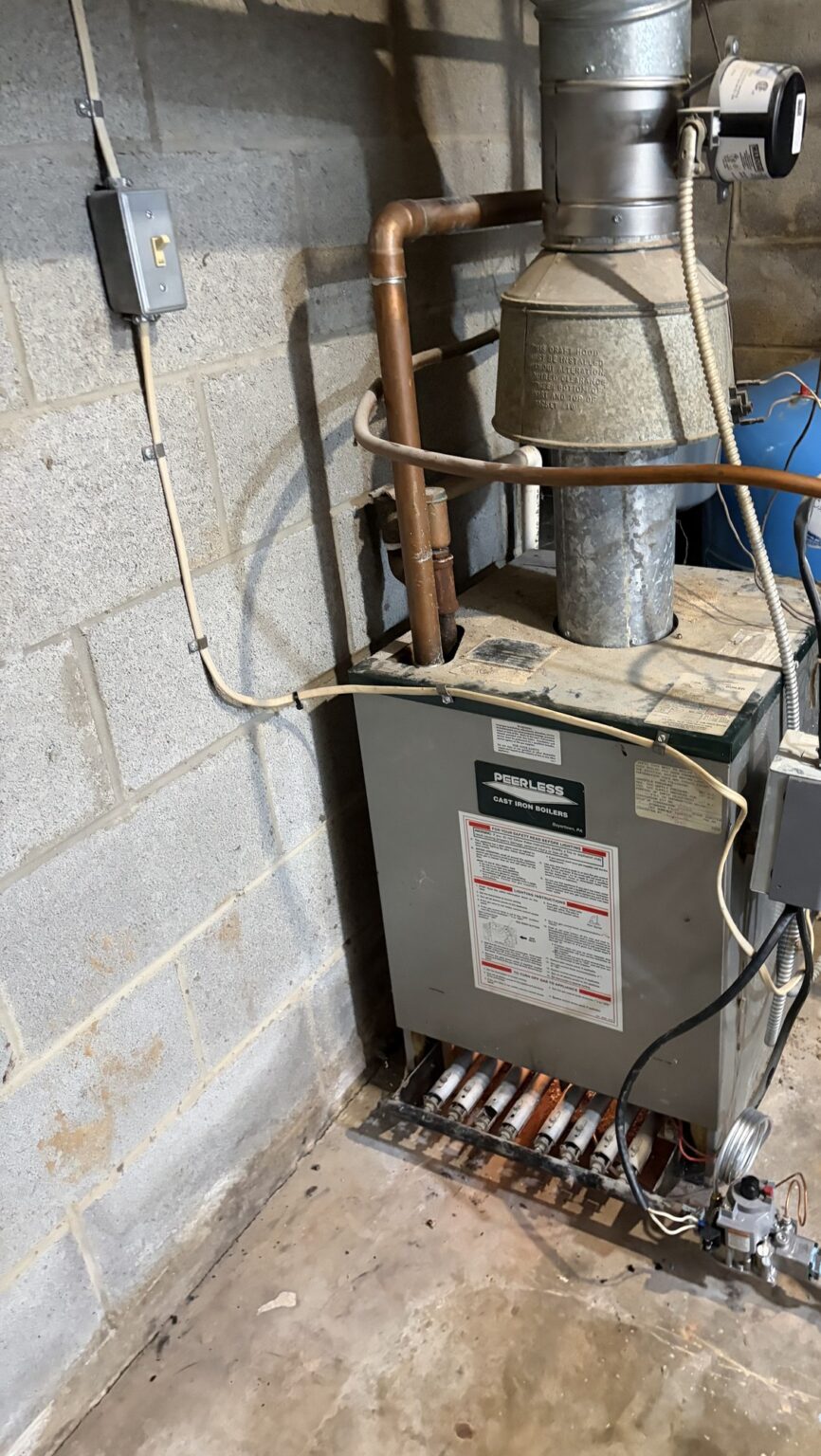
The typical house dates from 1996, yet roughly one in five is older than 1960 and a third older than 1980. In those older houses a hot water boiler on radiators or baseboard is a common setup, often in a cellar under a chimney that has served it for decades.
In the central village, most exterior changes need the County Historic District Review Committee’s approval before work starts. A condensing boiler’s plastic vent through a wall is an exterior change, so ask whether the vent can stay where it is; a cast iron boiler going back on the existing chimney avoids the review. Approval comes before work starts, so a failing boiler in the village is a reason to call early rather than late. The National Historic Landmark around the village is larger than the district and is an honorary designation.
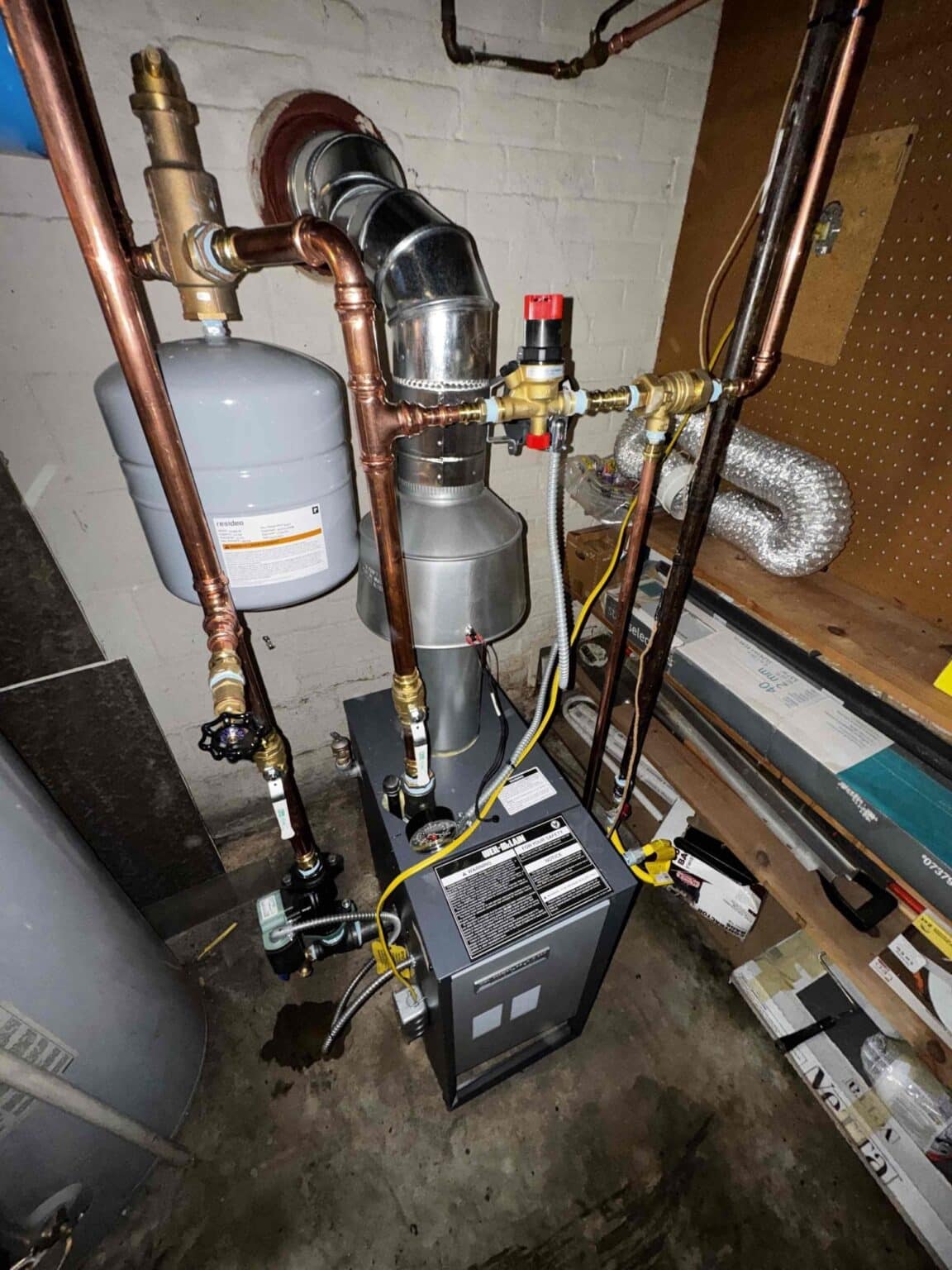
For a Waterford house moving to high efficiency, a condensing or combi boiler costs $12,782 to $16,500 installed, and it runs off the same propane tank. With detached houses making up nearly every owner home here, each boiler has its own chimney or wall to vent through, and the written price should name the route, the propane line and any radiator flushing, so nothing gets decided on the day.