Falls Church is one of the two places, with McLean, where boilers are a regular part of our heating work. The housing explains it. In the City of Falls Church the typical owner home dates from 1964 and about one in three predates 1960; on the Fairfax County side, in the Idylwood count, the typical one is from 1975, with about three in ten older than 1960. Those are the decades a hot water boiler with radiators or baseboard was still a common way to heat a new house.
A Falls Church mailing address reaches far past the City limits: Merrifield, Seven Corners and Bailey’s Crossroads are Fairfax County. Inside the City, the permit counter is at City Hall, 300 Park Avenue, and any work on a natural gas appliance takes a gas permit, removing one included. On the County side, a gas boiler replacement needs a Fairfax County permit even like for like, plus a chimney vent certification.
Condos are a big share here, about four in ten owner homes on the County side and close to half in the City. A condo boiler can belong to the building rather than the unit, so check with the association before calling anyone. When it’s yours, it’s usually a closet unit, and a wall-hung Navien combi at $12,782 to $16,500 installed can replace the boiler and the water heater in one box.
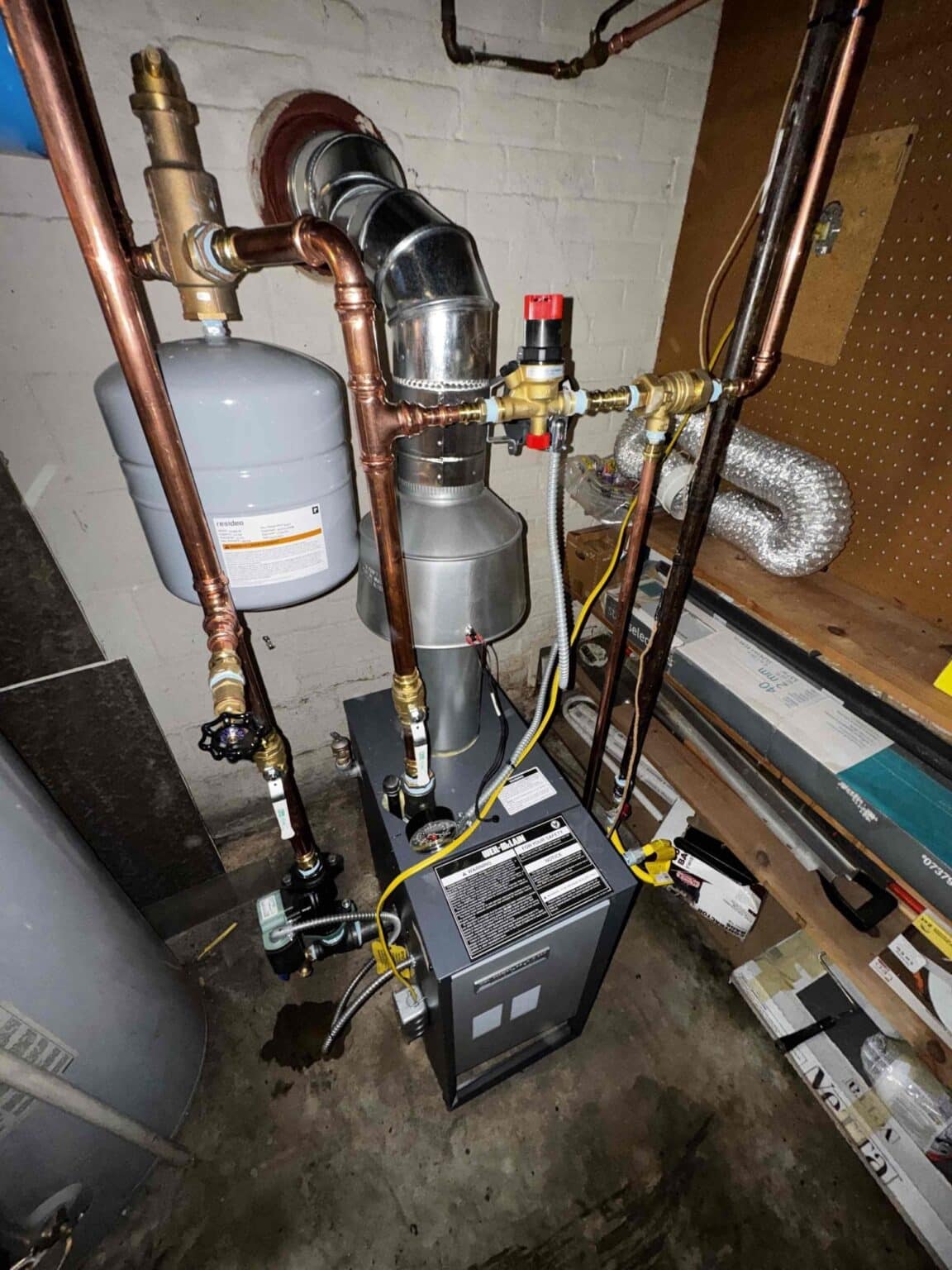
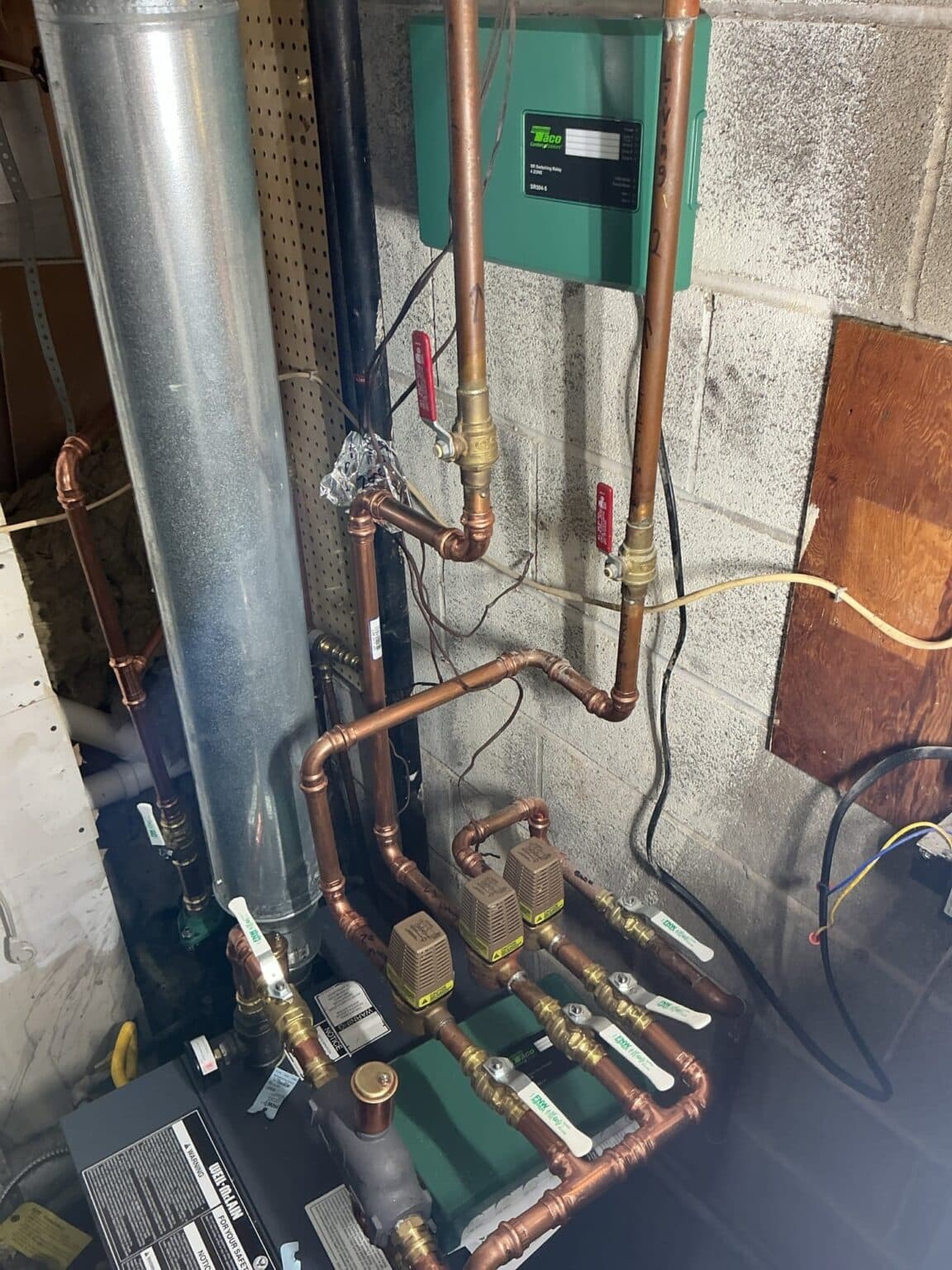
Gas heats about seven in ten owner homes in the City and about six in ten on the County side, so a Falls Church boiler is most likely on natural gas. One from the 1960s usually vents up a masonry chimney, and the choice at replacement is whether to keep that chimney with a new cast iron boiler or move to a condensing boiler that vents through a side wall in plastic pipe. City residents can also book a home safety check from the Arlington County Fire Department.