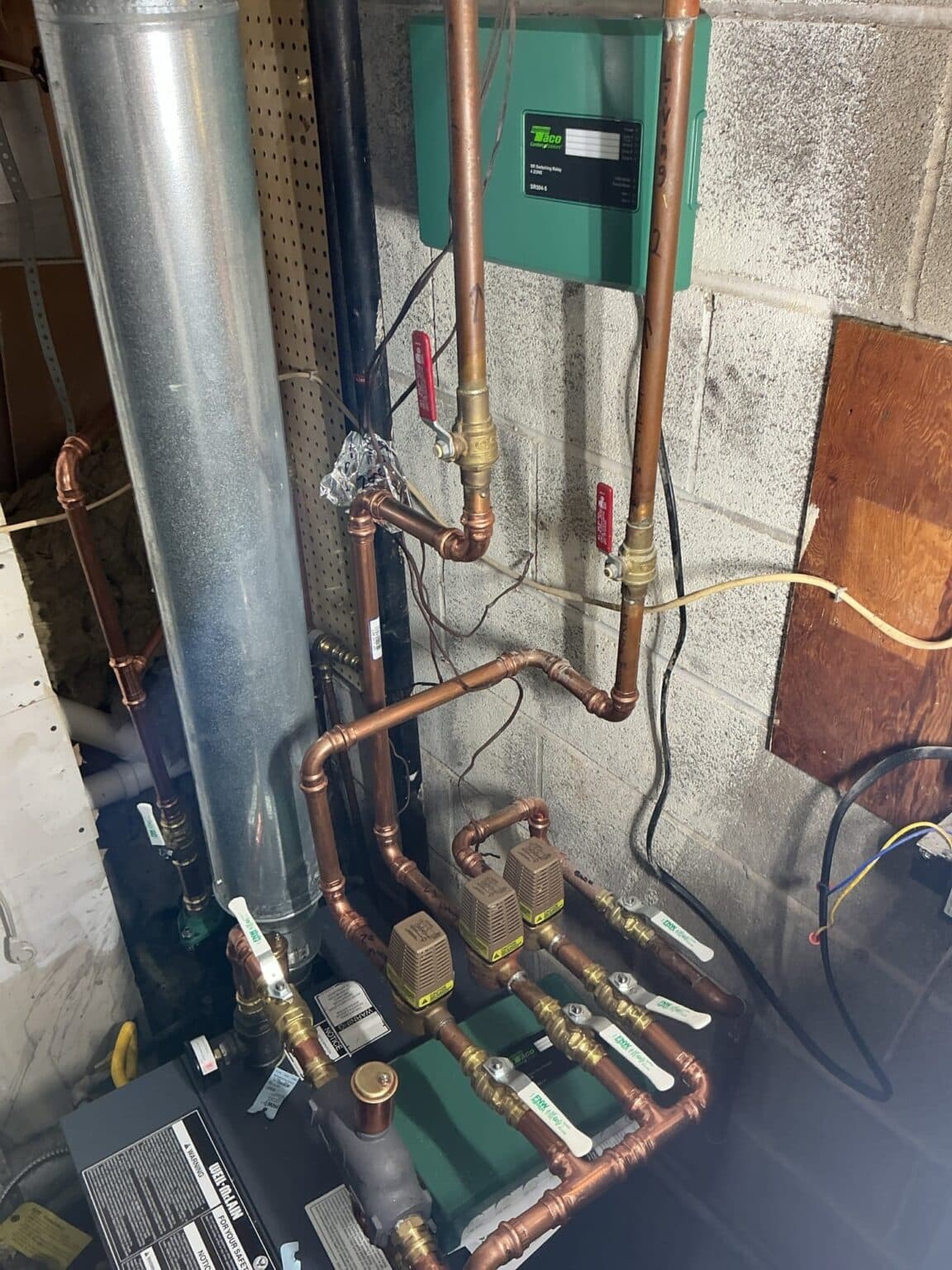
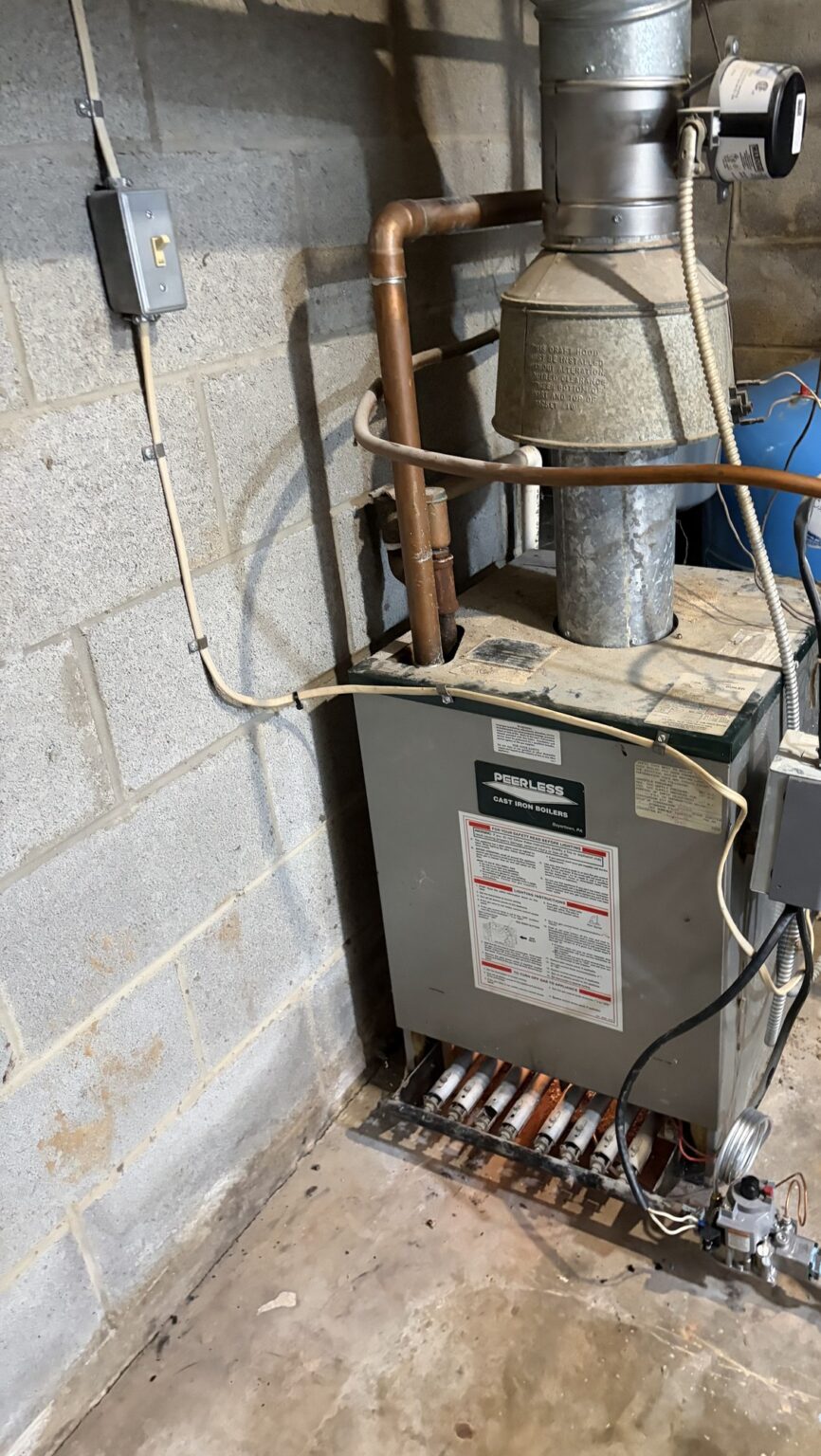
Inside the Town of Vienna, the typical owner home went up in 1972, and about two in three of them were built before 1980. That is where the boilers are. In those houses the boiler usually stands in the basement next to the gas water heater, both venting up one masonry chimney. The newer quarter of the town’s homes, built since 2000, mostly heat with forced air, so a boiler there is the exception, often a Navien combi in a utility room.
Gas heats about eight in ten owner homes in the Town, and the boilers we service follow that pattern. In these 1972-era houses, the boiler is often the original unit. When it acts up, it’s usually the circulator pump, a zone valve, or the expansion tank. A dripping relief valve points to pressure near 30 psi, while cold radiators at the top suggest air in the loop. We run the $99 diagnostic to pinpoint the part, then give you a written price before we touch the system.
Replacing a boiler in these older basements hinges on the chimney. A cast iron unit can often use the existing flue, placing the cost at the lower end of $9,900 to $16,500. A condensing boiler vents through the wall in white plastic pipe, costing $12,782 to $16,500. In Windover Heights, a new vent pipe on a street-facing wall is an exterior change. The Board of Review must approve it before installation, so check that requirement before you pick a model.
In Wolf Trap, the housing is newer, with a median build year of 1980. Most homes are detached and heat with gas. Boilers are less common here than in the Town, but when they exist, they are often heat-only units paired with a separate water heater. The $99 tune-up checks the burner, the flame and the pressure before the cold months, with the water heater beside it checked in the same visit.