Fairfax Station is a ZIP of detached houses, 5,687 owner homes in 22039, and about eight in ten of them were built from 1980 through 1999, with 1988 the typical year. Houses of that era were built around furnaces and ducts, so a hot water boiler in Fairfax Station usually sits in one of the roughly one in eight homes older than 1980.
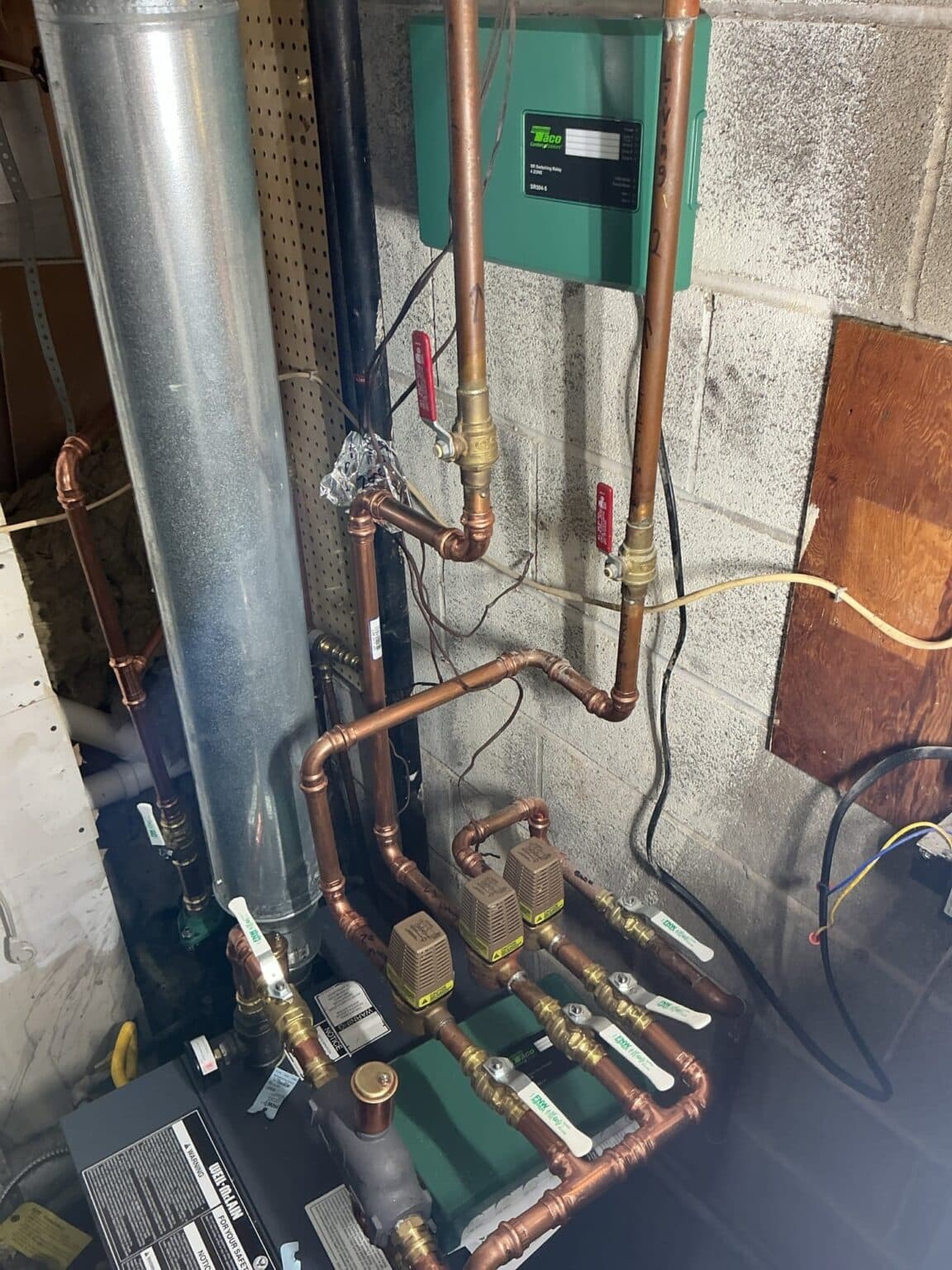
Natural gas heats close to six in ten owner homes and electricity about one in three; oil and propane together cover the rest, a few hundred houses with a tank outside. So a boiler here is usually gas, sometimes propane, and the oil ones are outside our work. In a house this size the boiler room is often a basement that was finished later, which makes access the first question: a wall-hung condensing boiler at $12,782 to $16,500 installed can give back floor space a finished basement wants.
On the larger lots west of Ox Road, many houses draw from private wells. A boiler’s fill valve tops up the loop from the house’s water line and holds the loop at its own low pressure, so a well’s ups and downs shouldn’t reach the boiler gauge; when they do, the fill valve is passing water it shouldn’t. We test well water too, so mention the well when you book.
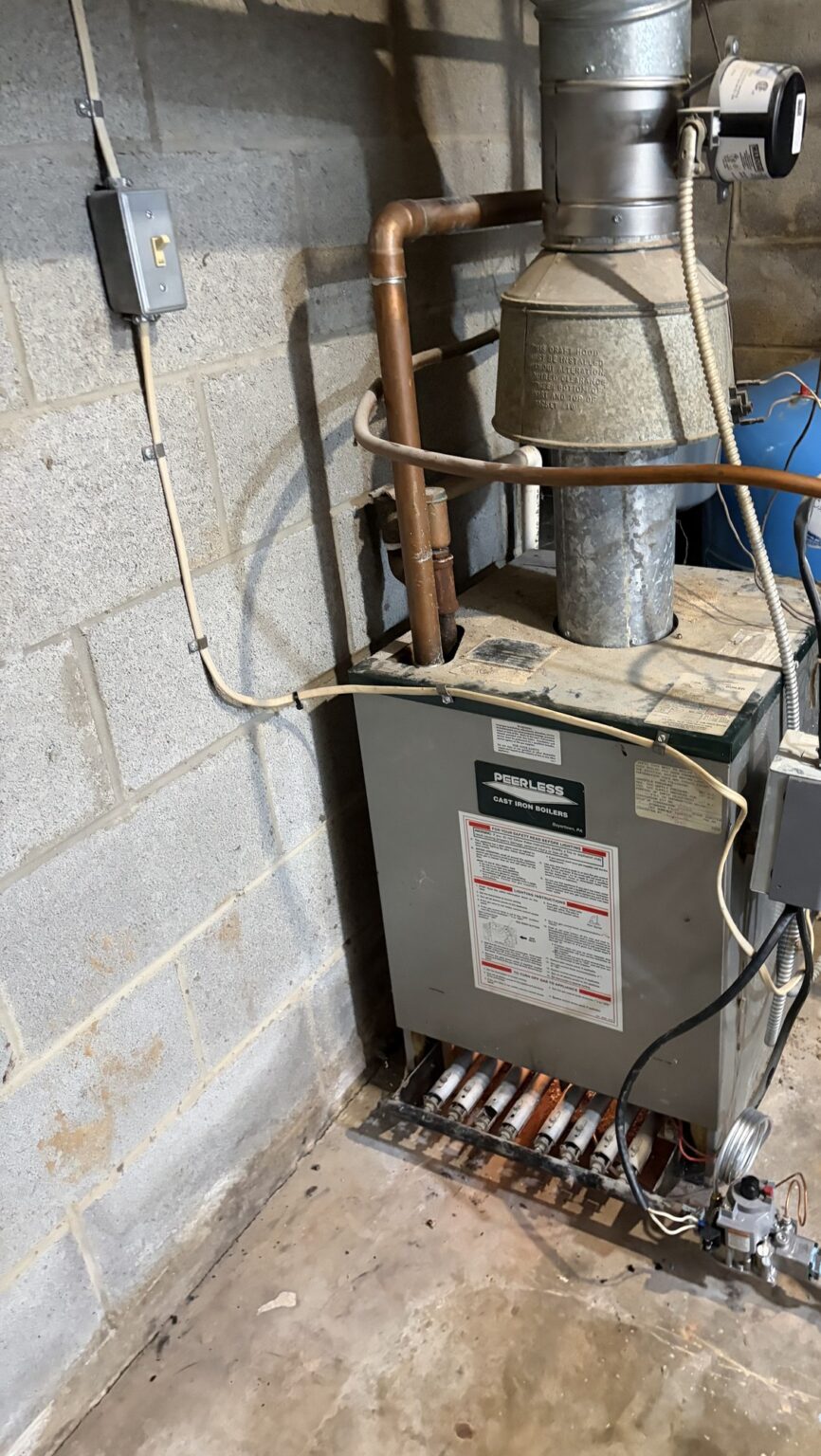
Very few homes here are rented, so the owner usually decides between repair and replacement. A tired expansion tank or a fill valve that won’t shut is a repair; a cast iron boiler with a leaking section is a replacement, kept on its chimney or swapped for a condensing one through the wall. Replacing a gas boiler in Fairfax County takes a permit even like for like, and the County wants a chimney vent certification with any fuel-burning swap. County Fire and Rescue asks for gas appliances to be inspected every fall and a CO alarm on every floor.