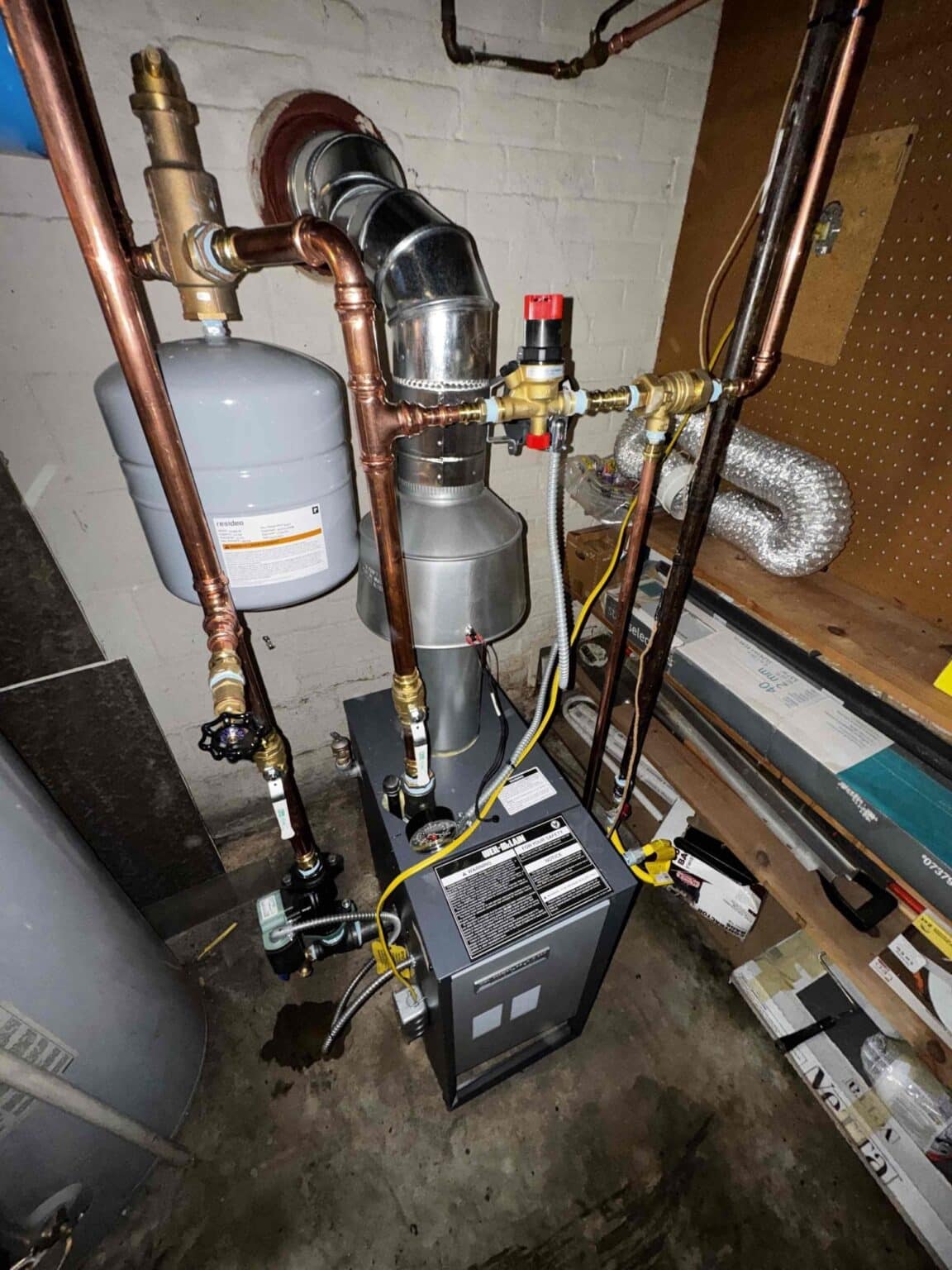
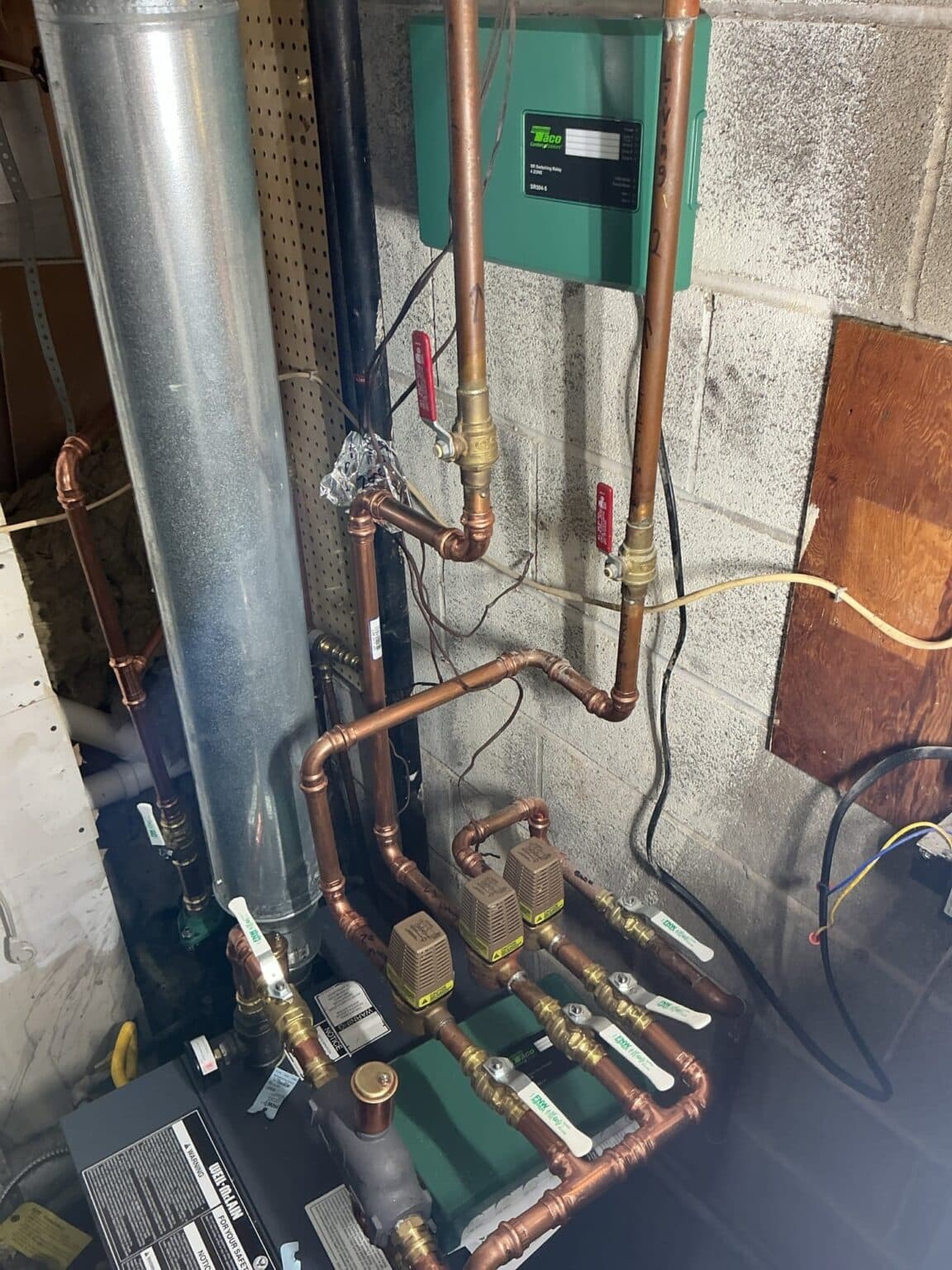
The City of Alexandria is where our boiler work happens. Its median owner home went up in 1970, and about six in ten of those homes were built before 1980. Those houses usually heat with radiators or baseboard. On the Fairfax County side, the median home is from 1986, and boilers are rare. We still service them in Kingstowne or Franconia if you have one, but most county addresses use forced air furnaces or heat pumps.
Inside the City, more than half the homes are in apartment or condo buildings. In those, the boiler is often a shared building asset, not yours. But in the detached homes and townhouses, especially in Old Town or the Parker-Gray area, the boiler is likely in a basement or a tight utility closet. Space is tight there. A wall-hung condensing boiler or combi unit fits better in those spots than a large floor-standing cast iron unit, freeing up floor space for storage or access.
Venting matters in the City. Trade a cast iron boiler for a condensing one and the vent moves from the chimney to a white plastic pipe through the wall. In Old Town, the Board of Architectural Review only reviews changes you can see from a public street or alley. A vent under a cubic foot, painted to match the wall, can usually get staff approval, and anything bigger or more visible goes to the Board. Houses in Parker-Gray follow their own residential guide. A cast iron replacement stays on the chimney, which skips that question, but the chimney has to be sound and may need a liner.
The City’s water comes from Virginia American Water, with hardness ranging from 78 to 191 ppm. That is moderate to hard. In a hot water boiler loop, the water is closed and filled once, so hardness does not scale the heat exchanger the way it does in an open system. The bigger issue is the expansion tank. If it loses its air charge, the pressure climbs, and the relief valve drips. That is a common repair in the City’s older radiator systems, and the $99 diagnostic identifies it before you replace the boiler.