A lot of the City of Alexandria was built before central air was. The median owner’s home there was built in 1970, and more than half the City’s homes are in condo and apartment buildings. In the older rowhouses and radiator houses, the air handler went wherever it fit, usually the attic or a top-floor closet, with the ducts squeezed into soffits. An attic unit sweats all summer above a bedroom ceiling, so its drain line, the pan underneath and the float switch that cuts the cooling before that pan overflows are where a City tune-up starts.
Plenty of City condensers sit on the roof, and the City’s zoning ordinance says anything up there has to be concealed by, or built from, the same kind of materials as the building’s walls. A screen built tight around a condenser can leave it breathing its own hot exhaust on the afternoons you need it most, so on a rooftop unit the tech checks the room around it as well as the coil. Tell us when you book how to get up there: a hatch, a ladder or the building’s key.
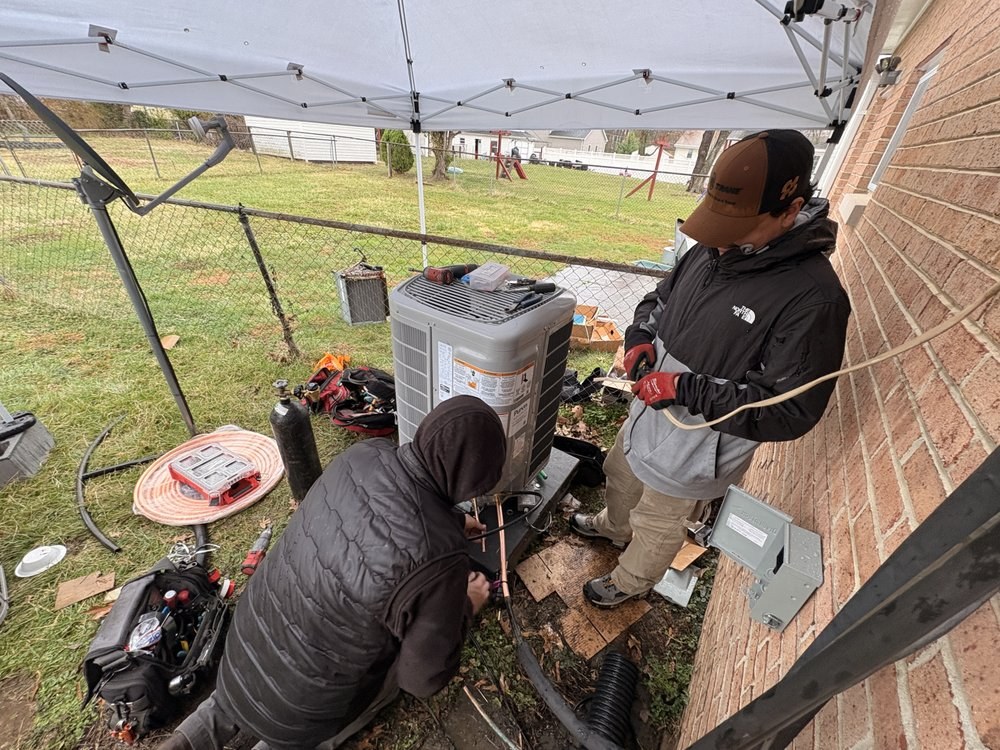
In Kingstowne, on the Fairfax County side, the median owner’s home went up in 1994, townhouses make up close to half its homes, and roughly 7 in 10 owners heat with gas. So the coil usually sits on a furnace in the basement or a utility closet, and the air conditioner rests on a pad behind the house, an arm’s length from the neighbor’s, packed with thirty-odd summers of clippings. Fort Hunt, Rose Hill and Hayfield run the same pairing in older single-family houses.
Franconia and Woodlawn are the exception. More than half the homeowners in each heat with electricity, which on these streets generally means a heat pump, and about half of Franconia’s homes are townhouses from the 1980s and 90s, so those heat pumps stand in the same rows. The spring visit is for cooling; come fall, the heating half earns a visit of its own.