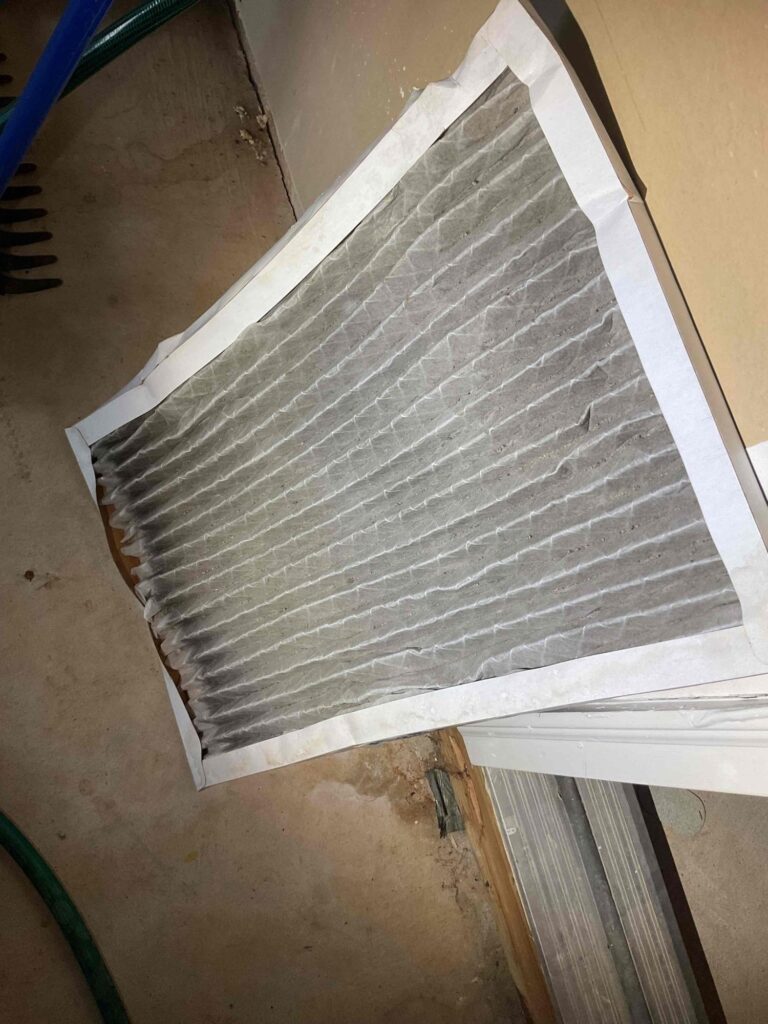
Close to three in ten owner homes inside the Town of Leesburg, about 3,400, heat with electricity, which here mostly means a heat pump whose outdoor unit never got the winter off. It ran through every cold snap, frosting and defrosting, while leaves and grit settled against the base of the coil. The day you switch over to cooling, that coil is where the house dumps its summer heat, and it starts the season partly blocked.
An air conditioner paired with a gas furnace, the setup in most of the rest of town, sat idle all winter, and its usual trouble is the other kind: a drain line dry since October, sometimes a nest in the electrical box, last fall’s leaves in the coil. Townhouses are about 5,000 of the town’s homes, their condensers lined up close behind them, sometimes under a deck. Hemmed in by boards overhead or a fence beside it, a unit breathes its own hot exhaust back in, and the write-up says when the spot is the problem.
Downtown, the Old and Historic District’s design guidelines ask for outdoor units at the side or rear of a house, screened from the street with plantings or fencing. So a downtown condenser is often tucked behind boxwood, lattice or a board fence. It pulls air in through its sides and throws it out the top, and a screen grown or built too close makes it rebreathe its own heat. Trim the plantings back before the visit. Moving a fence there is exterior work, and the Town’s preservation staff are the ones to ask first.
Lansdowne, outside the town limits, built most of its housing in one decade: about 3,500 of its 4,900 homes went up from 2000 to 2009. Close to four in ten are in condo and apartment buildings, where your outdoor unit may share a pad with the neighbors’. Ask the association which one is yours, and whether the closet air handler is yours to keep up, before the visit.