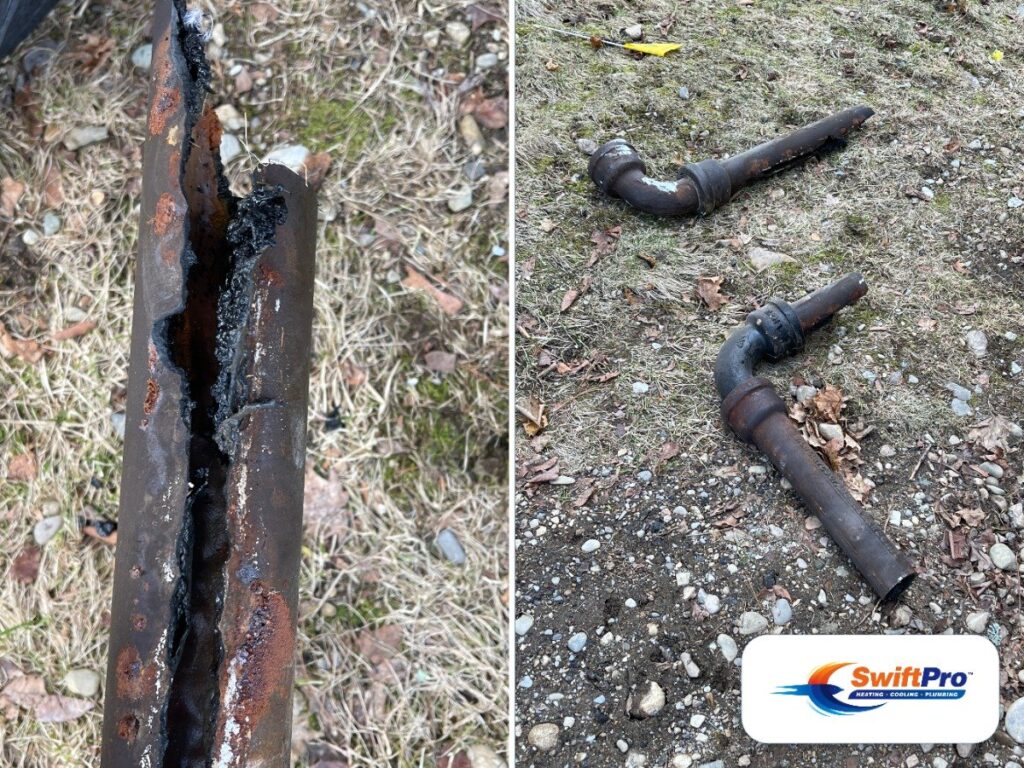
Leesburg was platted in 1758, and the streets of that plan, King, Market, North and Cornwall among them, still make up the grid downtown, lined today with mature trees, the Town’s Tree Commission says. A sewer line under one of the old houses there, if nobody has replaced it, is usually cast iron or clay with a joint every few feet, and a big street tree has had decades to find the one that opened.
Fewer than one home in twenty in town went up before 1960, but close to one in four predates 1980. Houses from the 1950s and 60s can drain through Orangeburg, a fiber pipe soaked in coal tar that sags out of round with age, and a cutting head pushed blind through a soft stretch can tear it apart.
Most of Leesburg is younger: about four in ten homes went up between 1980 and 1999 and more than a third since 2000, so most laterals in town are plastic, and plastic’s weak spots are its joints. The Town’s standards ask for sewer joints designed to keep roots and groundwater out; the camera shows whether yours still do. The Town is even moving its own main out of the Exeter dam embankment, a line it calls nearly forty years old.
Lansdowne shares the 20176 mail but sits outside the town limits, on Loudoun Water’s sewer, and nearly nine in ten of its homes went up since 2000. Close to four in ten are in condo or apartment buildings, where one building line often carries every unit’s drains and the association decides when a camera goes in.