Start with where your line goes. Fairfax County’s sewer map leaves about 4,100 of the 6,120 home addresses in 22066 outside the area it plans to sewer, so those houses drain to a septic tank on their own lot: the village around Georgetown Pike and Walker Road, and all of Lexington Estates, Hickory Creek, Lockmeade and Oliver Estates. There our camera runs from the house to the tank’s inlet and stops. The tank, its pumping and the drainfield are a septic contractor’s work; SwiftPro doesn’t do septic.
The county’s septic code shapes that inspection. It wants a cleanout brought up to the ground every 50 to 60 feet, so a long run across a big lot should give the camera more than one way in. Within 50 feet of a private well the line has to be pressure-tested water pipe, and never closer than 10 feet. Nearly one in four wells on the Health Department’s county map sit inside the Great Falls Census area, so the well and the tank line often share a yard.
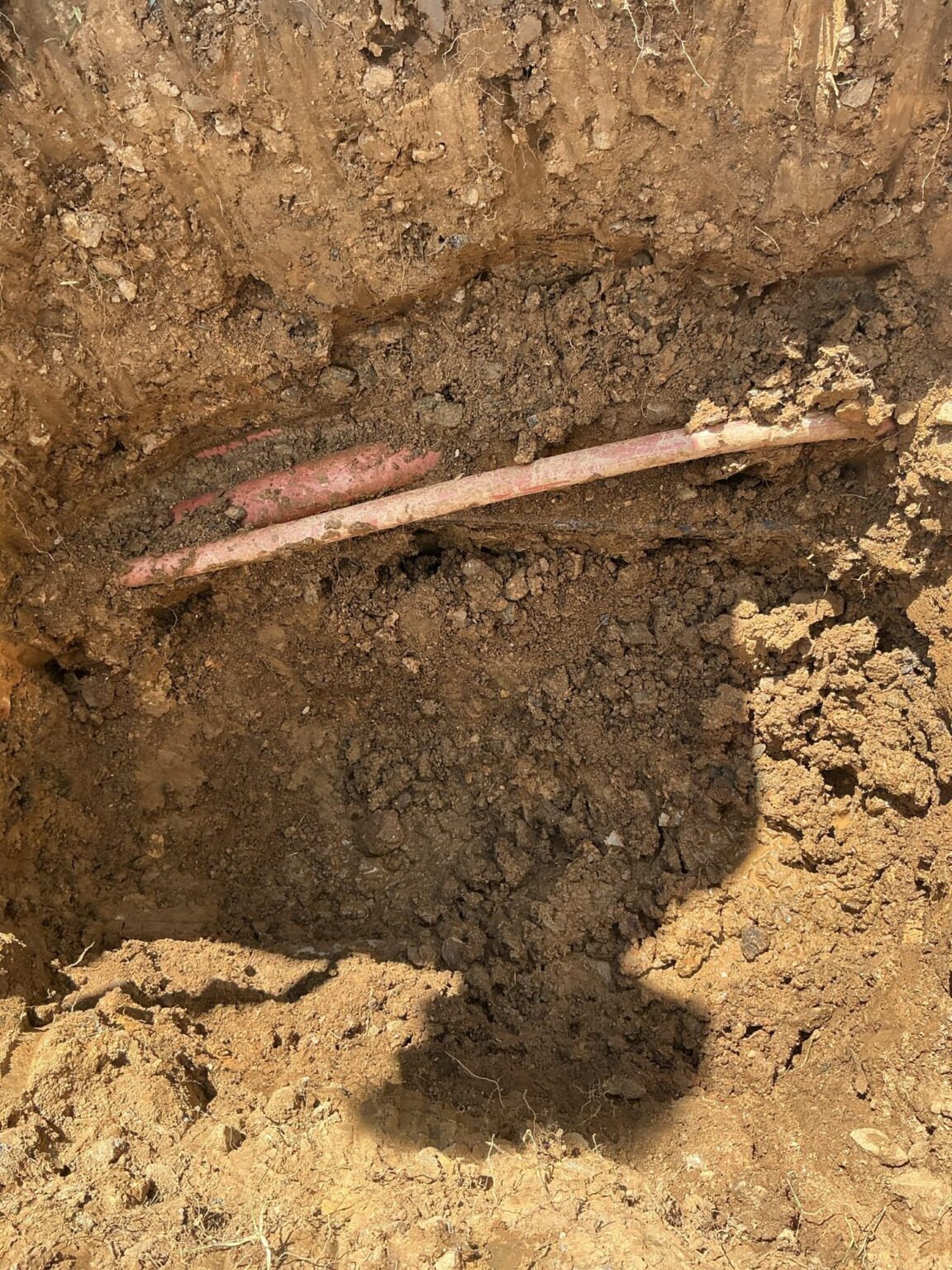
The pipe follows the decade. County records put most of Oliver Estates in the mid-1960s, and a line that age can be Orangeburg, wood fiber pressed with pitch, which sags out of round; today’s septic code bans bituminous fiber pipe outright. Lexington Estates, Hickory Creek and Lockmeade went up mostly in the 1970s, when cast iron, clay and early plastic were all in use. The typical owner’s home here dates from 1986, and in a house that young the line is usually plastic, so the camera hunts for a sag, not a crack.
The other third drains to the county sewer: Holly Knoll and Locust Hill, mostly from the late 1970s and 80s, and Great Falls West from the mid-1990s. There the owner keeps up the private line from the house to the county main, connection included. Under trees this old, roots are the usual trouble. If a plumber cuts them out of your lateral, the county asks you to call its Customer Communications Center so it can clean its main too.