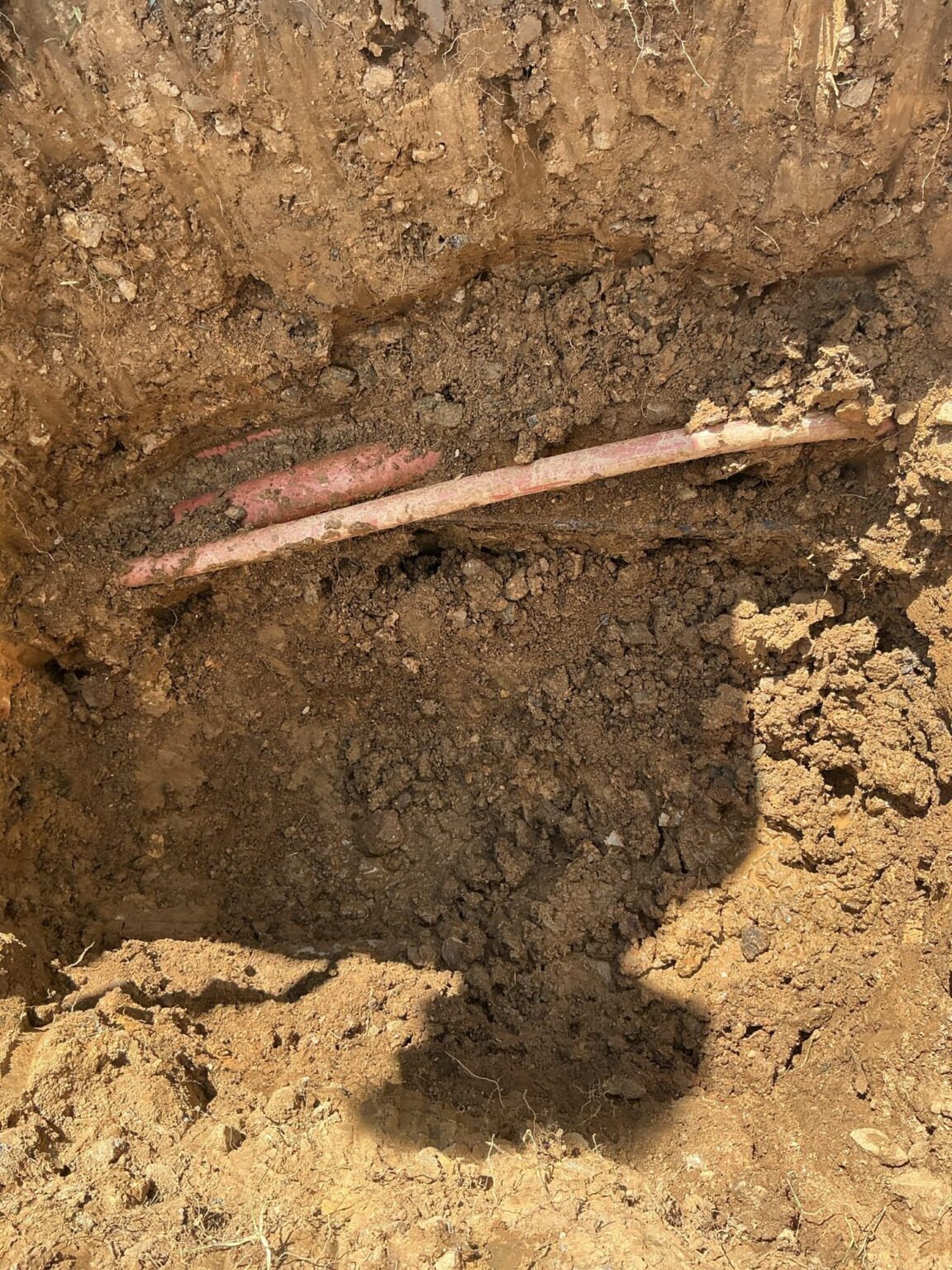
Fauquier County keeps public sewer inside its designated service districts, and Orlean isn’t one of them. Flush a toilet here and the water leaves the foundation in a pipe you own and ends in a septic tank you also own, a short walk across the yard. That pipe is what our camera goes down. The tank and the drainfield past it belong to a septic contractor; SwiftPro does no septic work.
Most Orlean homes sit outside the village. The Census block group centered on it covers about 26 square miles and counts 576 homes, every one detached, with a median build year of 1982, and the 1990s were its busiest decade. A drain from those years is most likely plastic, which doesn’t rot, so when one acts up the camera is usually hunting for a joint that came apart or a stretch that sank.
The ground explains much of that. The County’s village plan describes clay pockets that swell wet and shrink dry, and bedrock that can sit close to the surface on the steep slopes along Thumb Run and Cabin Branch. Moving clay can nudge a joint out of line, and rock under the lawn makes every dig slow and expensive, so finding the exact spot before a shovel goes in is worth more here than in a suburb.
The oldest village houses are older than any drain in them: log, stone and frame from about 1795 on, with plumbing added later, often in rounds. The Methodist church, finished in 1883, got a kitchen and bathroom in a full basement when it was raised in the early 1990s. A line added in stages can be cast iron in one stretch, clay or Orangeburg fiber pipe in the next and PVC at the end, and the camera names each before a cable goes through.