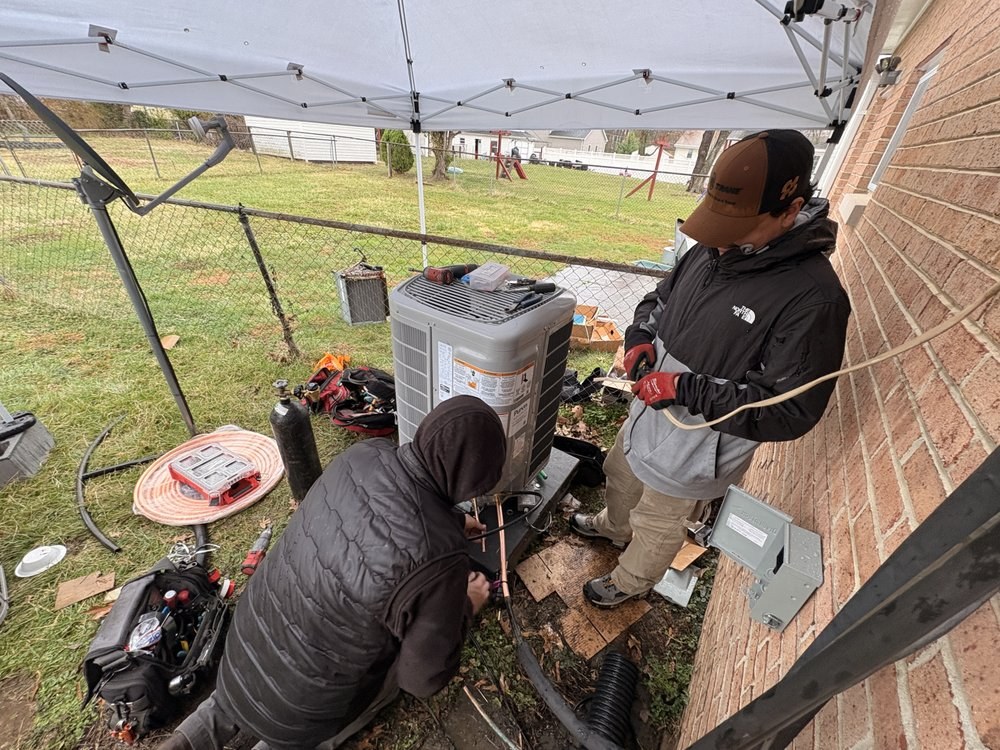
The Census counts Orlean inside Marshall’s ZIP, 20115, where 64 percent of owner homes are heated electrically and natural gas heats fewer than 1 in 100. On a farm road, electric heat usually means a heat pump, the same box out back that cools the house. NOAA’s thirty-year normals from the co-op station 3 miles southeast of Warrenton, 12 miles away, show how lopsided its year is: degree days run about 4,685 for heating to about 1,018 for cooling.
Summer is shorter, and it still bites: that station averages a July high of about 85 and some three weeks’ worth of 90 degree days a year. A run capacitor that spent the winter starting the compressor through defrost cycles is often the first part to quit on an afternoon like that, $240 to $370 to replace.
Wind does the damage here. The federal storm record for June 22, 2022 describes gusts estimated at 80 to 90 miles an hour on a path running to Orlean: thousands of trees down, shingles and siding stripped, and one resident near the village trapped for several hours, uninjured. Another tree came down at Cabin Branch Road and Cliff Mills Road on June 12, 2026. Afterward, walk around the unit before you switch the cooling on again: limbs through the top grille, fins mashed flat on the windward face, the cabinet knocked crooked on its pad. Find any of that and keep the breaker off. Call us after the storm, and we’ll look over everything before it restarts.
Out in Orlean’s rolling farmland, a condenser beside a hayfield or a pasture breathes in chaff, seed fluff and dust all summer, and matted fins starve the coil of air. Keep grass cut two feet back, and after haying, rinse the fins gently from the inside out with the power off. The indoor blower wheel is the other half of that airflow, $300 to $440 to pull and clean.