The closest long-running weather station to Rectortown sits outside Warrenton at 500 feet, about the village’s own 514. NOAA’s 1991 to 2020 normals there put the average July afternoon near 85 degrees, with about 21 days a year at 90 or hotter. Mount Weather, up on the Blue Ridge ten miles north, logs about a sixth less cooling load. Down in the valley the outdoor unit runs longer, and the hottest week is usually when a weak capacitor quits.
In the 20115 ZIP that holds most Rectortown homes, close to two in three owner homes heat with electricity, and around here that usually means a heat pump. The compressor and refrigerant circuit cooling the house in August will heat it in January, so a summer repair done right is also the winter’s repair.
The village is older than any air conditioner. The state’s historic register dates 25 of its properties to 1880 through 1910, mostly two-story frame houses, many still under standing-seam metal roofs. In those the ductwork usually ended up in the attic, right under that metal, where an August afternoon heats the ducts before the cold air reaches a bedroom. A crushed run up there costs cooling every hour.
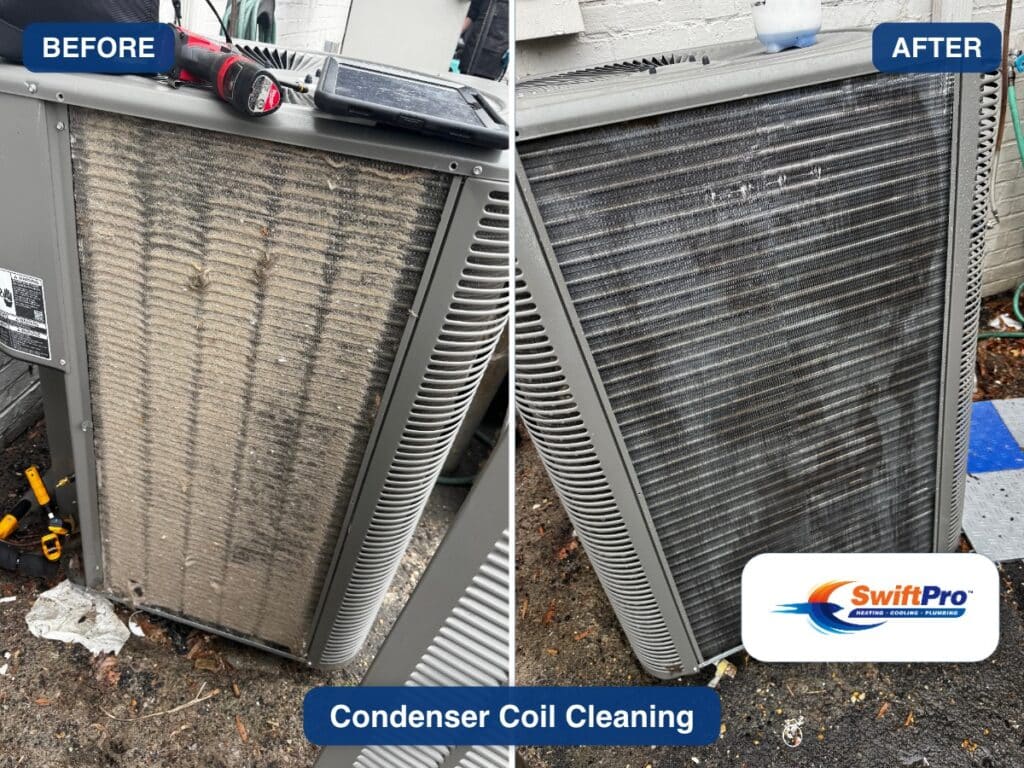
Summer storms are part of the season here. In July 2025 thunderstorm winds brought a large tree down where Rectortown Road meets Frogtown Road, just south of the village, and in June 2022 an 80 to 90 mph storm hit the Delaplane, Marshall and Ashville areas around it. After one, look at the outdoor unit before switching it back on: limbs or leaves packed against the coil, a tripped breaker. Call us after a storm and we’ll check it all, outdoor unit to drain line, priced before any repair.