Fairfax County’s tax records put the middle Great Falls house at about 3,700 square feet above ground, and that’s before the basement, which nine in ten of them have. One air conditioner can’t carry that. A house that size is usually zoned: one system for the basement and main floor, another in the attic for the bedrooms, sometimes a third for a finished lower level or an addition. Each has its own outdoor unit, so when one quits, the whole house doesn’t go warm. One end of it does.
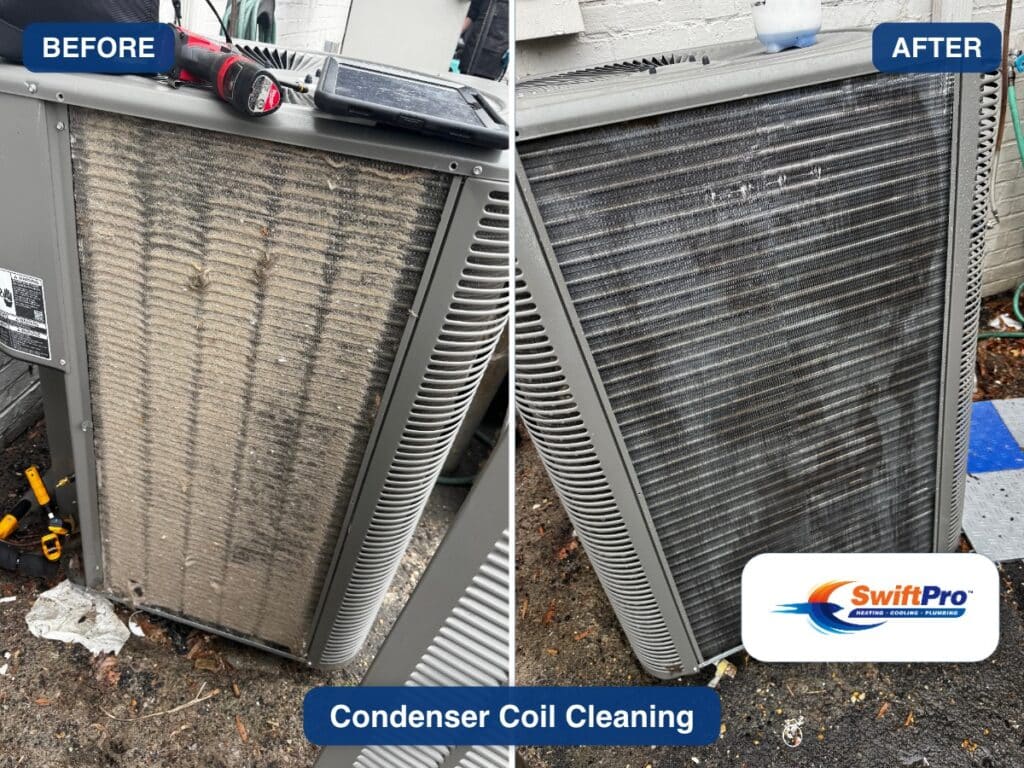
Then there are the trees. The county’s own plan for this part of Fairfax says it plainly: Great Falls has many large and old trees. A condenser tucked under them pulls in seed fluff in spring and leaves in the fall, and the coil mats over until the unit can’t shed its heat. It runs hot, and running hot is hard on the run capacitor, which is $240 to $370 to replace. Before you call, switch it off at the disconnect and look at the fins. If they’re furred over, a gentle rinse with a garden hose may be all it needs.
What kind of system you have depends on the fuel, and Great Falls has four. A little under half the owner homes burn natural gas, and about four in ten heat with electricity, which usually means a heat pump that works all winter too. About one in seven burn propane or heating oil, close to five times the share across the county. In those houses the cooling is a separate split system, a condenser outside and a coil on the furnace or an air handler in the attic, and it breaks the same way central air breaks anywhere.
Half the homes here went up in the 1970s and 80s, so most are on their second or third air conditioner. A unit put in before 2010 is probably charged with R-22, the old refrigerant nobody makes anymore, and topping one up only buys you a summer. If yours is that age and leaking, put the replacement number next to the $1,850 to $2,700 leak repair before you choose.