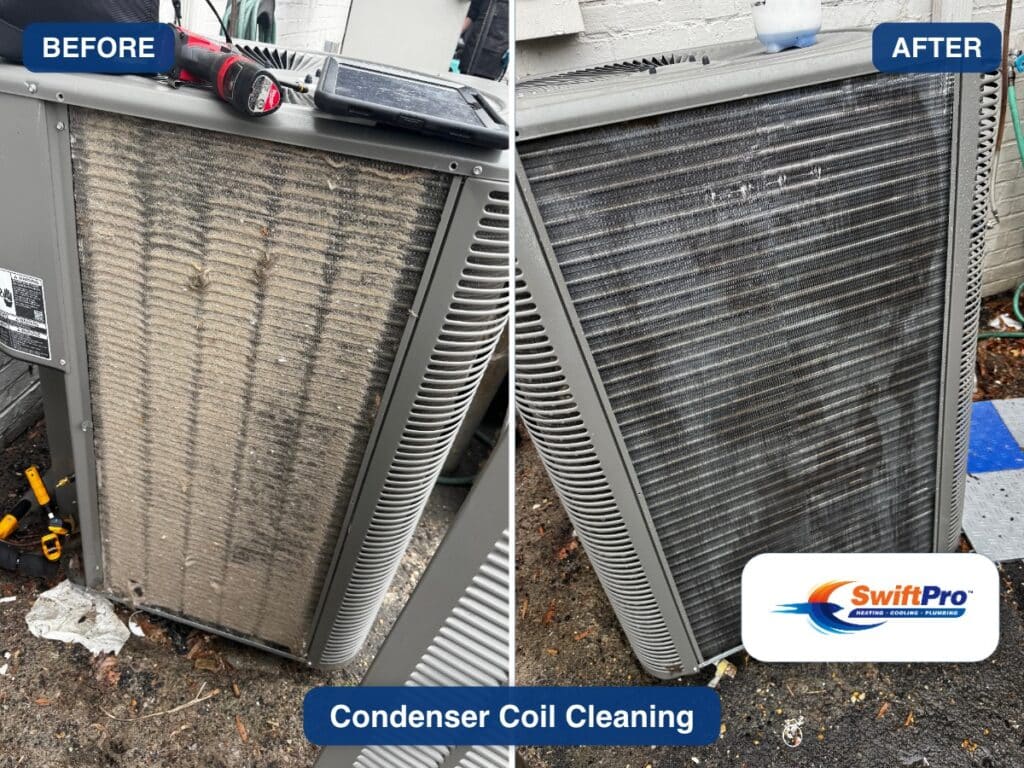
In Linton Hall, the Census place covering roughly two thirds of 20136, about three homes in four went up after 2000, and the median owner home in 2004. So the outdoor unit that came with a typical Bristow house passed twenty a couple of summers ago. Plenty have been replaced once already. Plenty haven’t, and on those the label plate on the side of the condenser is the first thing worth reading, because it carries the year it was built and the refrigerant inside.
That refrigerant line matters more here than in most towns. Equipment built before 2010 mostly ran R-22, and building in Bristow carried on straight through the switch to R-410A, so two houses on one street can hold two different refrigerants. On R-410A a leak is a repair question. On R-22 it’s a budget question: the refrigerant has been out of production since 2020, a recharge means reclaimed stock, and a system past twenty rarely earns that.
Two in three homes here are detached, and a two-story single-family house from those years often carries two systems: one for the main floors and one for the bedrooms, with its air handler up in the attic. In July the attic unit works hardest, and its condensate line runs above a finished ceiling. When only the upstairs is warm, that second system is usually the one to look at, not the whole house.
The county paperwork is light. Prince William asks for no permit to repair an air conditioner with replacement parts, or to swap an outdoor unit or a heat pump for the same type in the same spot. A new location is a different story in an HOA neighborhood. Victory Lakes, with 609 townhouses among its 1,296 homes, says owners may need an Application for Exterior Modification reviewed by its Covenants Committee before changing the outside of the house, and a condenser on a new pad is that kind of change.