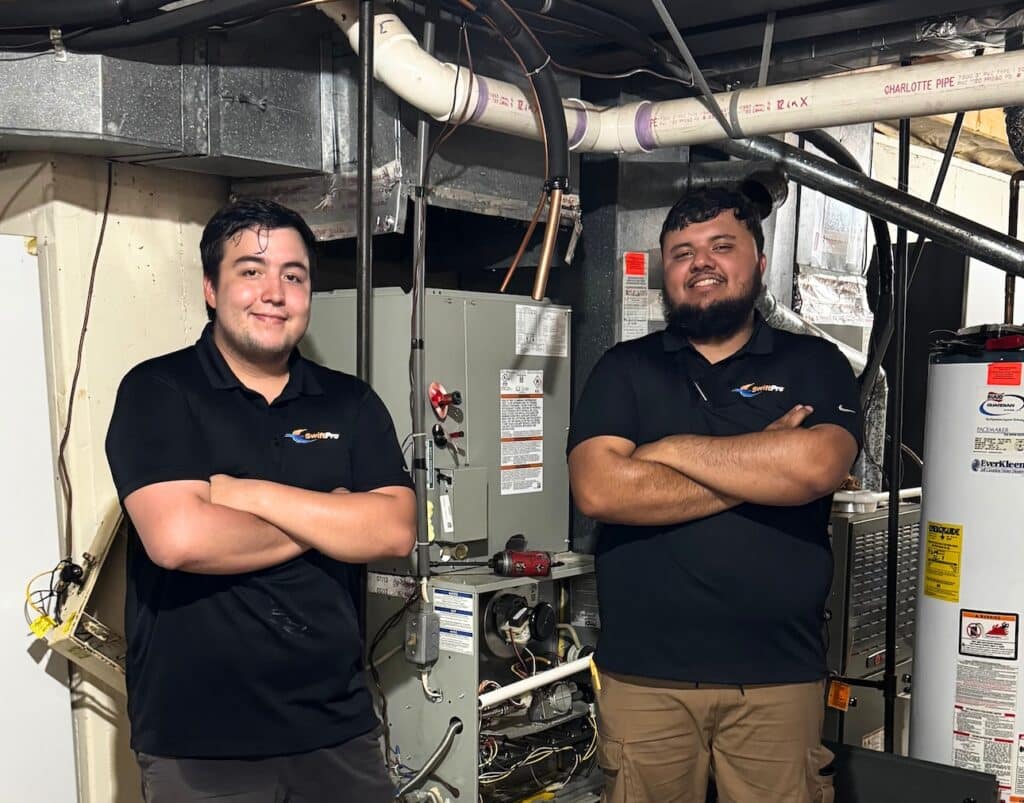
In Linton Hall, the Census place that takes in about two thirds of 20136, gas heats close to nine in ten owner homes. Electricity heats about one in nine, and a little over one in a hundred burns propane. The median home there was built in 2004, so the gas furnace on a typical Bristow call either came with the house or replaced the one that did, and both of those are old enough now to have a history worth asking about.
How it vents matters. A lot of builder furnaces from those years were 80 percent efficiency models that sent their exhaust up a metal flue shared with the gas water heater. Swap one for a high-efficiency furnace, which vents through plastic pipe out a side wall, and the water heater is left alone on a flue sized for two appliances, which can be too big for it to draw well. That’s worth settling while the new furnace is still a quote. Prince William County wants a permit for any gas furnace replacement, even like for like.
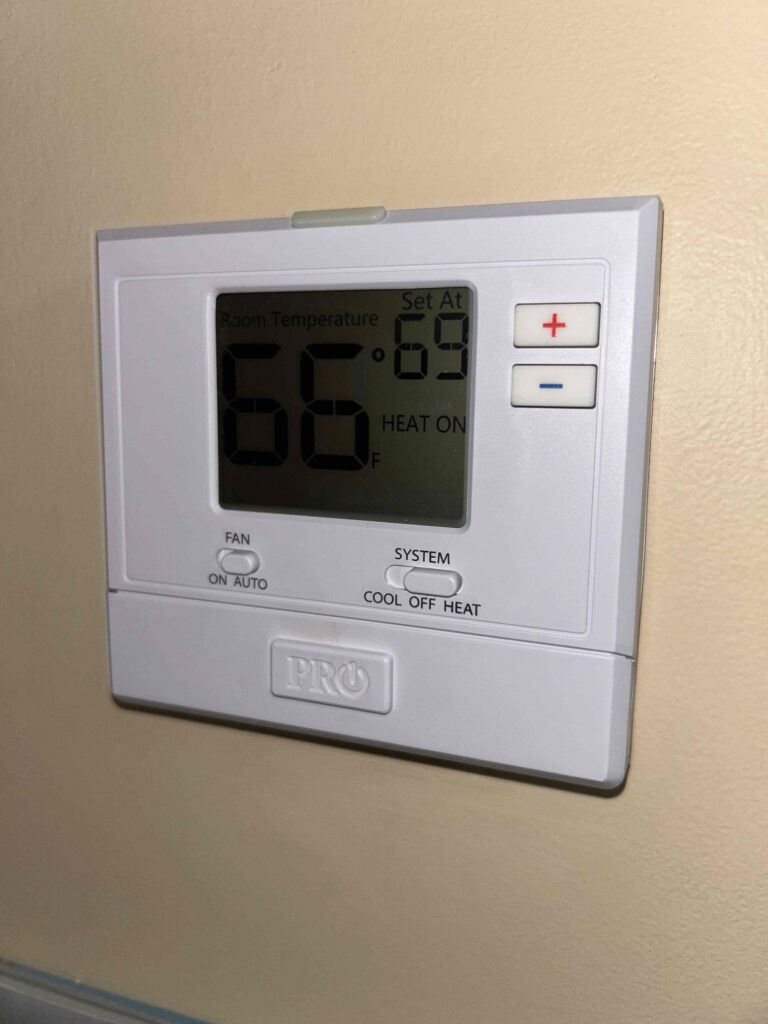
About one Bristow home in nine heats with electricity, which in houses this young usually means a heat pump. Its outdoor unit works every month of the year, so in one of those houses a July cooling problem and a January heating problem are often the same part. On a frosty morning, the outdoor unit going quiet and steaming for a few minutes is its defrost cycle doing its job. Lukewarm air from the registers all afternoon is not.
About three in ten homes here are townhouses, and Victory Lakes alone has 609 of them. A three-level townhouse runs warm on top and cool in the basement with nothing wrong at all, because heat rises and one furnace serves every floor. Out toward Brentsville, outside the Census place, nobody publishes a count of what heats those houses, and the fuel can be anything from propane to a heat pump; tell us what’s in the basement when you call.