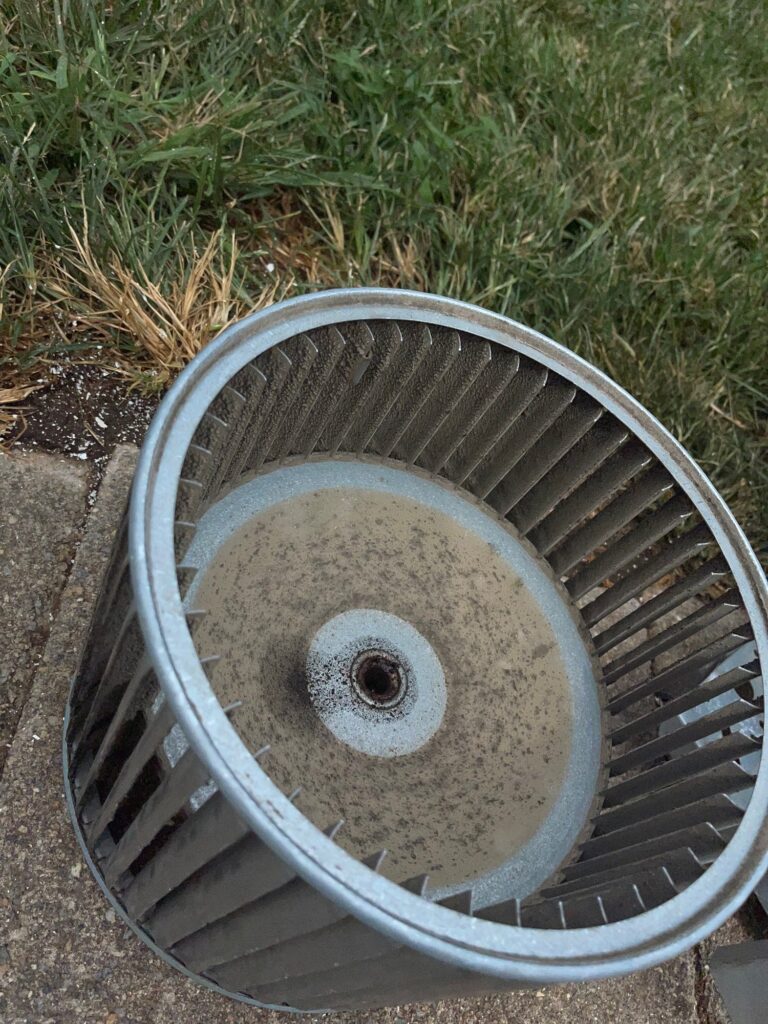
Electric heat leads by a mile here: about seven in ten owner homes in the village and more than half across the whole ZIP. Most of it is a heat pump with electric strips behind it for the coldest hours. When one can’t keep up, the strips quietly take over, the house stays warm and the bill jumps. The usual reasons are a failed defrost board, a stuck reversing valve, a slow refrigerant leak or a coil packed with debris.
Propane is the second fuel, about two homes in ten, piped from a tank in the yard or one buried beside the house. A propane furnace has the same parts as a gas one, flame sensor, igniter, inducer, pressure switch, set up for a different gas pressure. It also has a failure gas customers never see: an empty tank.
Piped natural gas comes third, 459 owner homes across 20181 by the Census count, nearly all of them out past the village. Those furnaces take the same repairs as the propane ones, set for the lower pressure of the gas main. When any furnace finally gives out, Prince William County’s replacement guidelines skip plan review only when the new equipment burns the same fuel, so a switch to a heat pump gets reviewed as a change. The HVAC estimator prices a heat pump or a propane furnace first.
A winter storm out here can take the power, and with it the heat pump, the furnace blower and the well pump at once. If you have a generator, check that the furnace or air handler circuit is actually on it, not just the refrigerator and the well. Our Clifton heating guide goes through propane, wells and outages one town over.