Most Nokesville sewer lines never reach a public main. The County’s septic map lists 2,349 parcels with a 20181 address, where the pipe leaving the foundation runs to a tank in the yard. That pipe is what the camera is for: in through a cleanout and along the run to the tank’s inlet, the locator marking its route and depth on the grass. The tank, its baffles and the drainfield belong to a licensed septic contractor; SwiftPro does no septic work.
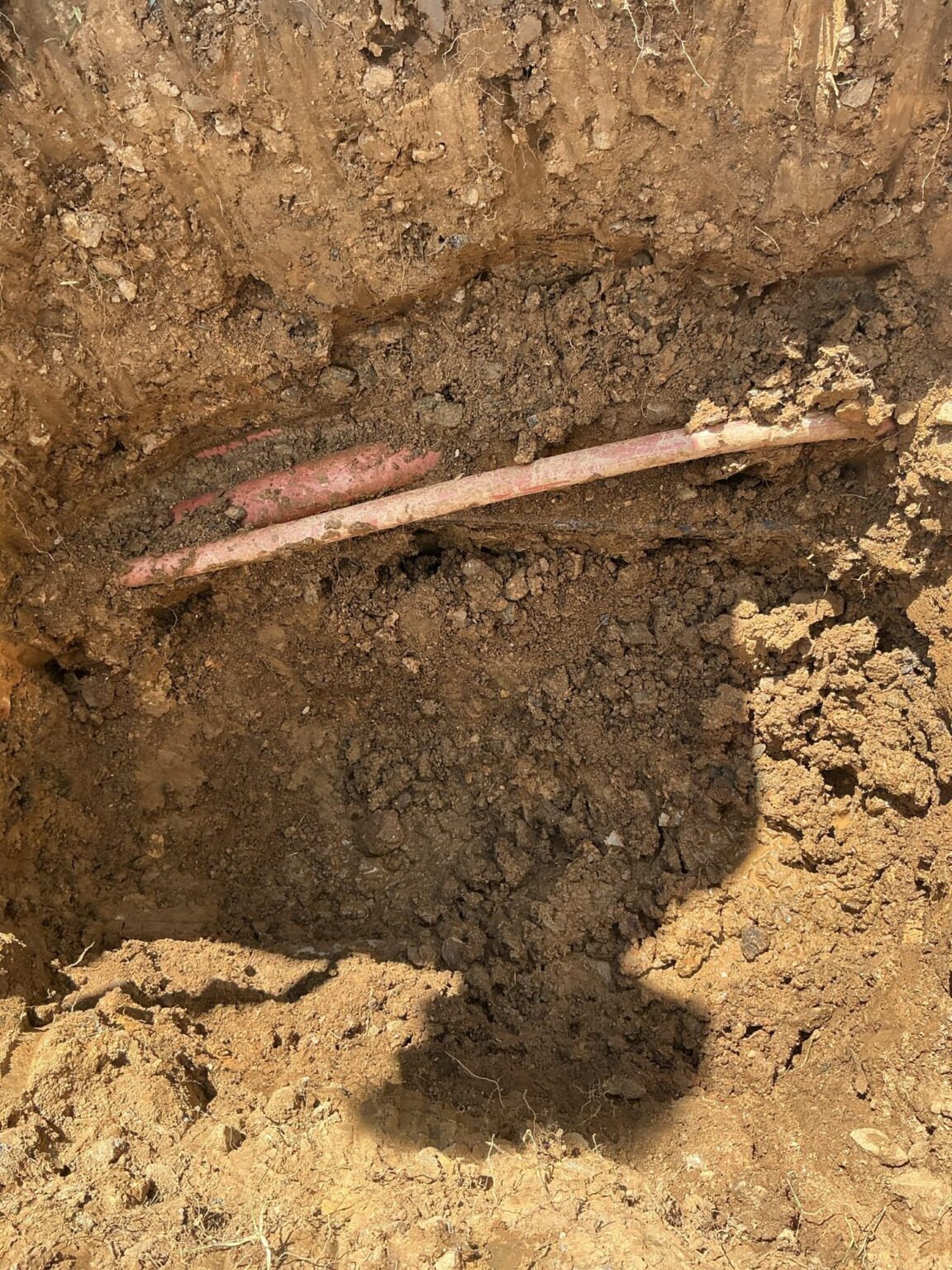
The pipe follows the age of the house. About six homes in ten across 20181 went up from 1980 on, so most runs to a tank are plastic. But about 470 homes in the ZIP predate 1960, close to four in ten in the village, and a line from then is often cast iron or clay, or from the late 1940s on, Orangeburg, tar paper pipe that slumps out of round. Under a farmhouse’s old shade trees, roots reach those joints years before a drain slows.
The village has public sewer, in two kinds. Along Fitzwater Drive, Prince William Water’s map dates the gravity main to 1969, mostly 8-inch clay pipe, and a house as old as that main may drain through a lateral just as old. On streets like Edmund Saul Court, Skylark Drive and Garman Drive, houses are on a low-pressure sewer instead, each with a grinder pump. There the camera’s part ends at the pump’s tank; past it, the line to the flush station is a pressure pipe about an inch and a half across.
At the north edge of the ZIP, Ashley Ridge went in on gravity sewer, its sections recorded from 2000 to 2002. A PVC line on Rain Slicker Place or Aqua View Court has had 25 years for its trench to settle and for trees planted with the houses to find a loose joint, so the camera there is hunting a sag that holds water, not rust.