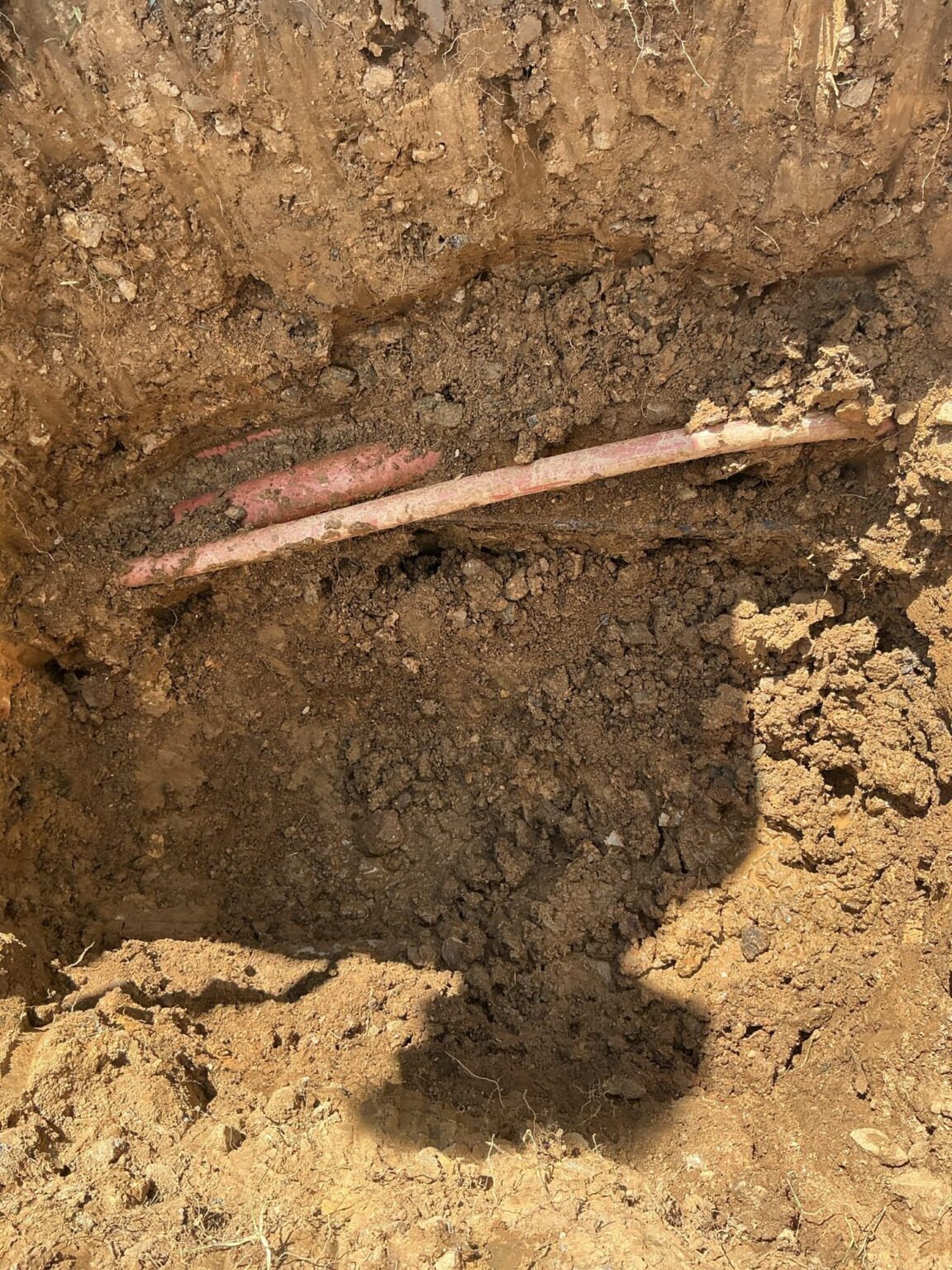
By the Census, the typical owner-occupied house in Arlington was built in 1960, the oldest median of any county or city in Northern Virginia, and about a third of all homes here predate that year. Plenty are far older: Maywood was built from 1909 to 1941, Lyon Park and Cherrydale filled in from the 1890s into the early 1950s, and Ashton Heights had its biggest burst of building from 1933 to 1940. Unless somebody has dug it up since, the lateral from a house that age is usually the clay or cast iron one it was built with, laid in short lengths with a joint at every one.
Those joints are where trouble starts. Arlington’s sewer staff list tree roots first among the things that block a line, and Arlington keeps planting: trees covered 35.2 percent of the county in 2023, up from 31.7 percent in 2014, with a County goal of at least 40. Good for the streets, and a reason to put a camera down an old clay lateral under a mature tree while it still drains fine.
Westover went up in phases from 1939 to 1957, into the years Orangeburg pipe was common: wood fiber and coal tar pitch, advertised to last fifty years and prone to going oval under the soil. Plenty of lines from then are cast iron instead, and the camera settles which before anyone runs a cutting head through it. The County also lists lines broken by construction crews and heavy equipment, worth remembering if the house next door was just torn down and rebuilt.
Most Arlington homes have no lateral of their own. More than half are in buildings of ten units or more, and in a condo community like Fairlington, 3,449 garden apartments and townhouses from 1942 to 1944, one line often serves several homes; the condo documents say whose it is. Close to six in ten Arlington households rent, and for them a camera on the line is the landlord’s call.