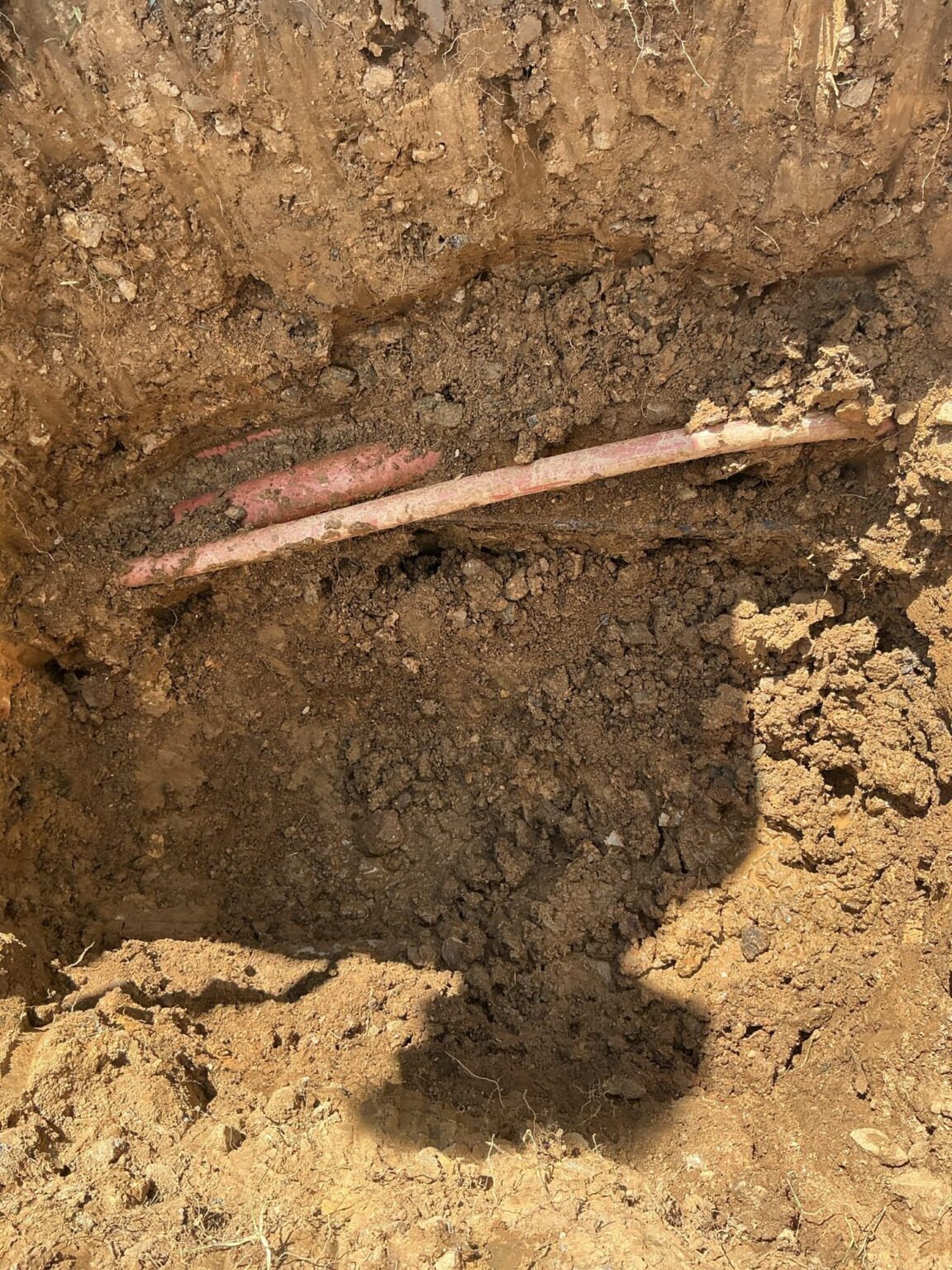
First question in Fairfax Station: where does your line end? The county Health Department shows active septic permits on about 3,000 properties with a 22039 address, close to half the houses, and nearly 9 in 10 of them sit west of Ox Road, along Hampton, Clara Barton, Havenner and Yates Ford. There the pipe leaving the house ends at a tank in the yard, not at a main under the street.
We run the camera from the cleanout to the tank’s inlet and stop there. SwiftPro does no septic work; the tank, its baffles and the drainfield go to a septic contractor the county licenses. The county’s septic code counts effluent backing up into the building sewer line as a malfunction, so on a slow septic house the camera tells you whether it’s the pipe or the tank.
Of the active septic permits, 83 percent were issued between 1970 and 1999, so most lines to a tank are plastic. Clay, cast iron and Orangeburg tar paper pipe belong mainly to the roughly 300 houses in 22039 built before 1970. The wooded lots add roots: the county’s septic code has maples, cottonwoods and willows cleared 10 feet back from a new drainfield for their water-loving roots, and those same roots find a pulled joint in the line.
Crosspointe is the sewered side. Its streets barely show up in the septic permits, so those houses drain to Fairfax County’s sewer, and they’re the youngest here: the typical owner’s house dates from 1993. Plastic runs all the way to the street, so a Crosspointe camera hunts for a belly where the trench settled, or a joint by the foundation that slipped apart.