Inside the Town of Clifton the sewer is far younger than the houses. The Town’s plan says they drained to septic fields and privies until the late 1960s, when Fairfax County laid lines through the wettest, most crowded part of town for a treatment plant that was never built, and settled on a pump and haul station instead. New development was kept off those lines, so a house on them most likely got its own pipe when those first hookups were made.
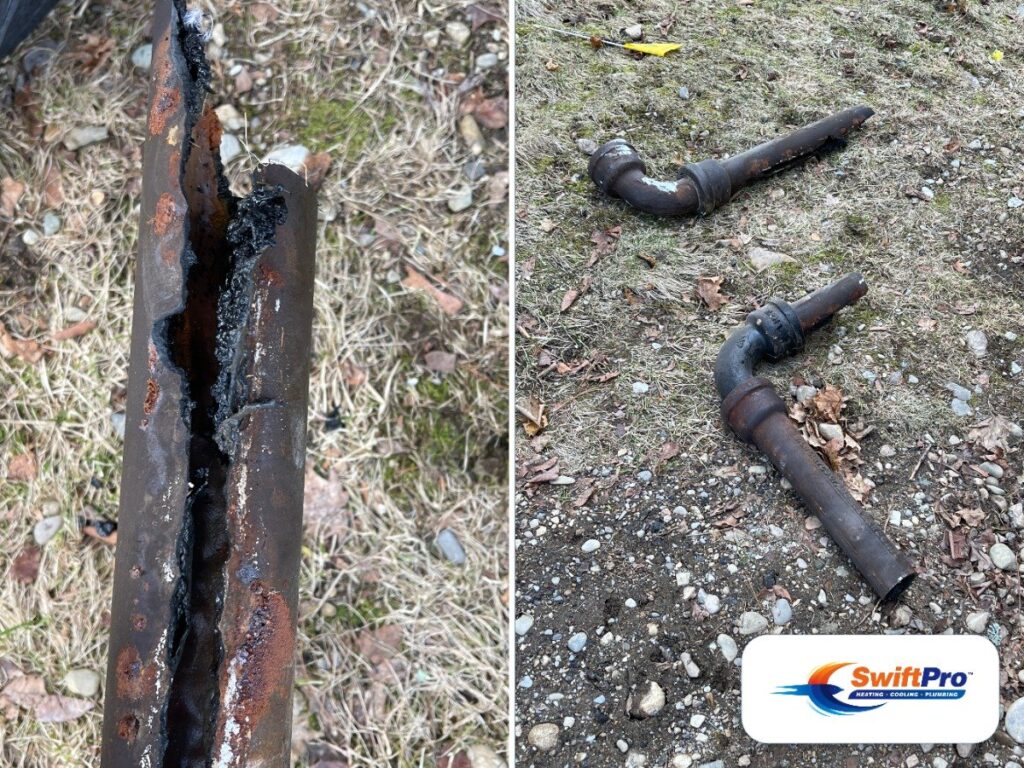
Pipe laid then may be cast iron, clay or Orangeburg, pressed tar paper pipe still sold in those years that sags out of round as it ages. The plan notes significant stands of mature forest in town, and roots find any joint that has opened. Whatever slips into a cracked line, groundwater included, rides to one concrete vault that gets emptied by truck.
Out on the five-acre lots along Clifton, Compton and Yates Ford Roads, the county’s plan for the Occoquan watershed keeps public sewer away. The pipe runs from the house to a septic tank, and that stretch is the camera’s. The tank and the drainfield belong to a licensed septic contractor, and SwiftPro does no septic work, so when the footage says the pipe is sound, that’s who we’ll tell you to call.
Around Springstone Drive and Union Mill Road the 1980s subdivisions drain to county sewer, and about nine in ten homes in that Census tract went up in that one decade. Pipe that age is plastic, so the camera there reads slope and joints more than the pipe itself.