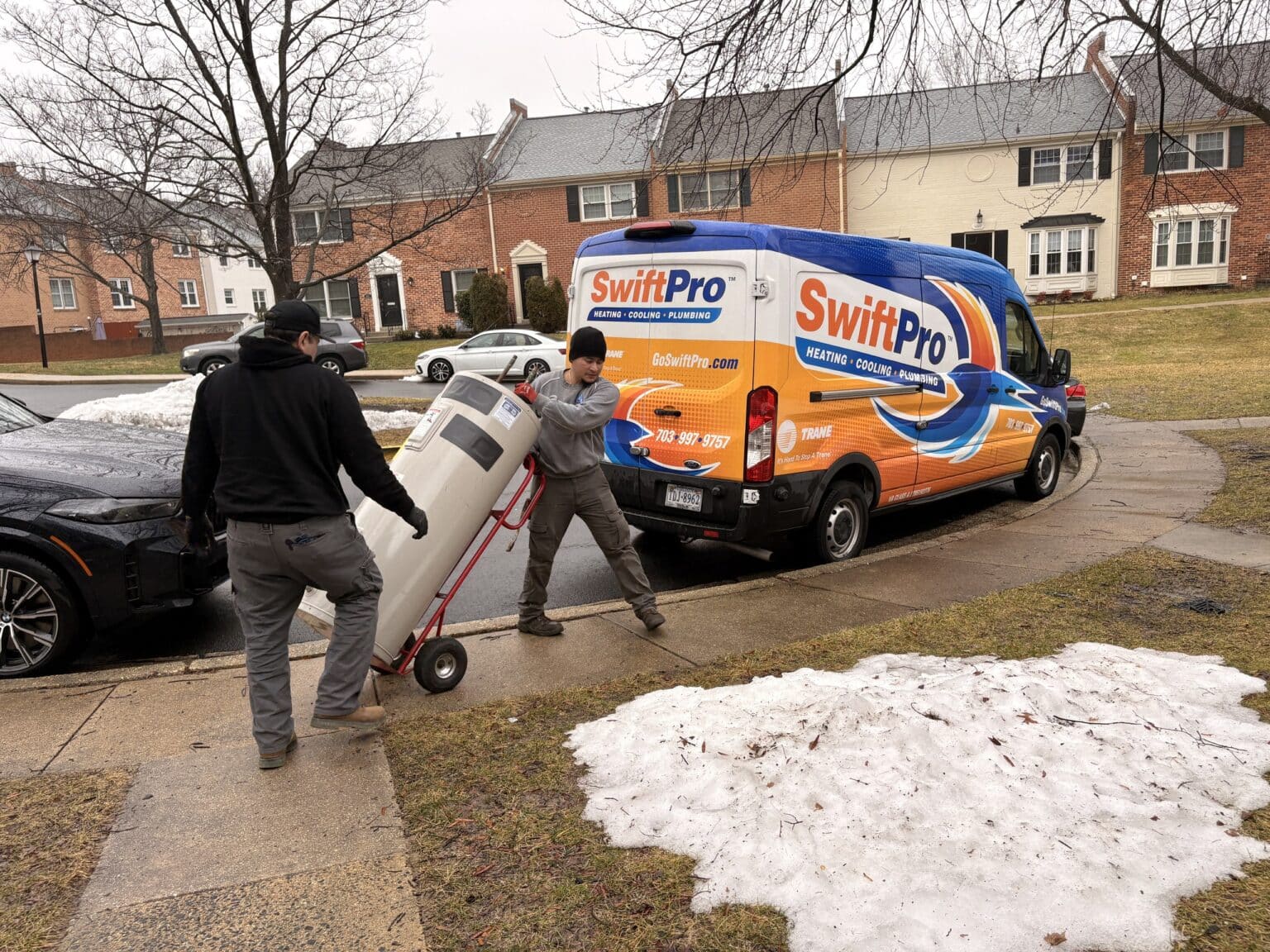
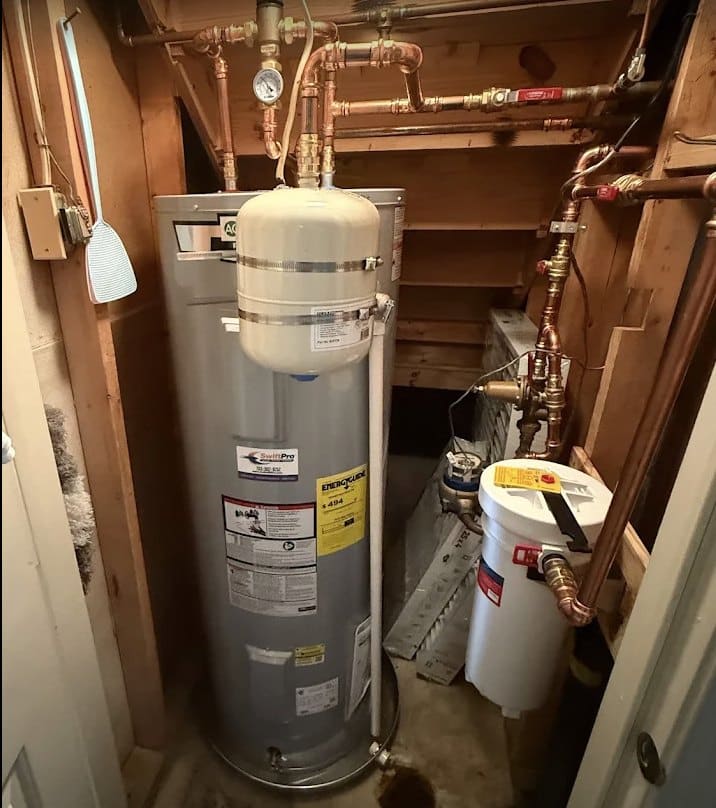
About half the owner homes in the Census tract around the town heat with electricity, and where nothing in the house burns fuel the water heater is usually electric too: $2,757 to $5,493 installed. Where the heat is propane the water heater often is too, and on our book a propane tank sits on the same row as natural gas, $3,379 to $5,485 on the flue you already have. The 1980s subdivisions around Springstone Drive are mostly natural gas, about 85 percent of owners, with the tank standing beside the furnace.
On a well, the water decides how hard the tank works. When the Town asked, the county Health Department called its well water relatively good, with some high iron, and iron settles in the bottom of a tank along with the rest of the sediment. If the hot water runs orange and the cold doesn’t, the tank itself is rusting; if both run orange, it’s the well, and the fix is treatment ahead of the heater, not a new heater.
Big houses change the sizing. Six in ten homes in 20124 have nine rooms or more, and a house that size often has a bath far from the tank or a soaking tub that empties a 50-gallon heater in one fill. Before we price one, we ask how many people shower in the morning and how far away the farthest bath is, then size the tank or the tankless unit to that.
Inside the town line, a gas or propane replacement still goes through Fairfax County, permit and chimney vent certification even like for like, but the county won’t move the application until the Town’s approval is uploaded. A tankless unit that vents through a new hole in an outside wall changes the exterior, and in Clifton’s historic district that’s the Architectural Review Board’s call before it’s ours.