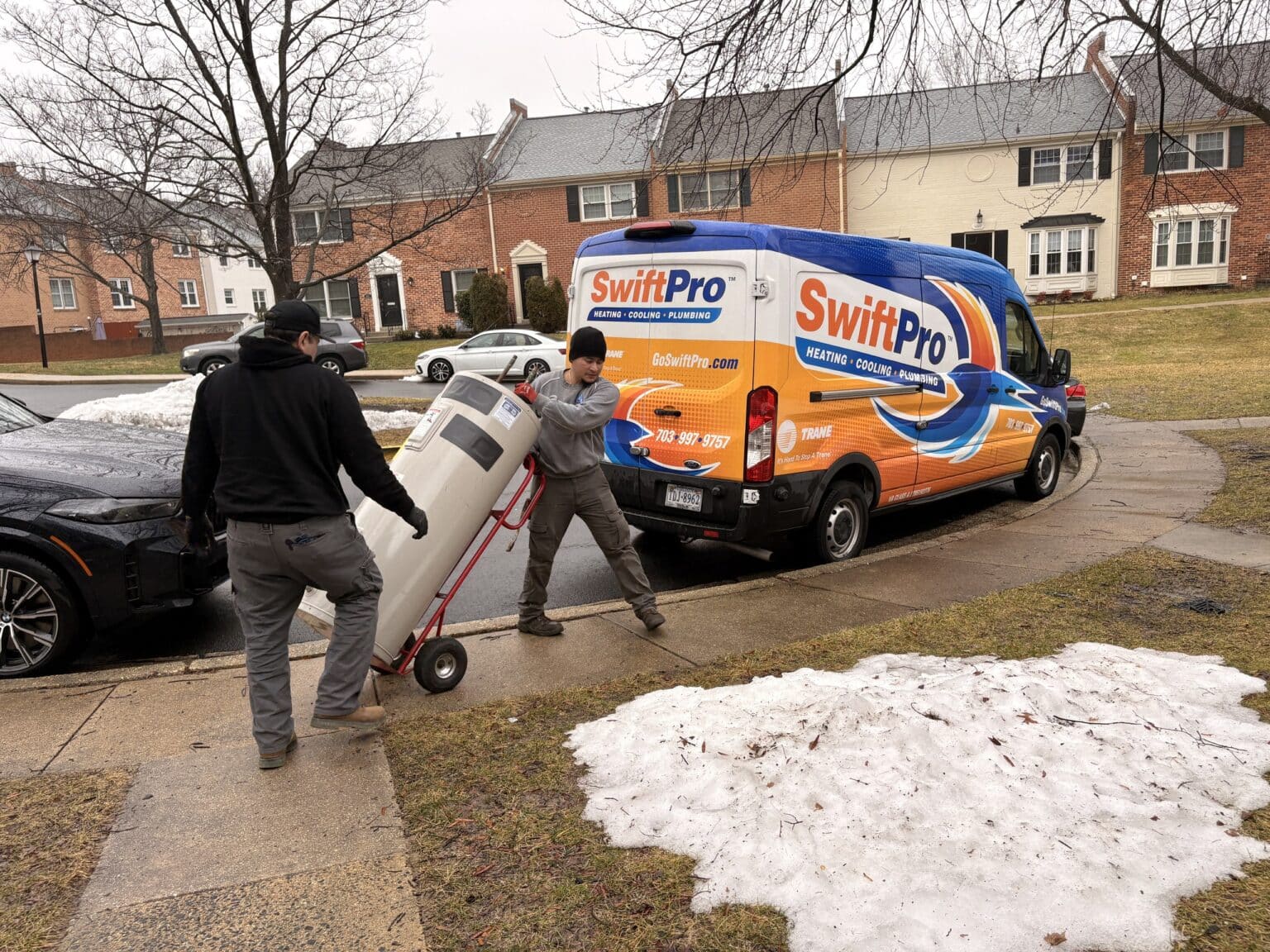
About seven owner homes in ten in Dunn Loring’s 22027 heat with natural gas, and in a detached house built around 1991, the typical one here, the water heater is usually a gas tank in the basement a few feet from the furnace. Most tanks give out somewhere past ten years, so a house that age is likely on its second or third. The couple of owners in a hundred on propane get the same row as gas.
The water it heats is hard. All of 22027 sits in Fairfax Water’s Washington Aqueduct zone, Potomac water the Aqueduct’s 2025 report puts at 5.6 to 10.9 grains per gallon, and the college-named streets off Cottage Street buy Town of Vienna water at 5 to 10. That calcium settles on the bottom of the tank. A yearly flush, $99 right now, slows that down; it can’t undo fifteen years of it.
Most of the storm reports NOAA files under Dunn Loring are wind. Tropical Storm Irene knocked out about 81,000 Fairfax County customers in 2011, with Merrifield, just across I-66, among the hardest-hit spots, and the June 2012 derecho dropped big limbs across Prosperity Avenue here. A standard gas tank on a chimney usually keeps making hot water through an outage. A power vent tank, $5,957 to $7,494 installed, and a tankless unit both need electricity to run.
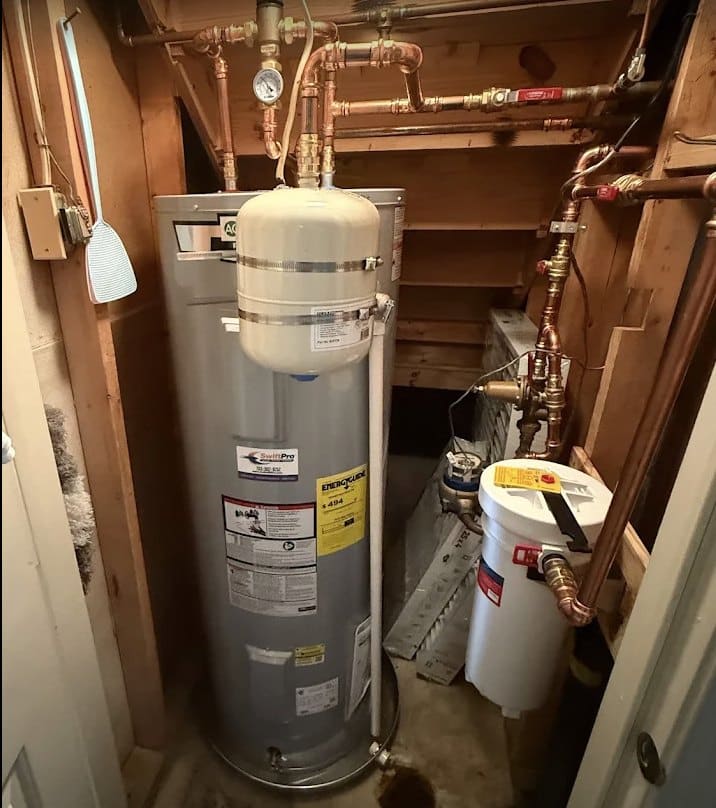
Look at the pipes on top of the old tank too. Some 1980s and 90s houses here were plumbed in gray polybutylene, and where it comes up to the heater, the written price says what it takes to change those connections. The label gives the year the tank was made; on gas in this water, past twelve is where we’d start pricing the replacement.