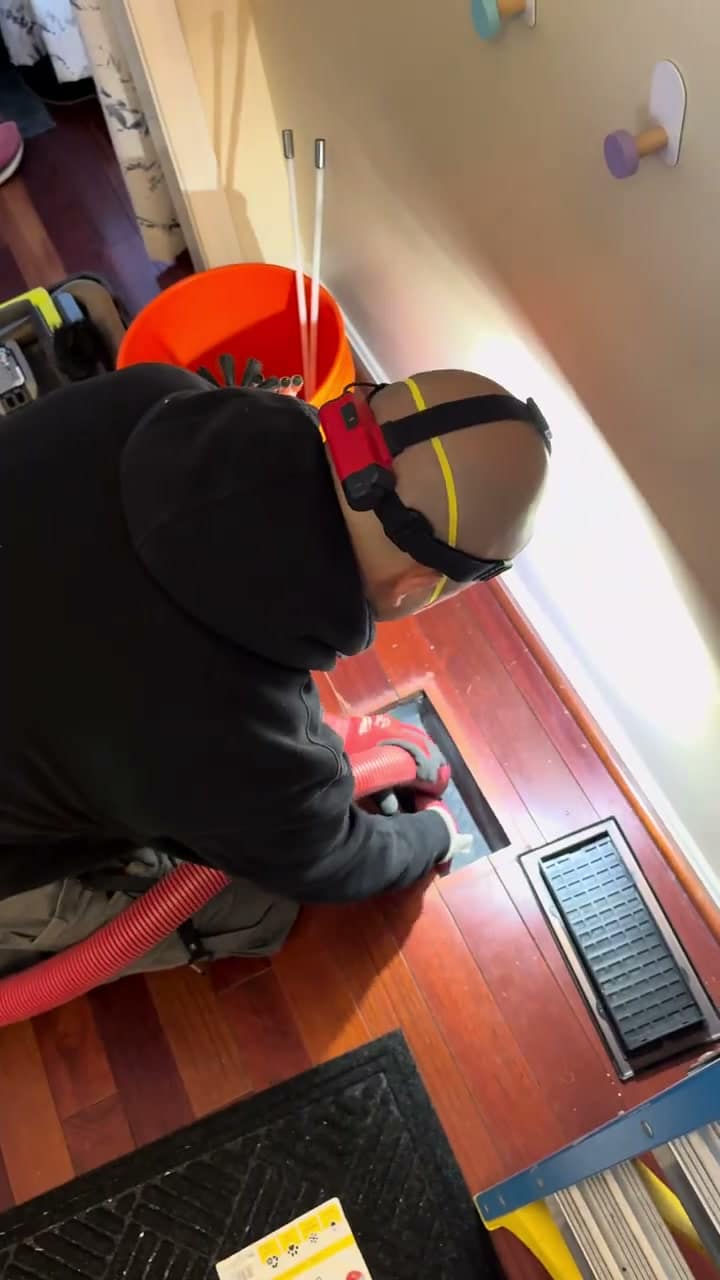
Dunn Loring’s own ZIP, 22027, covers the east end of the place around Gallows Road, and its typical owner’s house was built in 1991. About half went up between 1980 and 1999, and better than nine in ten are detached. In a house from that stretch the ductwork is usually galvanized trunk lines along the basement ceiling with flexible branches running off to each room. It has been carrying the same air for more than thirty years, and most likely nobody has seen the inside of it.
Heat is what keeps it busy. NOAA’s 1991 to 2020 normals for its Vienna weather station, 3.6 miles west, count 4,931 heating degree days a year against only 964 cooling degree days, and January nights there average about 23 degrees. In roughly seven 22027 homes in ten the heat comes from a gas furnace, so its blower is pulling air back through the returns from late fall well into spring, months longer than the air conditioner runs.
That also tells you when to book. In a typical year that station sees its last freezing night around mid-April and its first around the end of October, and it averages only about thirteen days a year at 90 or above. The weeks on either side of those dates are when the system can sit off for a cleaning and nobody misses it.
About a quarter of 22027 owners heat with electricity, which here usually means a heat pump and an air handler instead of a furnace. Its indoor coil sits right in the air stream, so the photos of the blower compartment matter as much as the ones from the ducts. On the Dunn Loring streets with Vienna mail, west and north of 22027, the houses are mostly from the 1960s and 70s, many with air conditioning added later and returns smaller than the system wants.