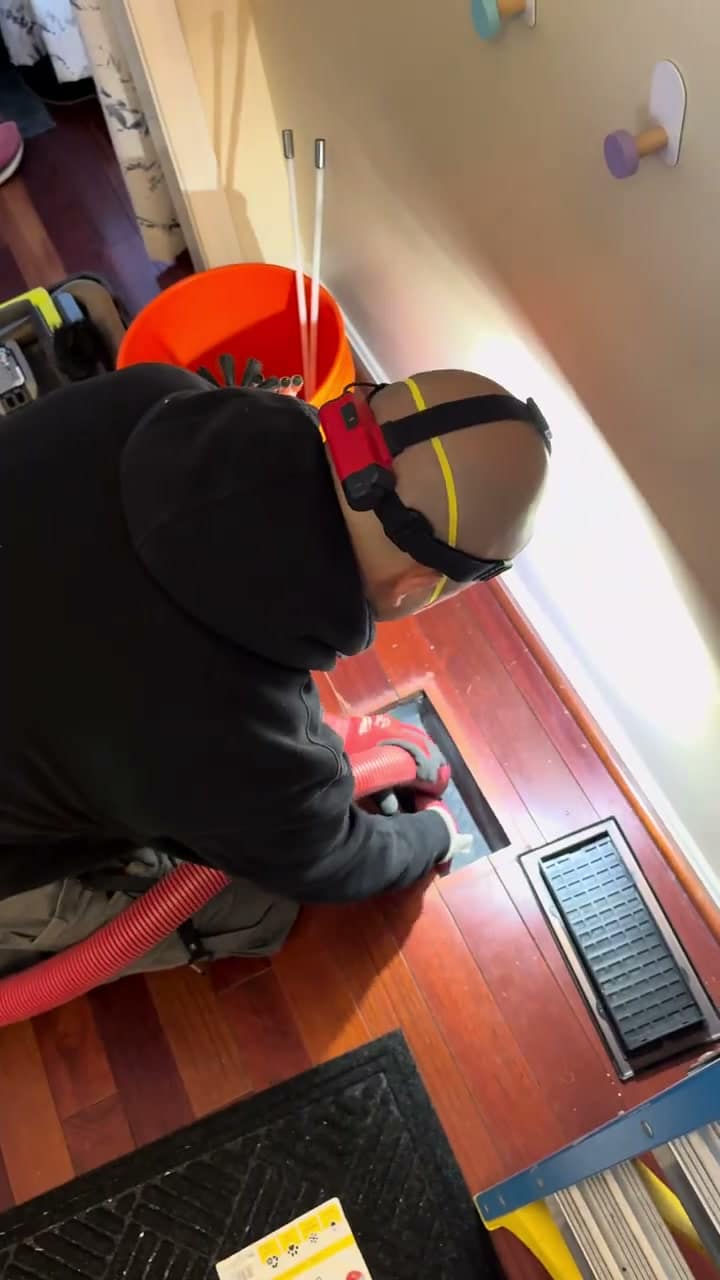
Triangle is really two building booms. About one home in six went up before 1960, on streets the County platted from 1946 on: Carborough Heights, then Graham Park and Mockingbird Heights in 1950, Amidon in 1955. Most houses from those years were built to be heated, not cooled, so central air came later, pushed through ductwork that may have been extended, patched or rerouted each time a furnace was swapped. The camera shows it fast: original sheet metal, newer flex spliced on, and dust gathered at every joint between them.
The other boom came all at once. A third of the homes standing in Triangle today went up in the 2000s, and the County’s plats put Kerill Woods at 2001 and Cramers Ridge, Moncure Woods and Lionsfield Valley at 2004. In a two-story house from that run, the bedroom ducts usually live in the attic. If a joint up there has worked loose, the return can pull attic air and insulation into the system, and no amount of cleaning helps until that joint is sealed.
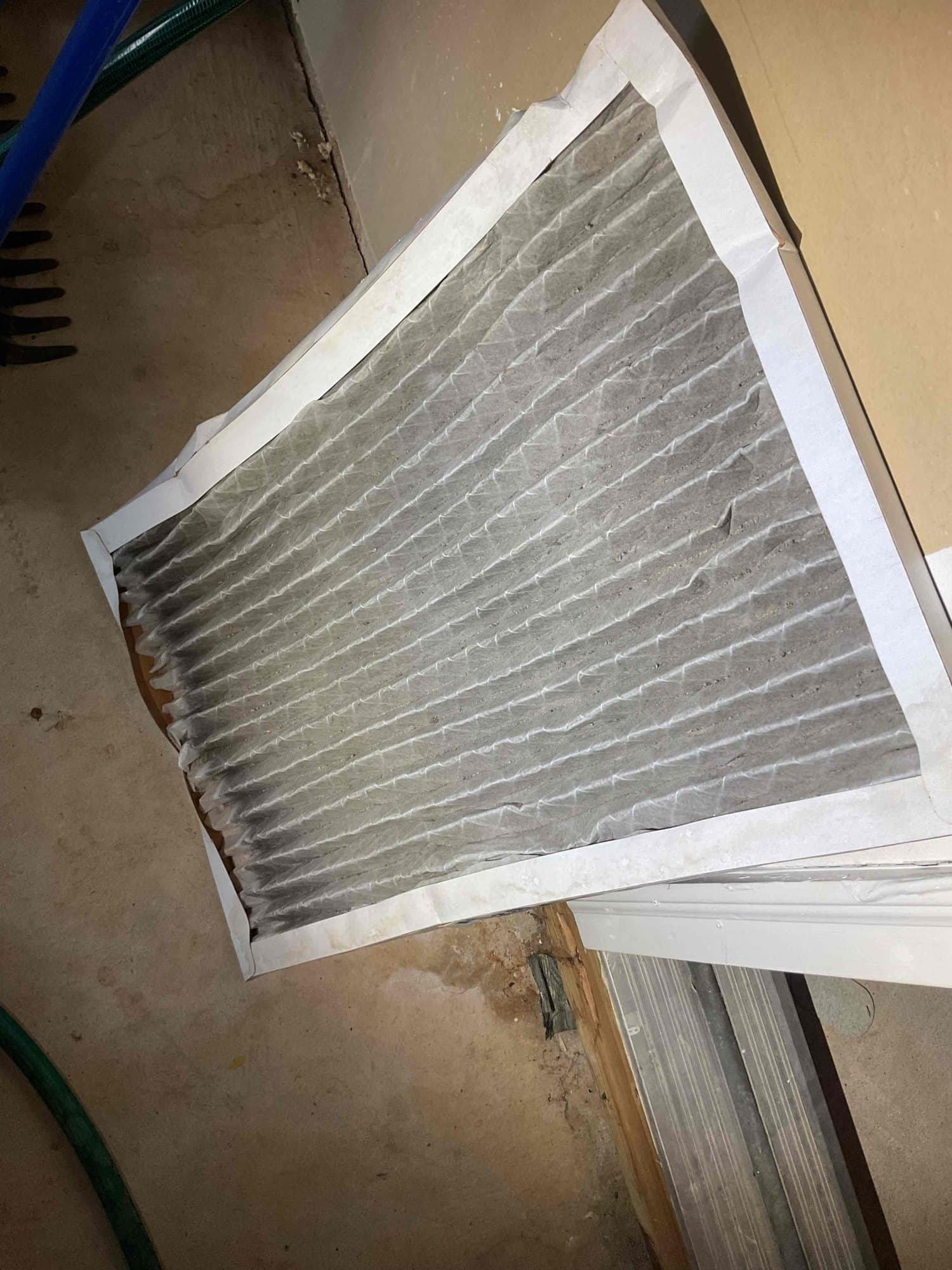
Here the blower rarely gets a season off. Quantico’s Marine Corps air station, 3.8 miles south-southeast, averages about 4,000 heating degree days and 1,500 cooling degree days a year, and July nights there hold near 71 degrees, so the system runs through summer evenings and most of the winter too. Every hour it runs, the returns drag the house’s dust toward the filter, and whatever slips past settles on the duct walls.
More than a third of Triangle homes are rented, and roughly three in ten sit in a building with two or more units. In a rental the ducts are the owner’s call, and between tenants, with the rooms empty and every register reachable, is the easy time to get them done.