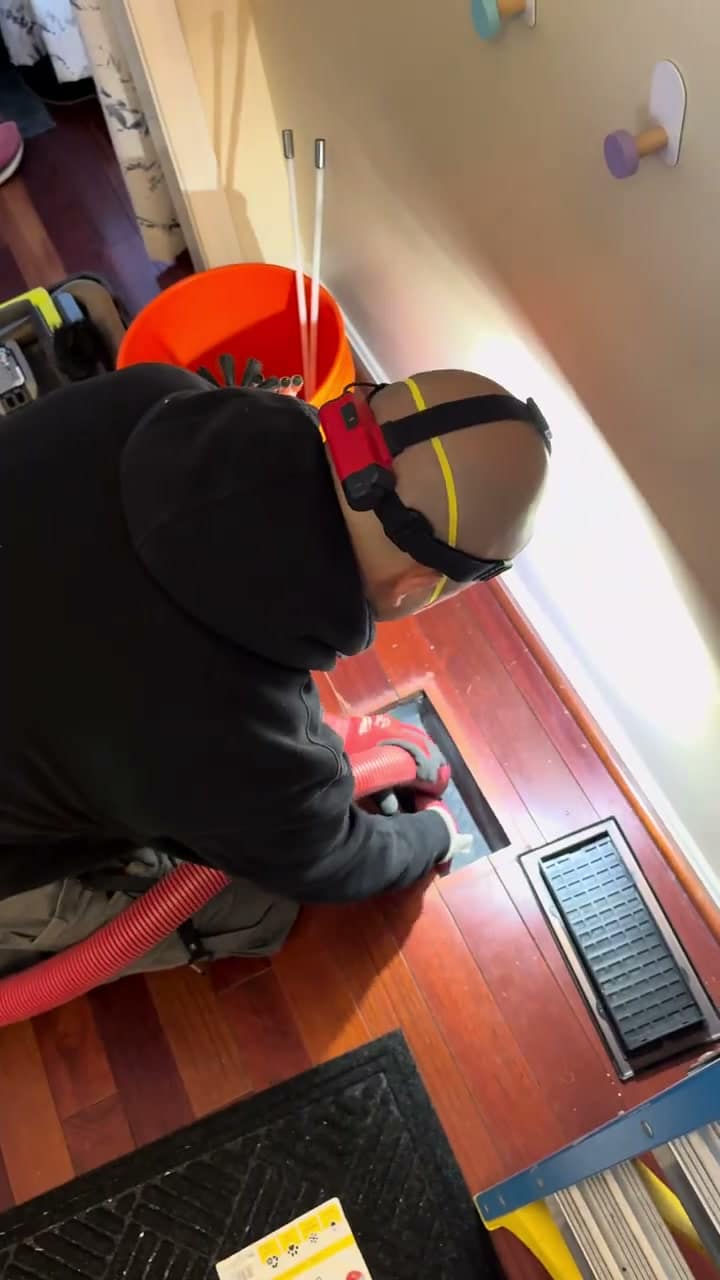
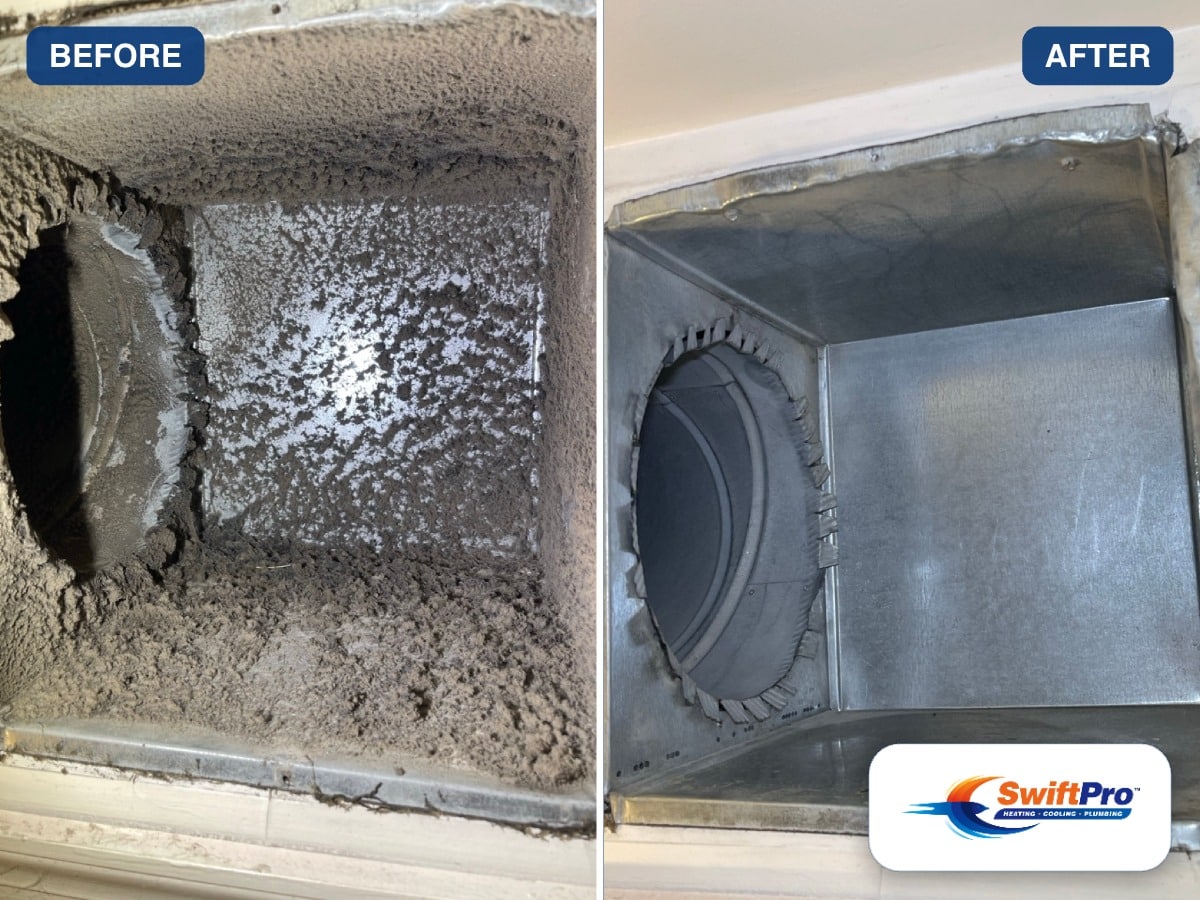
Close to half the buildings in The Plains Historic District went up between 1900 and 1930, and the state’s survey found balloon framing the usual way they were built, many finished in stucco. Nobody planned those houses around a duct. When central heat and air came, the trunk usually went into the attic or the cellar, and the branches found their way down through closets and wall cavities. So in town the camera has more ground to cover: long runs with odd turns, and returns cut in wherever a grille would fit.
Plenty of the town’s roofs are standing-seam metal, and the attic under one gets hot. The NOAA normals from Warrenton, 12 miles south, count about 21 afternoons a year at 90 degrees or more. Flexible duct that has baked through decades of summers up there goes brittle and can crush or split, so our tech photographs the attic runs before anybody brushes them, and cleans them with a gentler tool than sheet metal gets.
Past the town limits, ZIP 20198 is mostly detached houses on big lots, the typical owner’s home built in 1983, and about six owners in ten heat with electricity, which out here usually means a heat pump. The same station counts about 4,700 heating degree days a year against roughly 1,000 cooling degree days, so a heat pump’s blower does most of its running through the cold months. That’s when the returns load up, and spring, once the heat is off, is the sensible time to have them looked at.
About a quarter of the ZIP’s owners heat with propane, usually a furnace with the air conditioner’s coil sitting on top of it. Whichever you have, each system is photographed and priced on its own line. If the dryer vent cleaning should happen on the same visit, it’s $199 added on.