About 53 percent of Broad Run owners heat with electricity, and in a detached 1970s house out here that usually means a heat pump, sometimes an electric furnace, pushing air through the same ducts all winter and all summer. At the Warrenton co-op station, ten miles south-southwest, the median last spring freeze is April 9 and the first fall freeze is November 1. Heat runs on one side of those dates, cooling fills most of the other, and the blower rarely gets a month off.
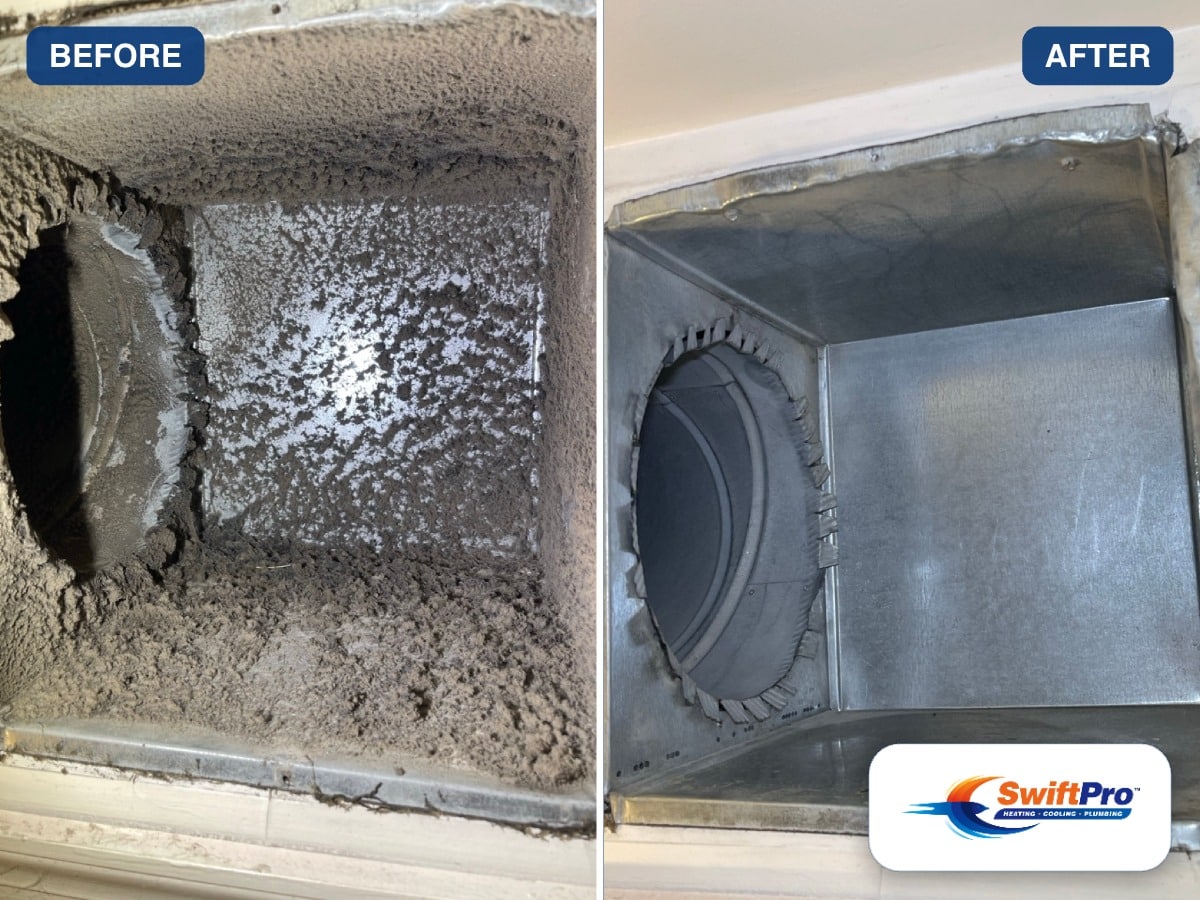
That’s why the return side matters so much here. Every hour the blower runs, the return pulls the house’s dust toward the filter, and whatever slips past a loose filter door or a gap at the rack coats the inside of the return and the blower wheel. On a system that runs ten or eleven months of the year, that adds up faster than on a furnace that rests all summer.
Close to three owners in ten heat with propane instead, usually a furnace with the air conditioner’s coil sitting on top. Plenty of houses have both kinds of system, one heat pump and one propane furnace serving different floors, and each one is photographed, priced and cleaned on its own line. In the older farmhouses along the stream, where central heat came long after the house did, the trunk lines can run through a cellar or a crawl space, so the tech will want to see under the house as well as the registers.
Broad Run itself floods. FEMA maps a Zone A floodplain within a few hundred yards of the old depot crossing, and in January 2024 high water closed Georgetown Road near Brookland Drive. Ductwork in a crawl space or basement that floodwater reached is a different job from a dirty duct: insulated duct that got soaked usually gets replaced, not cleaned. If yours has been under water, tell us when you book and we’ll photograph those runs first.