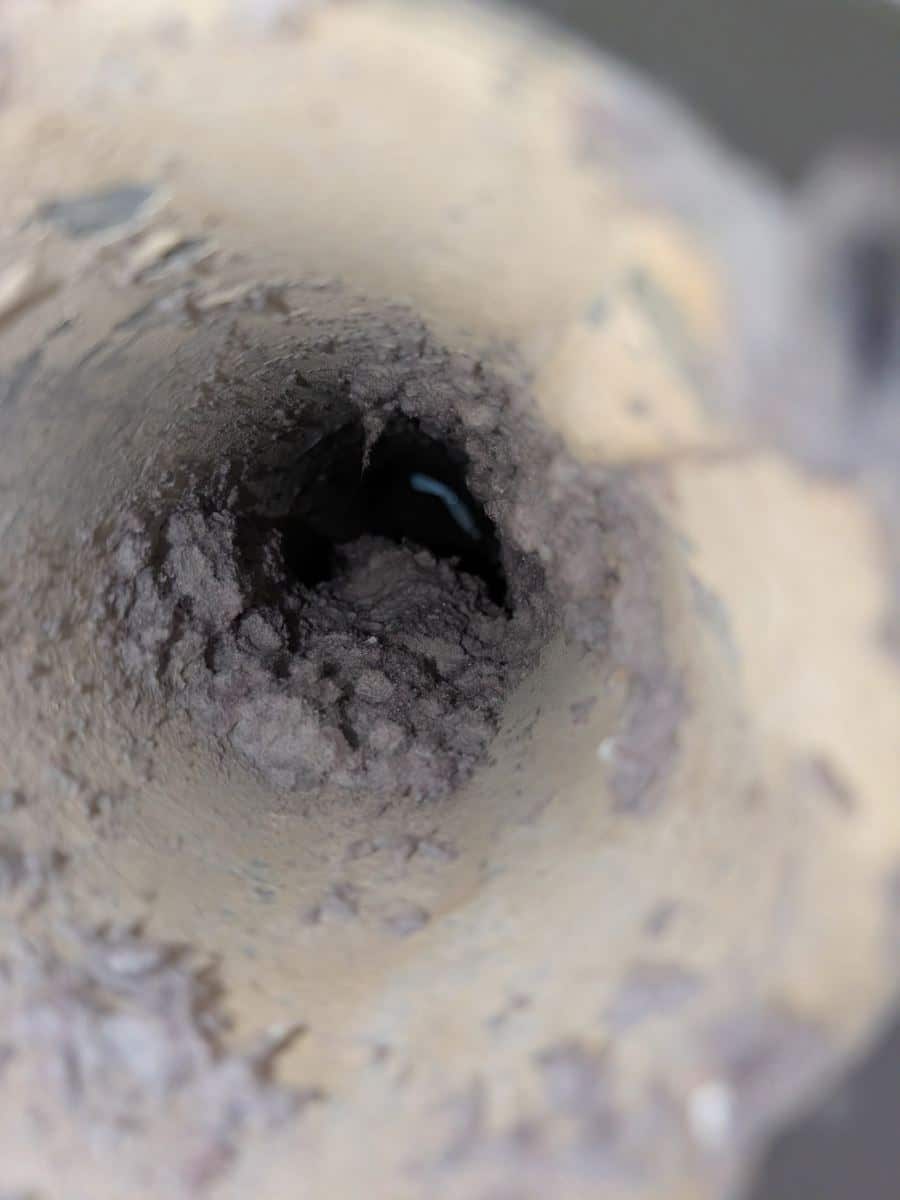
The Census counts every home in the Broad Run ZIP as a detached house, and the typical one dates from 1979. In a house like that the laundry is usually in the basement or a room off the kitchen, and the dryer vent line goes out through the nearest wall. Inside, the trouble is the usual kind. Outside is where Broad Run is different, because that hood sits on a house among fields and trees, a few hundred feet up at the foot of the Bull Run Mountains, and the weather reaches it first.
Ice is the quiet problem. On February 1 and 2, 2011, NCEI’s storm record logged a glaze of ice at Broad Run itself, and the Warrenton normals count about 13 days a winter that never climb above freezing. A flap that freezes shut closes the line while the dryer keeps pushing hot, wet air into it. Snow does the same from below: a CoCoRaHS observer 2.8 miles south-southwest measured 14 inches in one day in February 2014, deep enough to bury a hood mounted low on a basement wall.
Then the wind. On August 11, 2017, an EF0 tornado ran along the south side of Route 55 from Blantyre Road to Beverlys Mill Road and dropped trees on power lines and homes, and in August 2021 a tree came down on Beverley Mill Drive near I-66. A limb against the siding crushes a hood or tears its flap off, and a hood bent shut is a clogged dryer vent line with a different cause.
About three owners in ten here heat with propane, and a house with a tank in the yard often runs the dryer on it too. A propane dryer sends its burner’s exhaust out the same line as the lint, so a packed line on a gas dryer backs up more than heat. On wooded lots, birds and wasps also move into a hood whose flap stays open, and the camera finds the nest before the brush does.