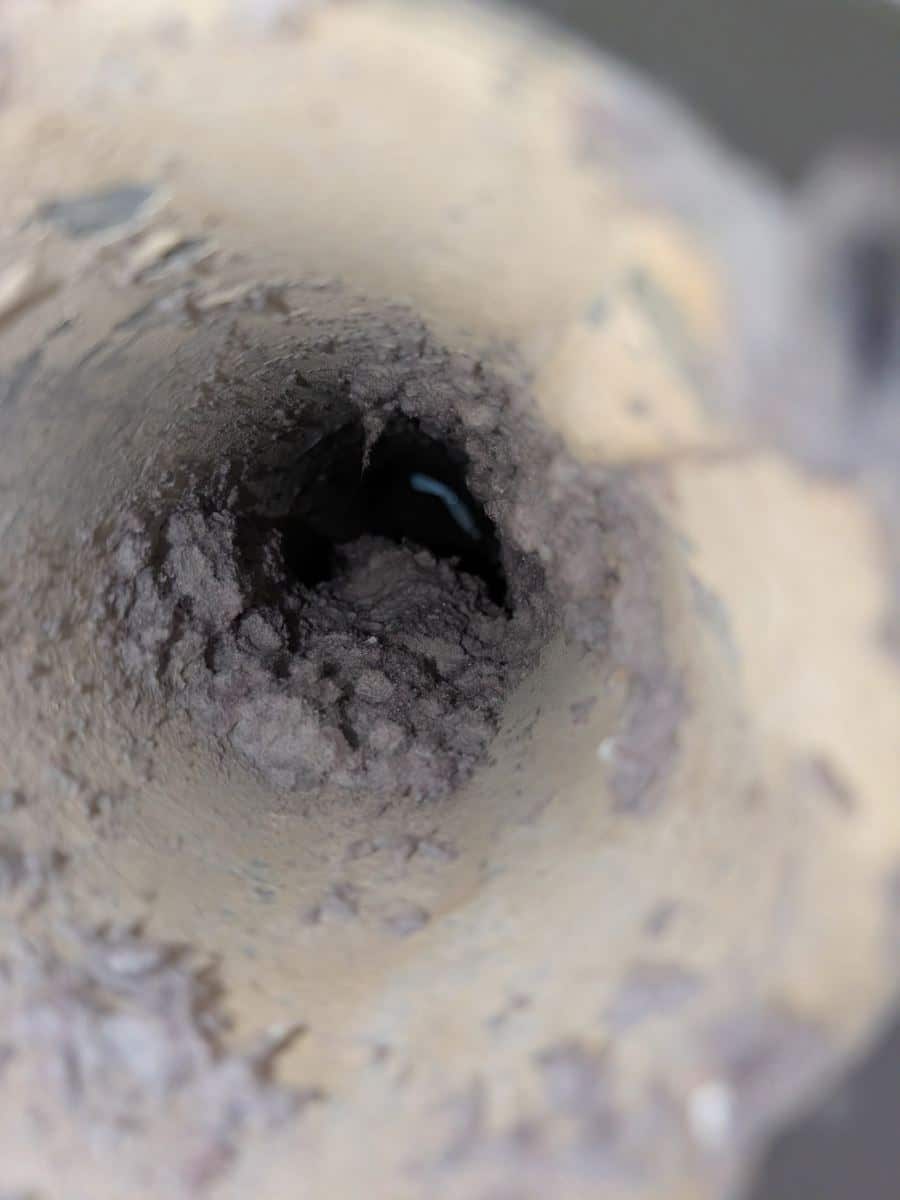
Close to nine in ten homes in 20141 are detached houses, most built since the 1990s, and in a two-story house from those years the dryer vent line can run a long way before it finds an outside wall: across a ceiling, through a floor, or out over the garage. About four in ten Round Hill homes heat with propane, and where the dryer burns propane too, that line carries the burner’s exhaust along with the lint.
Winter is the hard season for a dryer vent here. The Purcellville weather station, about three miles away, logs around 115 nights a year at or below freezing. Warm, wet air from the dryer cools fast in a line that crosses an unheated attic or a garage ceiling, and the water it drops dampens the lint, which then sticks to the walls of the line instead of blowing out. A low spot or a sag collects it first.
Then there’s the hood. The blizzard of January 2016 left 36.3 inches of snow a mile west-northwest of Round Hill by a trained spotter’s measure, and freezing rain in February 2018 put up to fifteen hundredths of an inch of ice on the town. A low hood disappears under a drift, and a flap glazed with ice stays shut. The U.S. Fire Administration says to make sure the outdoor covering opens while the dryer runs; after a big storm, check it before the next load.
If a deck went in after the house did, see whether the dryer vent hood now ends underneath it, where lint and leaves pile up out of sight; inside the town limits a new deck needs the Town’s zoning permit first. The once-a-year advice on the card below comes from Ashburn’s volunteer company, part of the same Loudoun County fire and rescue system that staffs Round Hill’s Station 4, which moved in May 2026 from 4 Main Street to 41 West Loudoun Street.