Nobody building in Rectortown planned for a clothes dryer. The register counts 25 of the village’s 54 properties from 1880 to 1910 and fourteen older than that, and when dryers came along the laundry went wherever a wall faced outdoors: the cellar, a rear ell, an enclosed back porch. The dryer vent line in a house like that is often short, but it passes through a stone foundation or a log wall far thicker than a stud wall, and that pass-through is often where the lint packs first.
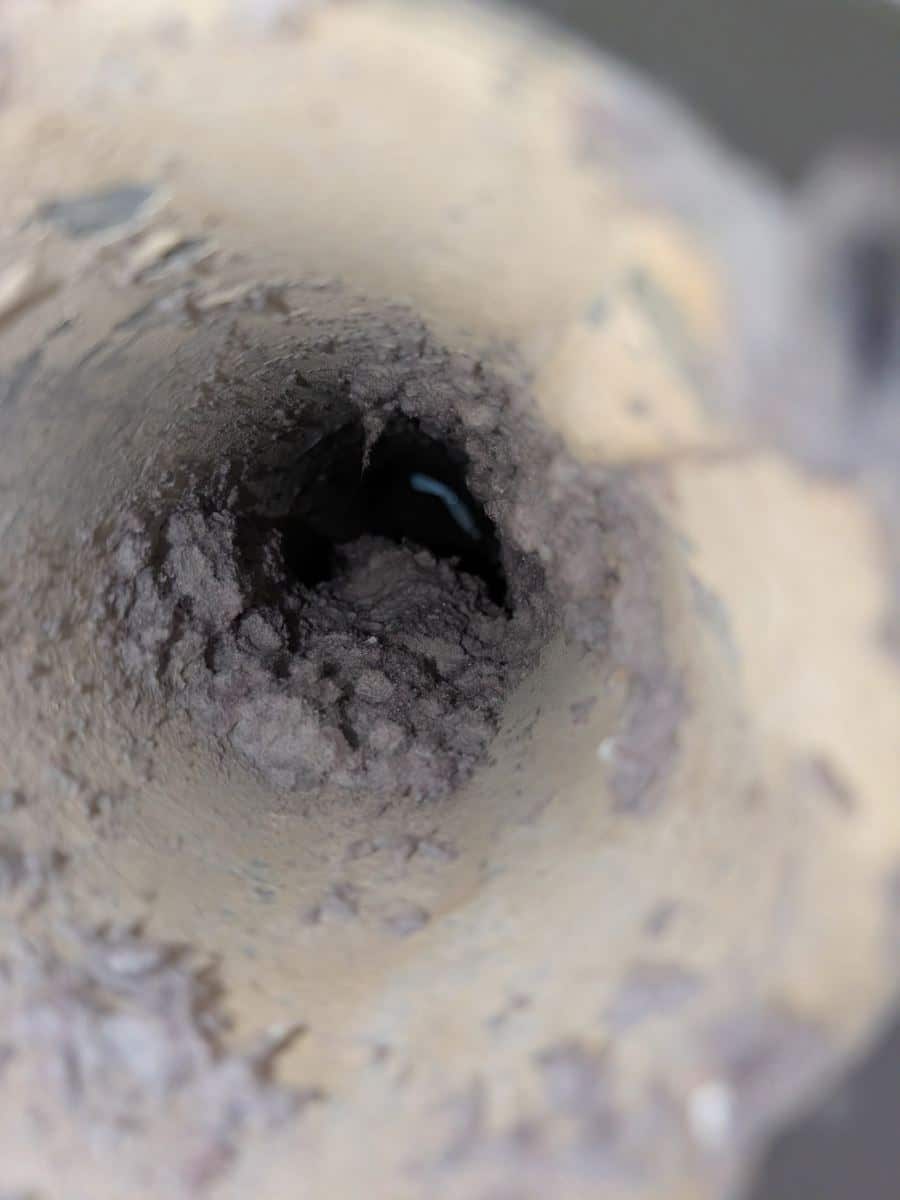
The village’s old stores and its school are homes now: the brick store at the crossroads closed in 1947, the two-room school from about 1880 in the mid-1950s, and Slack’s Store held on until 1999. In a building that started out that way, the laundry landed where the plumbing could reach, sometimes mid-house, so the dryer vent line can cross a ceiling or drop to the basement before it finds daylight. Longer lines fill sooner, and the camera photos show where.
The mid-century houses are simpler: the register lists stuccoed concrete block ranches from about 1958 and 1965, where the dryer vent line usually goes straight out through the block. Winter is the harder season. The Warrenton 3 SE weather station averages 98 nights a year at or below freezing, and warm, wet exhaust crossing an unheated cellar or crawlspace cools on the way out, so moisture beads inside the line and lint sticks to it.
Then there’s snow. The National Weather Service estimated 24 to 36 inches across northern Fauquier in the January 2016 blizzard, and a trained spotter in Middleburg, seven and a half miles away, measured 34. A hood low on a back wall disappears under a drift like that, and a dryer running against a buried hood pushes hot, wet air back into the line. After a big snow, dig the hood out before the first load.