Fauquier County’s building criteria size a heating system for an outdoor low of 17 degrees. The nearest long-record weather station, Warrenton 3 SE, near Rectortown’s 514 foot elevation, averages a January low just under 25, about 98 nights a year at freezing or colder and five at 10 or below. Mount Weather, ten miles north and 1,100 feet higher on the Blue Ridge, runs about 5,300 heating degree days to Warrenton’s 4,700; the village belongs with the lower number.
In ZIP 20115, which holds 66 of Rectortown’s 74 homes, 1,357 of the 2,109 owner homes heat with electricity, usually a heat pump with electric backup heat. The backup carries more of the load on the hardest nights, and late January 2026 brought a run of them, with Extreme Cold Warnings and Piedmont wind chills of 0 to 10 below. On a heat pump, the sequence of operation a tune-up checks includes when that backup comes on, and the tune-up is the same $99 a system.
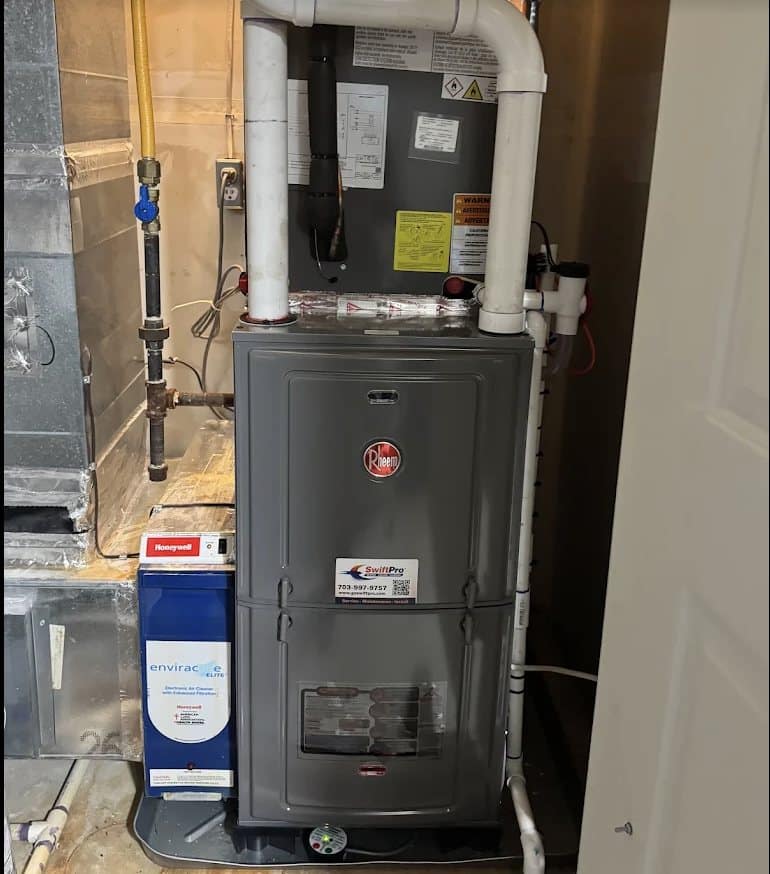
Another 424 owner homes in 20115 burn propane, fed by a tank and regulator that usually belong to the propane company. The January 2016 blizzard left an estimated 24 to 36 inches across northern Fauquier, and an ice storm three weeks later added two to three tenths of an inch of ice. A regulator buried or glazed over can hand the furnace the wrong pressure, and propane pressure at the burners is an early reading in the tune-up.
In the ZIP, 160 owner homes name wood as their main heat. Where a stove does most of the work, the furnace or heat pump becomes the backup, idle for days and then asked to run flat out the night nobody’s home to feed the fire. A fall visit makes it light, heat and shut down in order first.