The closest long temperature record to Rectortown, the Warrenton 3 SE co-op station at 500 feet to the village’s 514, averages a July high near 85 and about 21 days a year at 90 or above, with roughly 1,000 cooling degree days against nearly 4,700 heating ones. A house here asks far more of its heat than its cooling, but the cooling comes all at once, in sticky July weeks, when a weak part gives out.
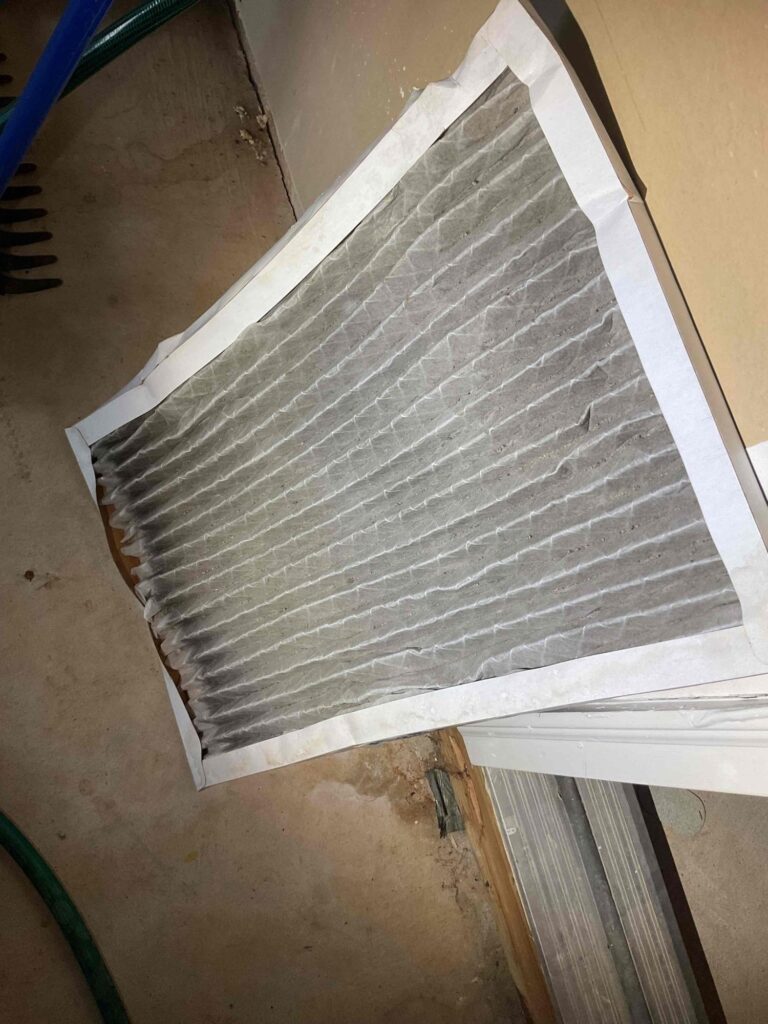
Across ZIP 20115, the Marshall ZIP area holding 66 of the village’s 74 homes, 1,357 of 2,109 owner homes heat with electricity, usually a heat pump. So the unit that cools in July already worked every cold stretch from the first freeze to the last. The spring visit turns it to cooling, cleans it and writes up what the winter left behind.
NOAA’s storm records put a large tree down at Rectortown Road and Frogtown Road, under a mile from the village, in a gust estimated near 60 mph on July 16, 2025, and the June 2022 storm that hit the Delaplane and Marshall areas carried winds put at 80 to 90 mph. After one like that, look at the outdoor unit before running it hard: a limb on top, crushed fins, leaves plastered on the coil, a unit pushed off its pad. If something looks wrong, or the breaker tripped when the power came back, call us after the storm and we’ll check the whole system.
The weather service estimated heat indices above 115 across northern Fauquier on July 22, 2011, and above 110 in July 2019. Where an old village house cools with a ductless mini split, it’s the same $99 a system, and each wall head’s drain line gets cleared, since a clogged one leaks down the wall.