Valley summers here aren’t mild. The nearest long-record station, Warrenton 3 SE, at about the village’s height, puts the average July high at 85 and sees close to three weeks of 90 degree days each summer. Heat waves go past that: the Weather Service estimated heat indices over 115 across northern Fauquier in July 2011. Up on the Blue Ridge, Mount Weather logs about a sixth fewer cooling degree days; Rectortown, at 514 feet, gets the valley’s summers.
The winter half burns propane. Natural gas heats only a handful of owner homes in the 20115 ZIP, so a furnace and AC pair here means a propane furnace with the air conditioner’s coil on top. The more common electric setup, a heat pump with an air handler, is its own job at $8,499 to $21,650.
In the village the ducts came last. The register’s survey dates nearly half of Rectortown’s historic properties to 1880 through 1910, with bungalows and a Foursquare from the early 1900s, all built for stoves and fireplaces. Where central air went in later, the trunk often runs through the cellar and the upstairs is fed through an attic or behind knee walls. Check those runs before sizing: a larger outdoor unit on the same tired ducts mostly gets louder.
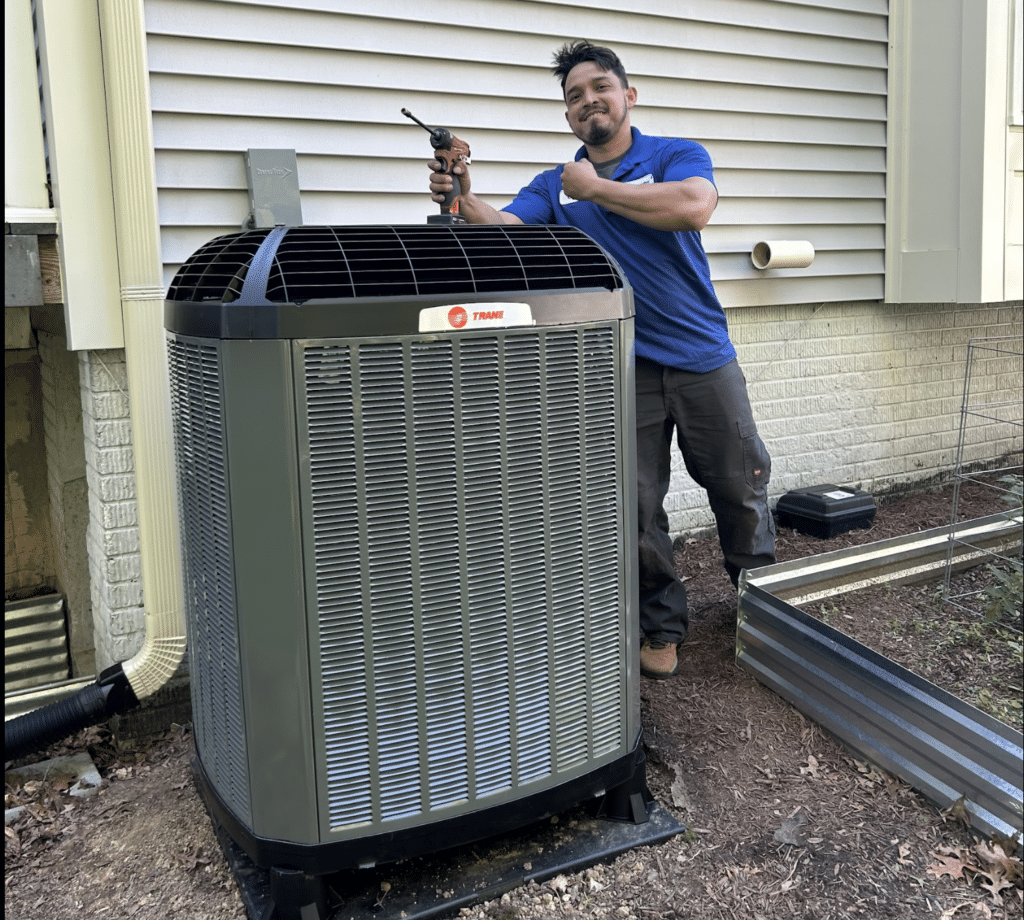
Storms are the other thing the outdoor unit lives through. In July 2025 a thunderstorm blew a large tree down at Rectortown Road and Frogtown Road, under a mile out, and the June 2022 storm that hit the Delaplane and Marshall areas with gusts near 85 mph landed on either side of it. After a storm, check the outdoor unit before the cooling goes back on: limbs on top, crushed fins, a tipped pad, a loose disconnect box. Then call us and we’ll check it all; the $99 diagnostic visit says whether it’s a repair or the reason to replace the pair.