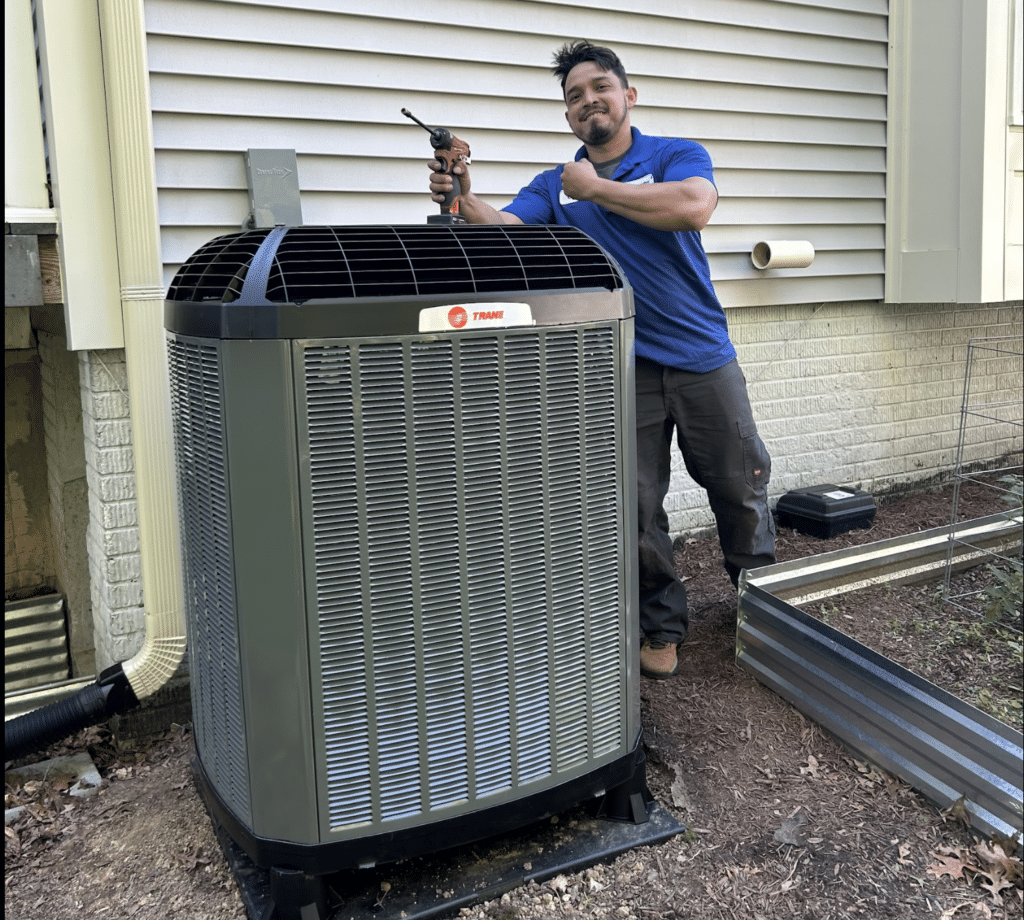
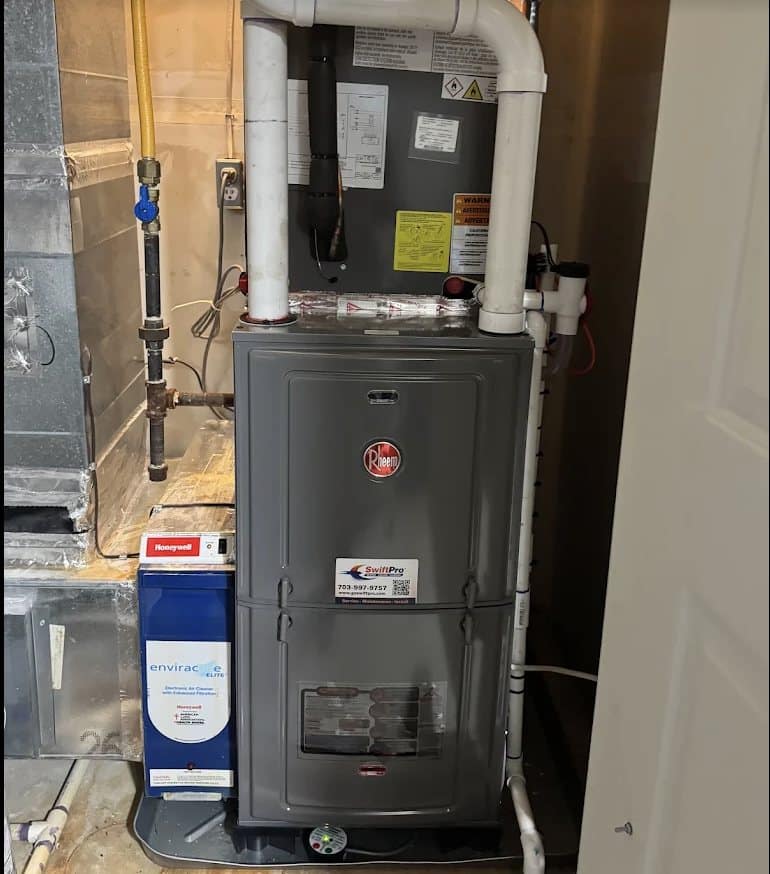
Where a Casanova house has a furnace and central air, that furnace burns propane: across ZIP 20119, the Census area around the village, no owner home heats with utility gas. The two halves share more than a thermostat. The cooling coil sits on the furnace’s outlet and the furnace’s blower pushes the summer air too, so a pair bought together is matched end to end and both come out of the same closet or crawlspace in one job.
Summers here are long enough to wear an air conditioner down. Warrenton 3 SE, the NOAA normals station a few miles west-northwest, averages about 21 days a year at 90 or hotter. On July 20 and 21, 2019 the Weather Service put heat index values above 110 across southern Fauquier, and on July 22, 2011 it estimated them past 115. An outdoor unit that’s been patched through a few of those summers is usually the half that goes first.
The outdoor half also takes the storms. On August 13, 2021, gusts estimated near 70 mph brought down numerous trees by Casanova Road and Meetze Road, about a mile west-northwest of the village. The low roads around it flood: Rogues Road closed for high water in November 2020, and on July 16, 2025 at least a foot of water ran across Balls Mill Road near Moopack Lane. After a storm like those, look the outdoor unit over before switching the cooling back on, for limbs on the cabinet, a kinked copper line or water that reached its electrical box, and call us to check it all.
The village houses went up from roughly 1880 to 1910, built for stoves and fireplaces, so any central system in one came decades later, its ducts fitted wherever there was room. Out along the farm roads the houses are mostly younger: the typical owner home across ZIP 20119 dates from about 1990. A furnace and outdoor unit original to a house that age are both well past the years either usually lasts.