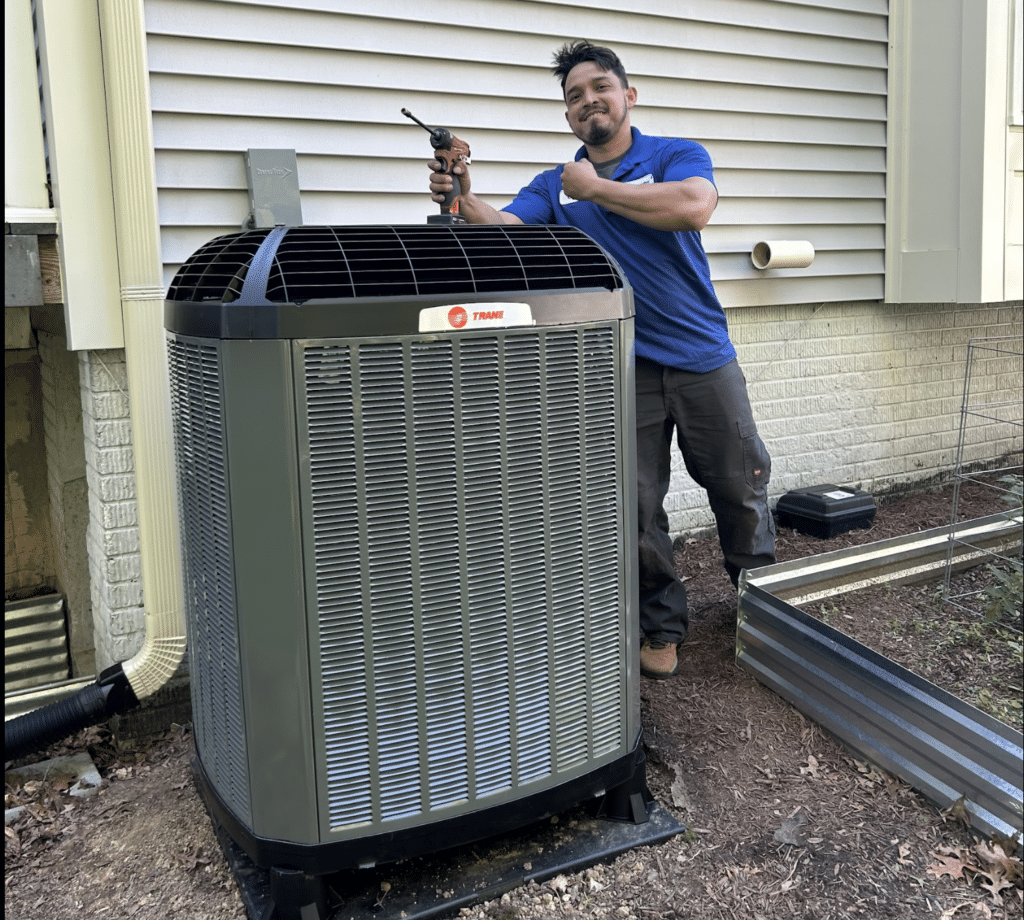
The typical owner home across Springfield went up in 1968, and close to six in ten of all homes here predate 1980. Furnaces and air conditioners each last something like fifteen to twenty years, which puts a 1968 house on its second or third set. When the last set went in on the same day, both halves have logged identical winters and summers since, and when one quits, the other is rarely more than a summer or a winter behind.
Date yours before deciding. Pull the furnace’s front panel and its rating plate shows a manufacture date, or a serial number that hides one; the sticker on the outdoor unit works the same way. If both are from the mid 2000s or earlier, every repair on either one buys less time than the last.
Kings Park, North Springfield and Ravensworth are close to nine in ten gas and mostly single-family houses, and plenty of them got central air years after they were built, on ductwork drawn for heat. The one easy time to improve that ductwork is when the furnace comes out: with the cabinet gone, the return and the filter rack can be rebuilt bigger, which plenty of these houses could use. Ask for it priced as its own line.
West Springfield, two thirds gas with close to four in ten homes townhouses, is the same job in a tighter room: furnace and coil in a basement utility room, the outdoor unit in a row out back. Newington Forest is the exception. About three in four owners there heat with electricity, so most houses there have an air handler with electric strips where a furnace would stand, and replacing that means a heat pump system, a different line on the price list.