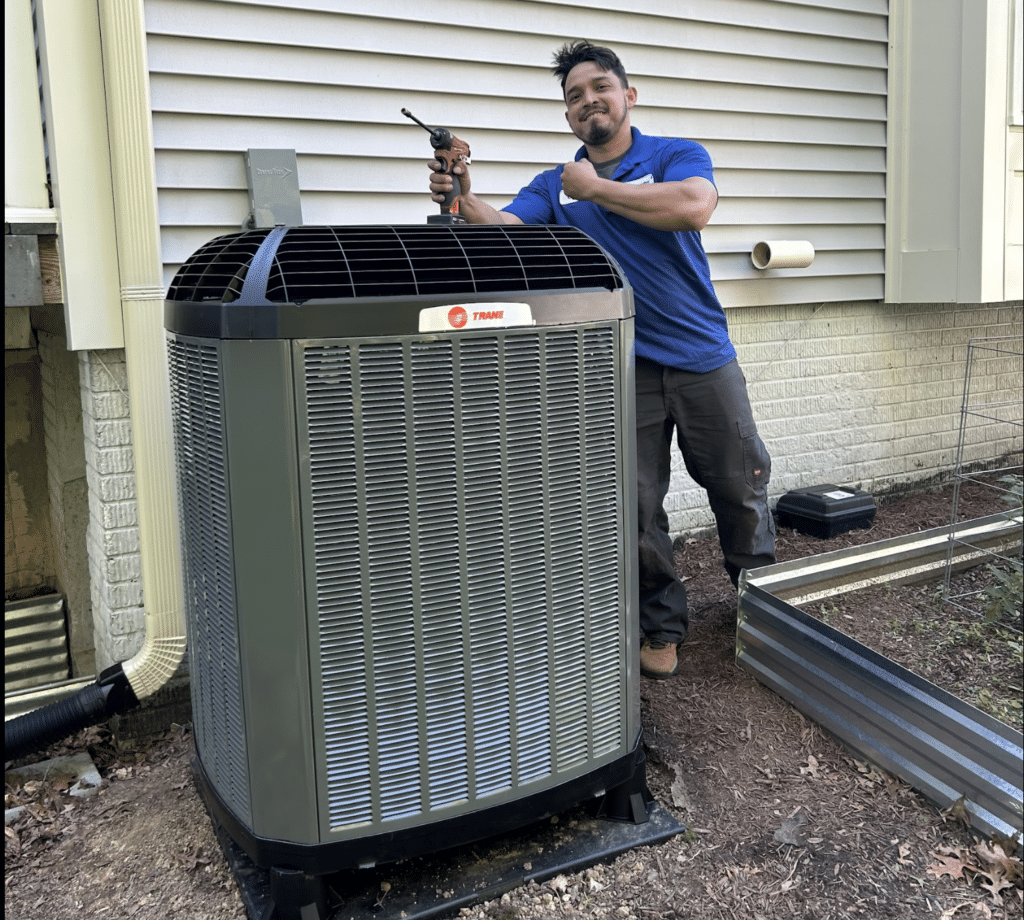
Electricity is the most common heat around Casanova. In ZIP 20119, the Census area the village sits in, just over half the owner homes heat with it, and in a house built since the 1980s that usually means a heat pump outside and an air handler with backup heat strips inside. The typical owner home in the ZIP dates from about 1990, so plenty of those outdoor units have already been swapped once and are coming due again.
Sizing starts with winter. On the morning of January 27, 2026, the weather station at Warrenton-Fauquier Airport, about five miles south, read 3 below zero. At Warrenton 3 SE, the nearest NOAA normals station, about five nights a year fall to 10 or lower, and the median spring freeze doesn’t pass until around April 9. A heat pump’s output falls as the air gets colder, so the question for a new one is how much it still puts out on those mornings and how much gets left to the strips.
Snow decides where it sits. In the January 2016 blizzard a CoCoRaHS observer about five miles west-southwest of Casanova measured 30 inches on the ground, and the Weather Service logged 18 to 30 inches across southern Fauquier. A heat pump melts the frost off its coil over and over in that weather, and the meltwater has to drain away instead of freezing under it. Out here the outdoor unit belongs on a stand or a wall bracket above the drifts, and out from under a metal roof that sheds its snow in one slide.
Casanova has no public water, so every house runs its own well pump, and that pump shares the electric panel with the heat pump and its strips. Before a bigger heat pump or a bigger strip kit goes in, the panel and the air handler’s circuit get checked for room. When the lines come down, as they did across the county in the March 2, 2018 nor’easter, an all-electric house loses its heat and its water at once, so if you run a generator, the heat pump belongs in that plan too.