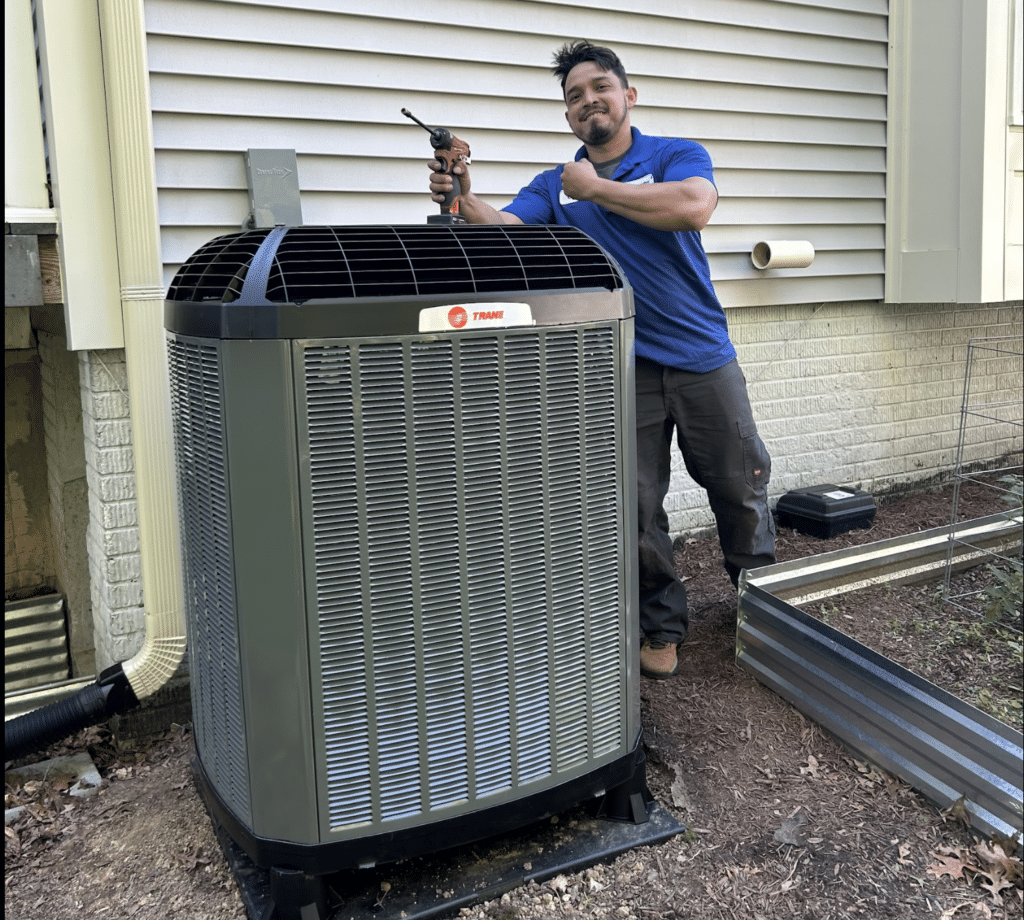
Around Orlean the heat pump is the main heat, not a helper. In the Census block group centered on the village, 306 of the 543 occupied homes heat with electricity. The Census doesn’t ask which kind, but in a ducted house that’s usually a heat pump, with backup strips inside the air handler. Replacing it swaps both halves and keeps the ducts.
That heat pump works a real winter. Warrenton 3 SE, the nearest station with thirty-year normals, counts about 4,700 heating degree days a year and a January low averaging just under 25 degrees. The village sits around 600 feet up in rolling farmland, three miles from Thumb Run Mountain, and Fauquier County sizes heat to a 17 degree day. On the coldest nights an ordinary heat pump leans on its strips; a cold-climate model holds more of its output into the teens.
Snow and ice come with the job. Northern Fauquier took an estimated 24 to 36 inches in the January 2016 blizzard and up to three tenths of an inch of ice that February, and after the January 2026 storm a gauge two miles north of the village still had 6 inches down five days later. Each defrost cycle sends meltwater off the coil, so the new unit should stand high enough to clear drifts and drop that ice, not sit low on the old slab.
Houses out here run on their own wells, so the panel feeding the backup strips also feeds the well pump. That matters when the lines come down, as in the March 2018 nor’easter, when county 911 was called about 1,100 times, mostly for trees and wires down. A generator sized for the well and the refrigerator may not carry a full bank of strips, so we stage them to come on in steps.