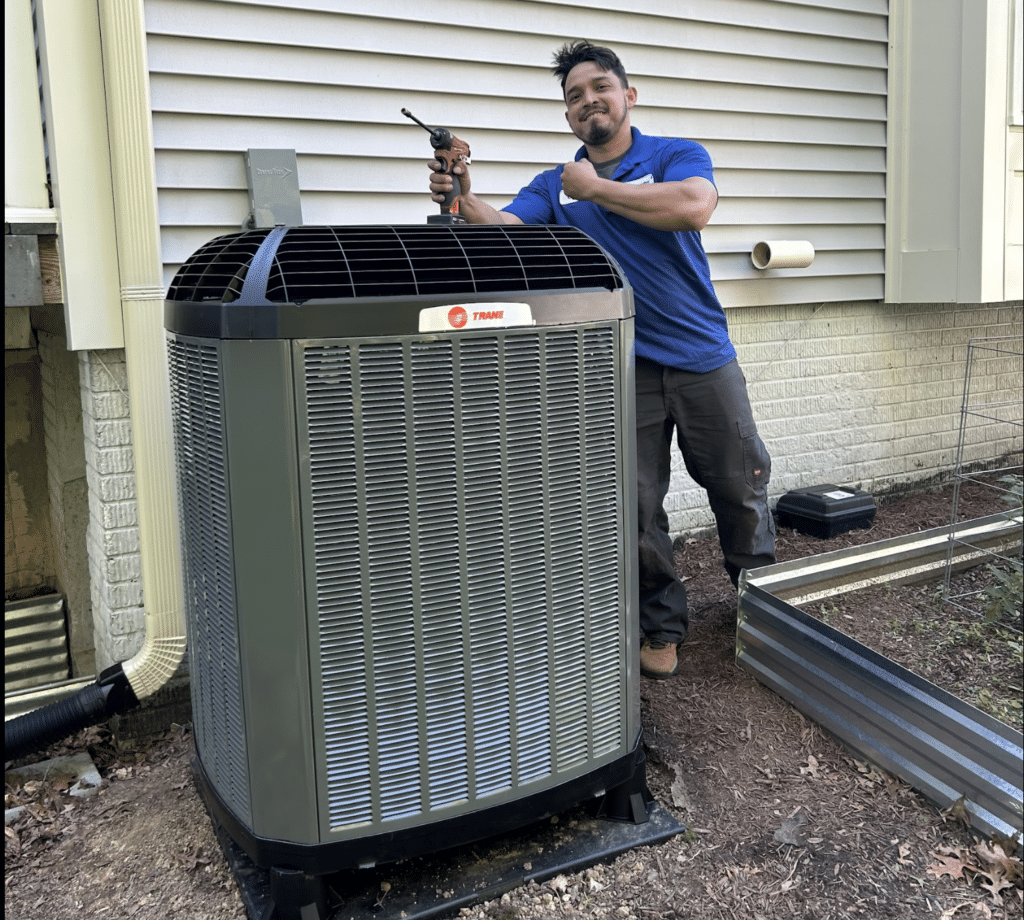
The Census counts 665 of the ZIP’s 1,298 owner homes heating with electricity, and in a house built here from the 1970s on, that most often means a heat pump outside with resistance strips in the air handler. In many of the 373 propane homes a heat pump stands in front of the furnace, calling on it only when the cold gets serious. Either way, the outdoor unit works all twelve months.
The Purcellville weather station, 2.6 miles west-northwest of town, puts the median first freeze on October 25 and the last on April 16, with close to 115 nights at or below 32 degrees between. On those nights frost builds on the outdoor coil and the heat pump reverses for a few minutes to melt it. One that stops defrosting and ices solid usually has a failing sensor, board or refrigerant charge, and past fifteen winters that repair often tips it to replacement.
Then the deep cold: about five nights a year at 10 degrees or below at that station, and a subzero night every other year. It logged 5 below on its February 24, 2015 reading, its lowest since 2000, and on January 23, 2025, a station in Hamilton read the same, unofficially. A current variable-speed heat pump keeps heating well into the teens; below that, the strips or the propane furnace carry part of the load.
Big snows decide where the outdoor unit sits. A spotter measured 18 inches in Hamilton in the December 2009 storm, and in February 2010 the Purcellville station had 39 inches on the ground and Loudoun County had outages throughout. A raised stand keeps the coil above drifts. In an all-electric house an outage takes the heat pump and the strips together, so size any generator before choosing the system.