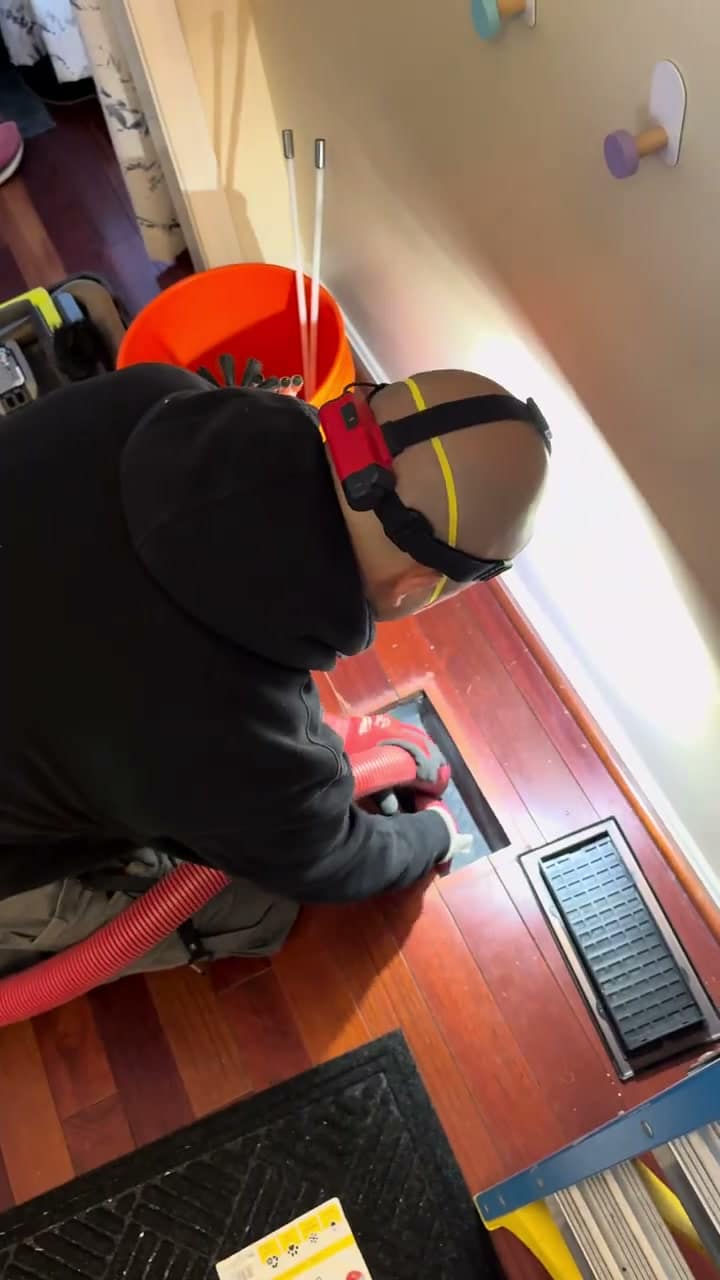
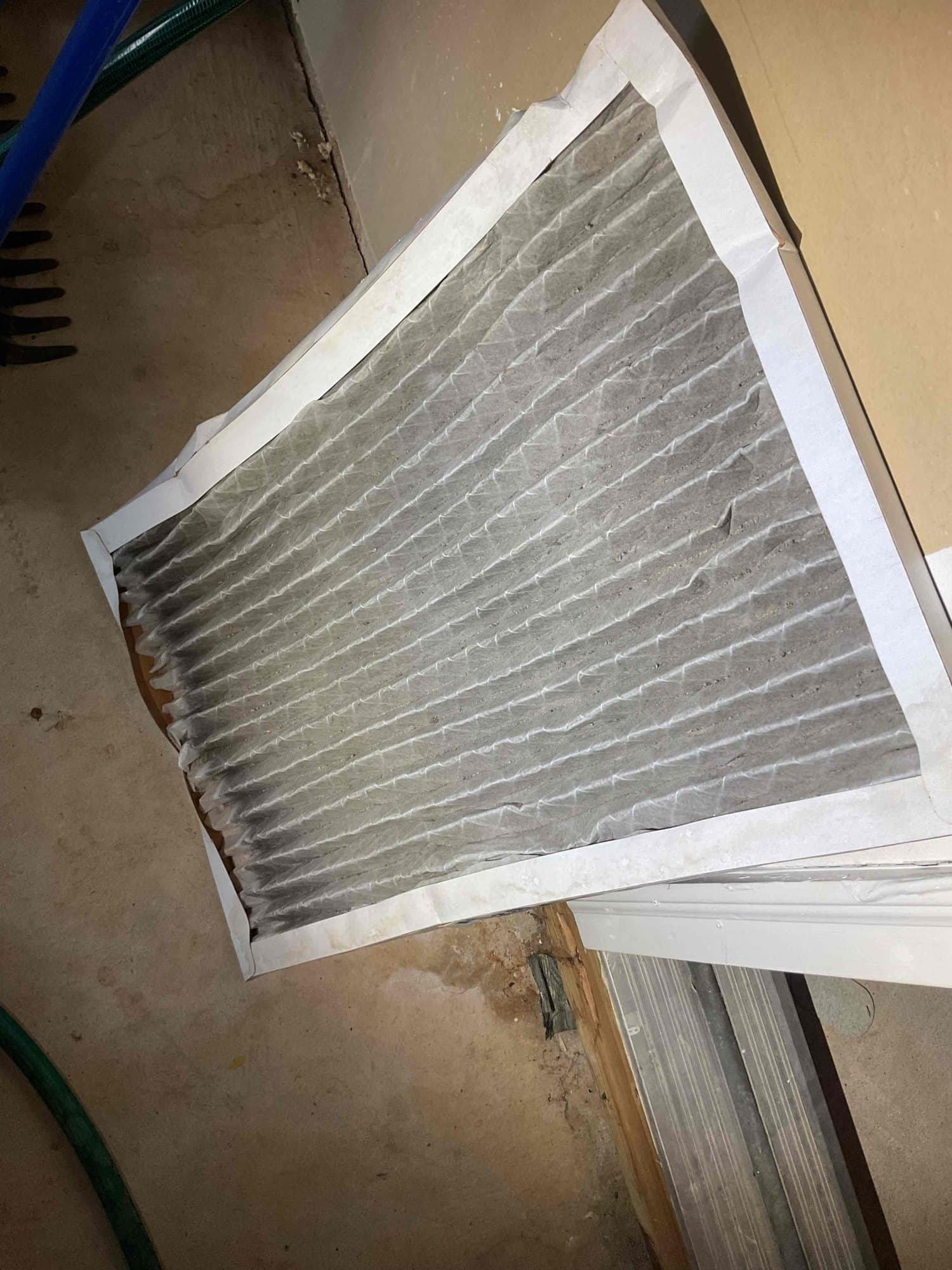
The closest long-running weather station is the co-op in Purcellville, about two and a half miles west-northwest, and its 1991 to 2020 normals put the heating load near 4,940 degree days a year, against about 1,050 for cooling. Washington Dulles counts about 4,600, so a Hamilton house asks roughly 7 percent more of its heat each winter than one out by the airport. The blower spends most of its year moving warm air, and every hour it runs pulls the rooms’ dust back through the returns.
Across ZIP 20158 half the owner homes count electricity as their heat, which in these houses mostly means a heat pump, and propane heats close to three more in ten. On a January night at the 24.5 degree average low, a heat pump hums along in long, steady stretches instead of short hot bursts, so the same air goes through the filter and the ductwork far more often than the thermostat lets on.
The houses come in layers. The 1970s were the busiest building decade before 2000, roughly a fifth of the ZIP’s homes, and those usually still have their original sheet-metal trunks behind an outdoor unit that’s been swapped more than once. Another four in ten date from after 2000, mostly with flexible runs laid through the attic. And in the old town, where the Town’s plan describes mostly late Victorian buildings from the railroad years, ducts were fitted long after the plaster went up, along whatever route the house allowed: an old chase, a closet, the basement ceiling.
Storms reach ductwork from above. On July 21, 2019, thunderstorm winds damaged the roof of a home on Meadowlark Drive and dropped trees between Hamilton and the Route 9 and Route 704 intersection; in July 2010 the fire department counted at least thirty trees down across town. When a roof opens, rain finds the attic first, and in a newer house that’s where the flexible duct lies.