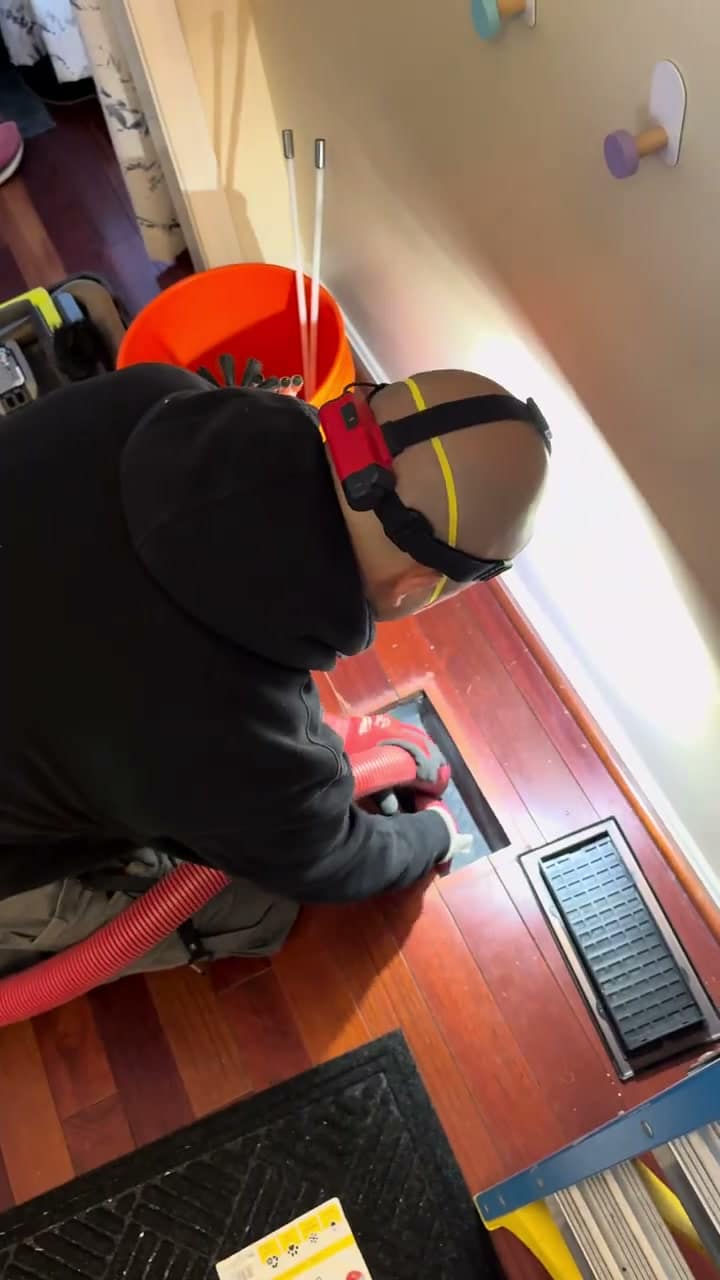
The Town of Warrenton has more old houses than its 1993 median suggests. Nearly three in ten homes inside the town limits went up before 1960, and the oldest of them, in and around the Historic District off Main Street, were standing long before anyone ran ductwork through a house. Their ducts came later and go where a carpenter could fit them: up a closet, through a soffit, across the attic floor to a register in the ceiling. Reaching them is most of the job, so the camera follows each run before anybody prices it.
About half the homes are single-family houses, about one in five are townhouses, and about one in four sit in small multi-unit or condo buildings, where a closet air handler feeds a few short runs and the visit goes quicker. Nearly four in ten households in town rent, and an empty unit between leases is the easiest place to reach every return.
Most people with a Warrenton address don’t live in the town at all. The Census counts about 10,200 people inside the limits and about 34,700 across ZIP codes 20186 and 20187. New Baltimore, along Lee Highway in 20187 with Vint Hill inside its boundary, has more residents than the town by itself. Nearly all of its homes are single-family houses, and about half went up after 2000.
A single-family house from that era often runs two systems: one in the basement for the living floors and one in the attic for the bedrooms. Each gets its own camera look and its own line on the written price. The attic unit is the one nobody thinks about, and it has carried every summer’s cooling load since the drywall went up. About three in ten New Baltimore owners heat with electricity, so plenty of those attic units are heat pumps that move air all year.